I’m an American who thinks Trump is destroying what our two countries share. I also think I know why he’s doing it - Toronto Star
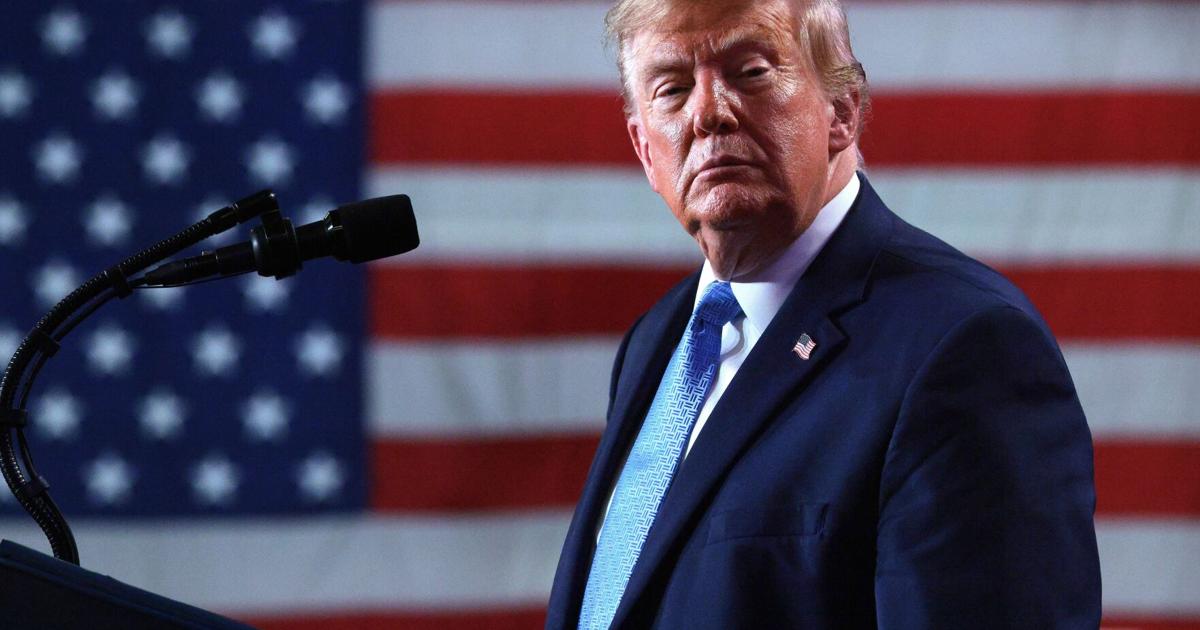
Canada and the U.S. have a long history of co-operation. Trump has a history of truculence.
U.S. President Donald Trump learned early on in life that controlling the narrative, even through lying, would serve him well, writes James McManus.
James McManus is the author of "Positively Fifth Street, Cowboys Full: The Story of Poker" and 8 other books of poetry, fiction and journalism.
Ever since we fought side-by-side in both world wars, nearly all Americans have gotten along famously with Canadians, and vice versa. Not that long ago, almost 100 million of us travelled each year back and forth across our 5,525-mile border, the longest on earth, for jobs, trade, vacations or more permanent stays. But that number has fallen dramatically during the second Trump administration, when our president began treating Canada as an adversary, almost an enemy.
Given our shared history, it makes the way President Donald Trump is treating our neighbour especially galling. Most of us are angry, confused and embarrassed that he’s thumbing our ally’s eye in our name. We’re baffled by his stupidly counterproductive tariffs and outright bans of other products, his adolescent insinuations that Prime Minister Mark Carney is merely the governor of our 51st state, his executive order that Lake Ontario be called “Lake America,” and I could go on.
For many millions of us, the connective bonds are also quite personal. My wife’s ancestors include Adelina Rouleau and Louis François Xavier Frenette, both of Québec, who were married in 1882. She and I spent our honeymoon in British Columbia and Alaska in 1992, in part because she’s loco for loons. On other trips, we’ve been to Waterton Lakes National Park, the Canadian side of Niagara Falls, and watched whales with our kids in the Bay of Fundy. We’ve cheered Jim Cornelison as he rousingly belts both national anthems before Blackhawk games with one of your teams, and we’ve never heard boos during “O Canada.” It was, after all, Canadian studs Jonathan Toews, Denis Savard, Bobby Hull, and so many others losing chiclets in pursuit of Lord Stanley’s Cup. A dynamic statue of the Golden Jet mid-slapshot has a place of honour outside Gate 3 1/2 of the United Center, facing one of “Stosh” Mikita stickhandling through traffic. Mikita was born in Czechoslovakia but grew up, as Hull did, on the north shore of Lake Ontario.
Despite current tensions, Canada and the U.S. have a long shared history, writes James McManus.
Despite recent revelations about her sad and strangely unmaternal response to her second husband’s sexual abuse of her daughter, Andrea Skinner, Alice Munro remains my favourite writer of short stories, though most of hers are more like novellas. Her female characters have Shakespearean depth and complexity, and many of her stories — “Vandals,” “The Children Stay,” several others — are even darker and more hair-raising in the glare of Andrea’s testimony.
As a poker historian, I’ve written about the Acadians who brought the French game of poque from Nova Scotia down to New Orleans in the late eighteenth century. In that bubbling ethnic melting pot, poque soon blended with English brag and other vying contests to form poker. Variants of that French-Acadian game are now played, for pennies or eight-figure stakes, on every inhabited continent.
It’s more than just art or games, though; our connection is also military. Tens of thousands of white and Black Canadians fought with the Union during our Civil War; only 2 or 3 per cent sided with the slave states.
In the First World War, my namesake grandfather served alongside Canadian and British sailors mining the North Sea from Scotland to Norway to hem in German U-boats. During the Second World War, my father and all three of my uncles served with over 1.1 million Canadians. In 1961, at the height of the Cold War, President John Kennedy said of Canadians, “Geography has made us neighbours, history has made us friends, economics has made us partners, and necessity has made us allies.”
During the Vietnam era, about 40,000 draft-age American men fled north to avoid serving in a war now widely viewed as a colossal mistake. Pierre Trudeau’s government welcomed them.
Canadians sheltered six American diplomats who evaded capture when militant students stormed our embassy in Tehran in 1979. Your ambassador, Ken Taylor, and immigration officer John Sheardown risked their lives to secretly harbour these diplomats in their private residences for almost three months. To safely extract them, your government took the unprecedented step of issuing them real, though fake, Canadian passports. Ottawa worked with CIA exfiltration specialist Tony Mendez to concoct an elaborate ruse: the Americans posed as a Hollywood crew scouting locations for a science-fiction movie called “Argo.” With their new identities and documents, they fooled airport security and boarded a commercial flight out of Iran. This “Canadian Caper” was dramatized in Ben Affleck’s masterpiece, “Argo,” which won seven Oscars, including Best Picture.
Tension with the U.S. and Donald Trump’s aggressive posture toward Canada has spurred anti-American sentiment among Canadians.
On 9/11, Canadians sheltered travellers on hundreds of westbound flights unable to land as we struggled to learn what other planes might have been hijacked. The people of Gander alone accommodated almost 7,000 stranded passengers. The next day, Ottawa was the first government to invoke NATO Article 5 and soon sent over 40,000 armed forces to Afghanistan to help us try to terminate Osama Bin Laden. This is the country our president is hassling? The ultrareliable ally that also gave us Joni Mitchell, Neil Young and Kirkland Signature Organic Pure Maple Syrup?
Canadians are naturally outraged by Trump’s inane animosity, but you really shouldn’t feel singled out. While sucking up to Xi Jinping, Kim Jong Un and Vladimir Putin, our wannabe autocrat saves his insults for leaders of democracies. “Governor Carney” is “nasty” and “ungrateful,” Denmark’s Mette Frederiksen is “nasty” as well, Angela Merkel was “stupid,” and Georgia Meloni of Italy “begged” him for a shared photo op. Speaker Nancy Pelosi is “an animal,” and blue voters are “vermin” and “scum.” Besides his rancid misogyny, our president is obviously a millennium-class mimophant, Arthur Koestler’s term for someone with the thick hide and tusks of a bull elephant when disparaging others but the delicate epidermis of a mimosa flower when criticized himself.
How has it come to this? Millions of words have been spent online, in print, and on television trying to explain Trump’s 24/7 belligerence. To me, though, it isn’t a mystery. It’s simply his nature to pick fights with anyone he doesn’t fear or respect. I mean, just ask him. “I was a very rebellious kid,” he told the Pulitzer-winning journalist Michael D’Antonio. “I always loved to fight,” he boasted on tape. “All types of fights, including physical.” At his posh K-12 prep school, he had, writes D’Antonio, “a reputation for disrupting class, resisting teachers’ commands and bothering his classmates. Once a female student slammed her lunch box on [his] head after he had pulled her pigtails. He spent so much time in detention that fellow students nicknamed the punishment DTs — short for ‘Donny Trumps.’”
President Donald Trump has a long, documented history of attempting to project strength through violence, and vilifying enemies, writes James McManus.
In his 1987 book “The Art of the Deal,” he claimed that in second grade he punched his music teacher, Charles Walker, in the face, giving him a black eye. For what? “I didn’t think he knew anything about music,” he said of his Harvard-trained, highly decorated musician and educator, proudly adding, “It’s clear evidence that even early on I had a tendency to stand up and make my opinions known in a very forceful way.”
Plus ça change, plus c’est la même chose. His destabilizing pugnacity was distilled by D’Antonio in 2015: throughout his life, Trump had “showed a stubborn tendency to deviate from the very principles that underpin civilization.” Why? “Trump explained to me … that he felt most people are ‘not worthy of respect … When I look at myself in the first grade and I look at myself now, I’m basically the same. The temperament is not that different.’”
Vicious disrespect remains his default mode. As a heckler was being removed from one of his rallies, Trump snarled, “I’d like to punch him in the face,” adding that he missed the “old days,” when vocal dissenters would be “carried out on a stretcher.”
The New York Times’ Maggie Haberman, who knows him as well as any reporter, put it in a nutshell: “Trump’s idea of strength is violence.” And he doesn’t just love to fight — he fights dirty. Referring to nonviolent demonstrators outside the White House in 2020, he implored Secretary of Defense Mark Esper, “Can’t you just shoot them? Just shoot them in the legs or something?” He told Chairman of the Joint Chiefs Mark Milley to “crack their skulls.”
Both men were shocked and refused to order active-duty soldiers to attack their fellow citizens. Trump later called Esper “weak,” “ineffective,” and a “lightweight.” Far worse, he suspended Milley’s security detail in spite of credible threats from Iran to retaliate against Milley for authorizing the fatal drone strike on the commander of their elite Quds Force — a strike ordered by Corporal Bone Spurs himself.
After losing the 2020 election to Joe Biden, Trump was caught on tape demanding that Georgia’s Republican Secretary of State “find” enough votes for him to secure that state’s 16 electoral votes. “I just want to find 11,780 votes, which is one more than we have. Because we won the state.” The state performed three recounts of the nearly five million ballots cast; all three confirmed Biden won.
Trump responded on Jan. 6, 2021, by siccing a mob on the Capitol to thwart Vice President Pence’s courageous decision to certify Biden’s election. Brandishing nooses, the rioters chanted “Hang Mike Pence!” More than 1,200 of them were convicted of or pled guilty to crimes, including 250 for assaulting Capitol Police officers. On his first day back in office, Trump pardoned or commuted the sentences of all of them and even tried to set up a $1.776 billion fund of taxpayer money to lavishly reward their violent support of him.
At this summer’s Republican Midterm Convention, he urged supporters to vote by any means necessary. “I don’t care if I’m registered or not, I’m going to try and cheat like hell, like they do.” As usual, he provided zero evidence that Democrats had cheated in any election.
His father, Queens real estate baron Fred Trump, showed him how to violate fair housing laws by making Trump-owned apartments unavailable to applicants of colour while telling white applicants the units were vacant. Represented by attorney Roy Cohn — already infamous as the architect of Joseph McCarthy’s witch hunts and later disbarred for lying and stealing from clients — the Trumps flatly denied the allegations and filed a $100 million countersuit against the government for defamation. That suit was thrown out by a federal judge, deeming it a waste of “time and paper.”
But his father and Cohn had taught young Donald to never admit defeat or apologize for anything; to smear any prosecutor, judge, or critic; to loudly insist any charges are part of an unfair vendetta, countersue for absurdly long money, deny obvious facts, and relentlessly stall as your case moves through the courts. Cohn helped Trump understand that if you repeat a lie often enough, much of the public will believe you.
In Sara Levine’s popular and critically acclaimed comic novel The Hitch, the narrator, Rose Cutler, is asked by her six-year-old nephew, Nathan, why she isn’t warmer and cuddlier, or as he puts it, “Why aren’t you a hugger?”
“The same reason I’m not Canadian,” Rose tells him. “Some people just aren’t.”
“Sometimes,” says Rose. “Gun control, health care, good maple syrup. But I was born in the U.S. What am I going to do about it?”
What are we going to do about it — about not being Canadian, and about our catastrophically truculent president?
On Nov. 3, a majority of us will vote for a Congress we hope will impeach and convict him, or at least hem him in, like we did to those U-boats in 1918. After that, along with our allies and neighbours and friends, we’ll look forward to high noon on Jan. 20, 2029, if not sooner.
Error! Sorry, there was an error processing your request.
There was a problem with the recaptcha. Please try again.
You may unsubscribe at any time. By signing up, you agree to our terms of use and privacy policy. This site is protected by reCAPTCHA and the Google privacy policy and terms of service apply.
James McManus is the author of “Positively Fifth Street, Cowboys Full: The Story of Poker” and 8 other books of poetry, fiction and journalism.
Opinion articles are based on the author’s interpretations and judgments of facts, data and events. More details