I’m the 32-year-old who was running for Ontario Liberal leader. Now I’m withdrawing from the race. Here’s what I learned about politics - Toronto Star
Solutions to big problems exist, but they require politically difficult changes.
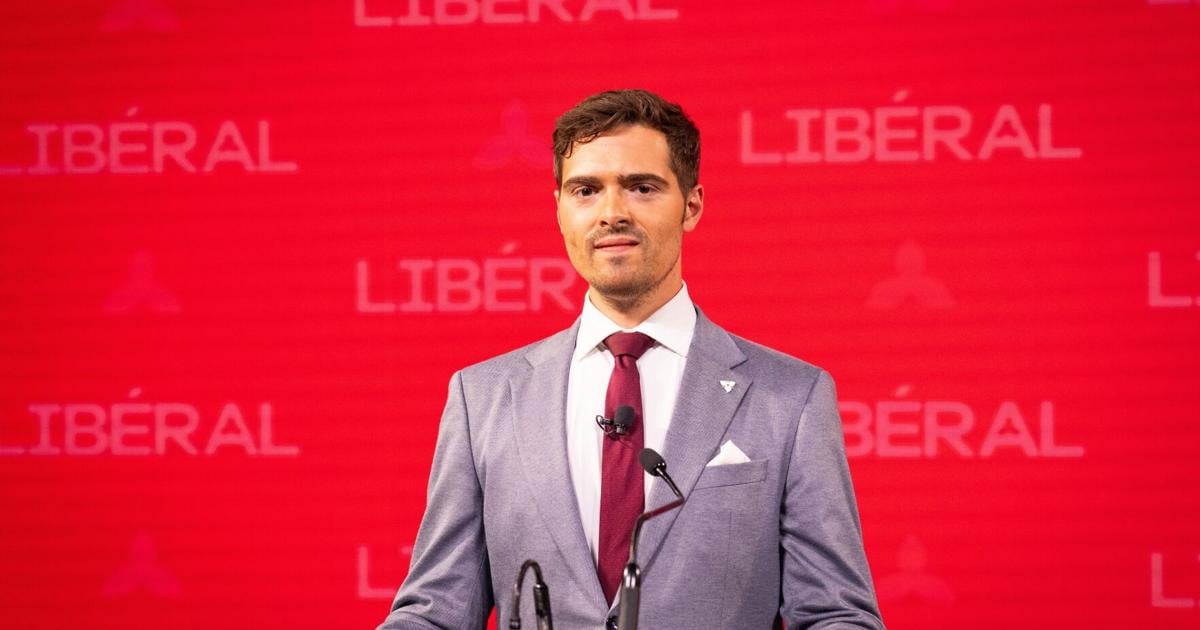
Ontario Liberal Party leadership candidate Eric Lombardi prior to the Ontario Liberal leadership debate in Brampton, Ont, on Monday, August 10, 2026.
Eric Lombardi is a former Ontario Liberal leadership candidate and the founder of More Neighbours Toronto, a housing advocacy organization. He works in financial services and technology and writes regularly on Ontario policy.
This week I withdrew from the race to lead the Ontario Liberal party. Plenty of people told me when I started that running was a crazy thing to do (it was). It was still completely worth it.
Housing is what first brought me into politics, and the longer I worked on it, the clearer it became that our housing crisis is now more a provincial problem than a municipal one. From there my focus expanded to include economic growth and infrastructure, and above all the milestone recession that is delaying young Ontarians from buying a home or starting a family.
Solutions to these big problems exist, but they require politically difficult changes.
I stepped into the arena because I believe we need more leaders focused on fixing problems for the long term. I want to reflect on what I learned in case it encourages someone else to try too.
What surprised me most was how many volunteers, donors and people from industry came forward because they believed the ideas we were putting forward. Riding associations across the province also reached out early and gave an unconventional candidate a genuine hearing.
I also learned a lesson about organizing that I wish I had understood sooner. My background is in technology, where the goal is usually to accomplish something with as few resources as possible. Politics almost works the opposite way, because the real work is making as many people as possible feel useful in pursuit of a shared goal.
That connects to something else I learned. Our campaign ran on substance, and we released a fully costed platform that I believe is one of the most detailed documents put forward in Ontario politics in some time. We travelled the entire province, built unique interactives including for high speed rail, released over 20 video explainers, accepted over 500 donations, and met with thousands of Ontarians. But voters aren’t only asking how our problems will be solved. They want a leader they can trust, who understands people like them, and has the credibility to lead a government.
Ultimately, I couldn’t make a strong enough case for why now. Many members told me some version of the same thing: they loved my thinking and want my ideas in the party, but would like to see me gain more experience. But in running, I’ve gained experience too.
Some of what I learned was harder to accept.
Social media rewards conflict far more than the sincere conversations that actually earned me support in person. At the same time, our political culture, including within my own party, can punish someone for the wrong word more than it rewards them for an honest thought. Politicians end up pulled toward provocation on one side and caution on the other, and candour gets squeezed out in between.
The public wants authentic and honest leaders in theory, but social and traditional media environments too often punish these traits in practice, which creates a strong temptation toward canned communications.
Furthermore, as a younger candidate, your mistakes tend to be read as proof of inexperience rather than as ordinary blunders. I built much of my public voice online and chose to keep using it during the campaign, which often helped. But there were times when I drifted from being authentic. It’s important to take discipline seriously, and find the balance between speaking candidly while holding yourself to a higher standard.
For young people thinking about running, one practical piece of advice is to start with specific problems rather than the biggest conceptual ones. Our most-watched videos were not about housing or the economy, but about grade inflation in Ontario’s schools, the water crisis in Waterloo and twinning the Trans-Canada Highway up north.
It also helps to remember that you don’t need to win to change minds or shape the agenda, as I believe I have done within the Ontario Liberal party.
I am also proud to endorse my former competitor, Lee Fairclough. Over these months I have watched her grow enormously as a candidate by putting in the work, and I’ve seen how she welcomes different perspectives and uses them to sharpen her own thinking, which is rarer in politics than it should be. This race taught me that good ideas need a leader who can build a team and bring people along, and I believe Ontarians will come to respect Lee’s leadership as I have.
This isn’t the end for me, and I know I still have a lot of growing to do. If you are young and frustrated with where this province is heading, I hope you raise your hand, because Ontario can still win and it needs more of us willing to make it better.
Error! Sorry, there was an error processing your request.
There was a problem with the recaptcha. Please try again.
You may unsubscribe at any time. By signing up, you agree to our terms of use and privacy policy. This site is protected by reCAPTCHA and the Google privacy policy and terms of service apply.
Eric Lombardi is a former Ontario Liberal leadership candidate and the founder of More Neighbours Toronto, a housing advocacy organization. He works in financial services and technology and writes regularly on Ontario policy.
Opinion articles are based on the author’s interpretations and judgments of facts, data and events. More details