Impeachment Committee chair confident legal challenges will not derail inquiry - IOL
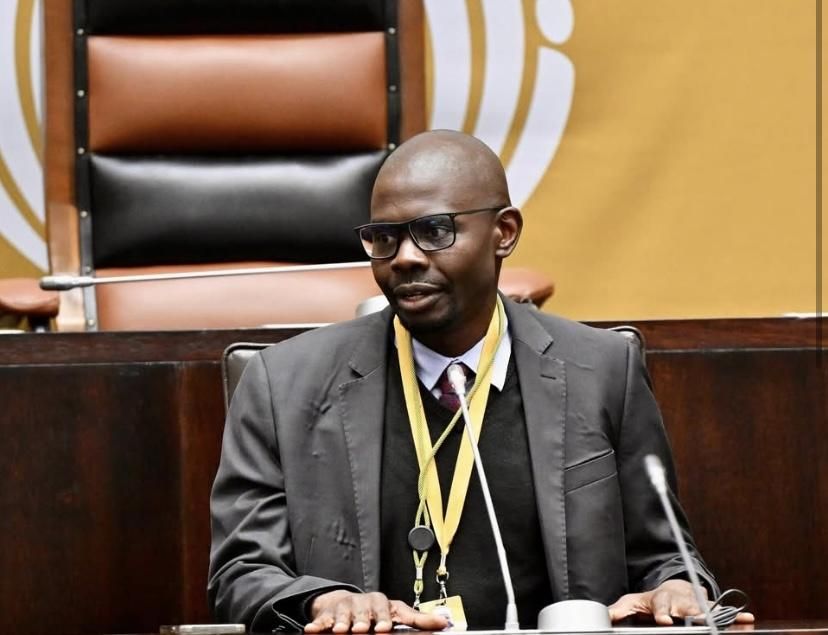
Chairperson of Parliament's Impeachment Committee Makashule Gana is confident that the committee will finish its work once the legal challenges have been resolved.
Impeachment Committee Chairperson Makashule Gana is confident that the committee will complete its work despite the several legal challenges that it has faced since its establishment.
The committee was constituted in June to conduct a formal inquiry into whether President Cyril Ramaphosa should be removed from office over the 2020 Phala Phala farm scandal.
Almost four months since its first meeting on June 1, the committee is yet to finalise and adopt its terms of reference, as it has faced a number of legal challenges that have slowed down its work.
Gana said he was confident that ultimately the committee will complete its work.
"I’m very confident the work of the committee will be done,” he said.
“But you need to accept that there are things that are outside of your control. I don't know what the court ruling in so far as the review application of the president is going to say. That review application will say whatever it says; I'm not in control of it. We operate within the legal space that we find ourselves in.”
Gana said the committee was for now doing the work that was within its control.
“Issues relating to court processes are the issues that are outside of our control. What’s in our control, we will do; what's outside of our control is outside of our control. There's nothing we can do about things that are outside our control.”
Gana said the committee’s intention is to adopt the terms at its meeting next week.
Political parties represented in Parliament have made written submissions in this regard, and their inputs will be consolidated before the committee adopts those as its terms of reference.
Gana said because several committee members were themselves chairpersons of other parliamentary committees, it was difficult to secure their availability for the Impeachment Committee’s meetings, and hence the bulk of its work was done during the constituency period when there would be no clashes with other committees.
Parliament did not set a deadline for the Impeachment Committee to conclude its work, but Gana explained that the rules require them to deal with the matter “as quickly as possible” within the confines of the law.
“If there were no legal challenges, we would be sitting now knowing the witnesses and so forth, but if there are things that you can't control, then you accept as such.
“The rule says we must deal with this matter without delay, so we are dealing with this matter. But if the court says ‘you can't hold public hearings’, we can't disregard what the court says.”
On Monday, Gana filed an answering affidavit to the EFF and the African Legal Professional Association’s legal challenge of the committee’s decision to rescind its recommendation of Advocate Thandazani Madonsela as evidence leader after objections were raised.
The EFF approached the Western Cape High Court earlier this month, saying it was doing so to safeguard the independence of Parliament from executive control, and to strengthen Parliament’s duty to hold the executive to account, without fear or favour.
While the Impeachment Committee initially resolved to appoint Madonsela as its evidence leader, it rescinded its decision after Ramaphosa objected to the appointment, citing conflict of interest concerns.
The committee has previously faced an urgent court application instituted by Ramaphosa, who was seeking to interdict its proceedings. The interdict was granted, prohibiting the committee from going ahead with the public impeachment hearings, pending a determination of the president’s review.
The substantive application to review and set aside the Independent Panel’s report was heard earlier this month, and a court decision in this regard is still pending.
The committee was established under Section 89 of the Constitution, which outlines the precise grounds and procedures by which the National Assembly may remove a president from office.