
In Japan’s Asian Games, China’s growing footprint — on field & behind the scenes - The Indian Express
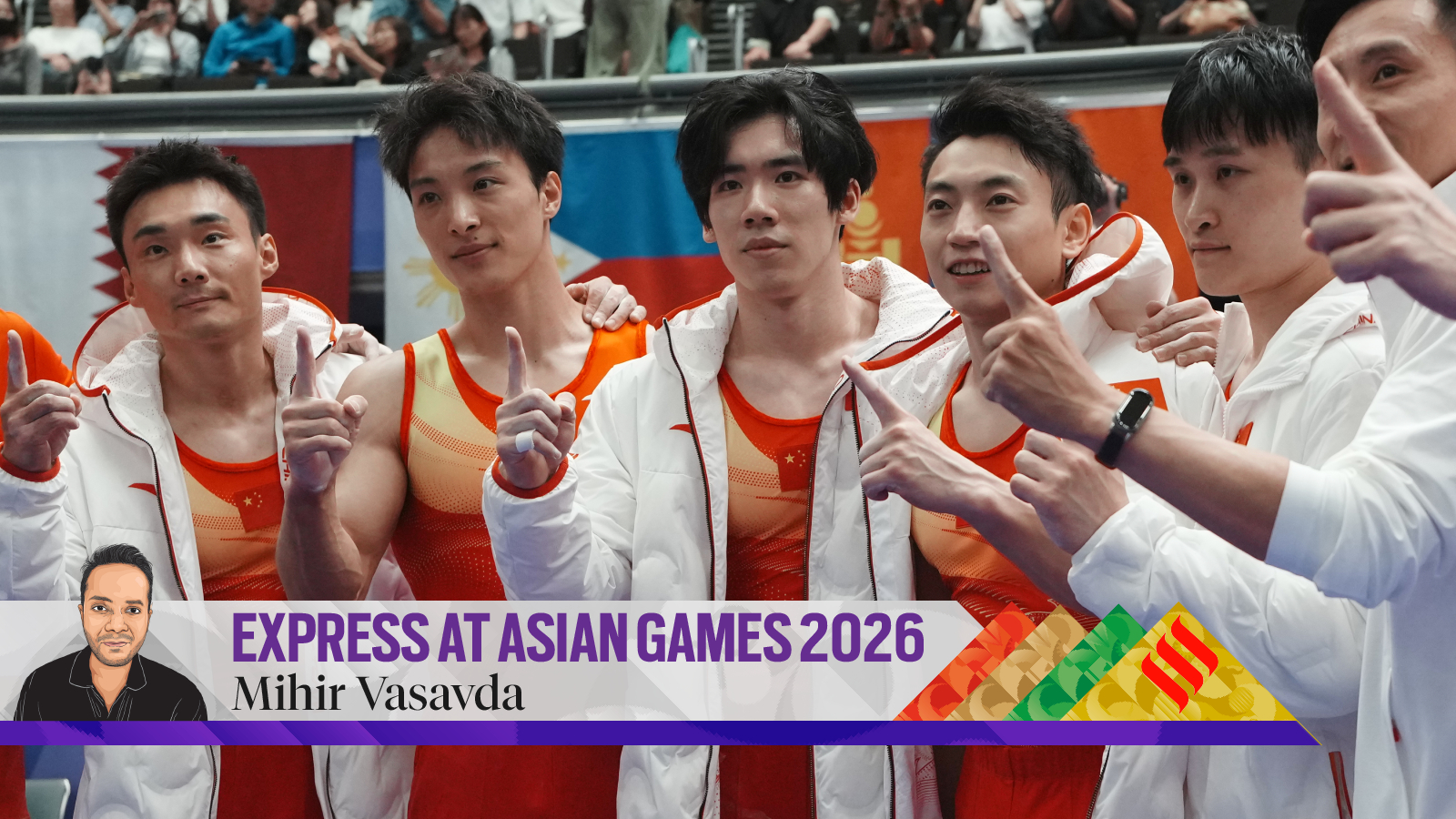
China arrived at the Aichi-Nagoya Asian Games as the continent’s dominant sporting power. With 38 medals, including 23 gold, they are already leading the medal table, a position they have occupied at every edition since 1982.
But there is another Chinese dominance at these Games, one that is less visible. Japan is hosting the Games, but China’s corporate presence is spread across different layers of the event, much of it away from the competition arenas.
A Shanghai-based company is the host broadcaster, another Chinese company is involved in the opening and closing ceremonies, and there are others that have been roped in for supply of temporary power, venue technology, LED screens and sporting equipment.
The most prominent is the China Media Group-International Media Port (CMG-IMP), the host broadcaster appointed by the Aichi-Nagoya Asian Games Organising Committee (AINAGOC) and approved by the Olympic Council of Asia (OCA).
CMG-IMP is producing the international television footage and providing facilities and services to rights-holding broadcasters, including the beauty shots of Nagoya and Aichi prefecture. According to the OCA, 3,858 personnel are working for the host broadcaster, which is providing live coverage of 28 sports while leaving out 15.
This is the first time that the Shanghai-based operation has been named the host broadcaster for an event held outside China. Hong Kong-based outlet Bastille Post reported that the CMG is also taking some of the production away from Japan, and doing it remotely from China.
The broadcasting contract itself has an unusual history. AINAGOC’s first host-broadcast contract went to ISBHAO, a consortium involving Spain’s International Sports Broadcasting and China’s Yahao Sports Culture Media. This contract was later terminated, and AINAGOC conducted a new selection process. CMG-IMP eventually won the new contract for a reported sum of 5.156 billion yen (approx Rs 314 crore).
AINAGOC and OCA did not respond to a questionnaire sent by The Indian Express on the host broadcaster’s contract as well as the broader Chinese involvement in the Games’ delivery.
OCA president Sheikh Joaan bin Hamad Al-Thani of Qatar told Chinese state media CGTN on Saturday: “What we have seen is impressive. The assessment would be at the end of the Games, we will see how things go in the next 17 days but what I have seen is really, really impressive.”
Then there is Zhejiang Dafeng Industry, based in China’s Zhejiang province, which is an AINAGOC Tier 2 official partner and “responsible for the planning, production and operation of the opening and closing ceremonies of the 20th Asian Games as well as digital content creation, the design and production of the cauldron, performances and cultural programmes”, according to the OCA statement earlier this year.
Dafeng, the OCA said, was listed on the Shanghai Stock Exchange in 2017. The company was also involved in the Hangzhou Asian Games in 2023.
The same pattern — of companies involved in the Hangzhou Asian Games also being a part of the Aichi-Nagoya operations — appears elsewhere. Beijing-based Starting Future Technology is an official supplier for venue technology operations. Its previous event experience includes the Hangzhou Asian Games and the Harbin Asian Winter Games.
Shanghai Yude Energy is a partner for temporary power supply at the Games. The organisers said the deal with Shanghai Yude, that also supplied temporary power at the previous edition of the Games, does not include Japan’s regular public electricity supply and is restricted only to Games operations.
There are Chinese suppliers inside the competition venues, too. Shandong Taishan Sports Equipment is supplying equipment across nine sports — boxing, wrestling, gymnastics, taekwondo, karate, wushu, kurash, jujitsu and archery.
Shenzhen Transtech Display Technology is an official supplier of LED screens across venues.
The Chinese presence also extends into newer parts of the Games. Tencent Technology (Shenzhen) Company Limited is an official supplier for esports solutions, with esports returning as a medal sport after its debut at Hangzhou. Sportswear company 361° is a “prestige partner” of the Games, making Aichi-Nagoya its fifth consecutive Asian Games partnership after Guangzhou, Incheon, Jakarta-Palembang and Hangzhou.
Meanwhile, the host — Japan — also has its share of companies on the ground. The major areas that Japanese companies are involved in include transport, communication and other Games operations.
Over the course of a 18-year-long career, Mihir Vasavda has covered 2010 FIFA World Cup; the London 2012, Tokyo 2020 and Paris 2024 Olympic Games; Asian Games in 2014 and 2022; Commonwealth Games in 2010 and 2018; Hockey World Cups in 2018 and 2023 and the 2023 ODI Cricket World Cup. ... Read More
