India chose a measured response: Swami Amritaswarupananda on Operation Sindoor
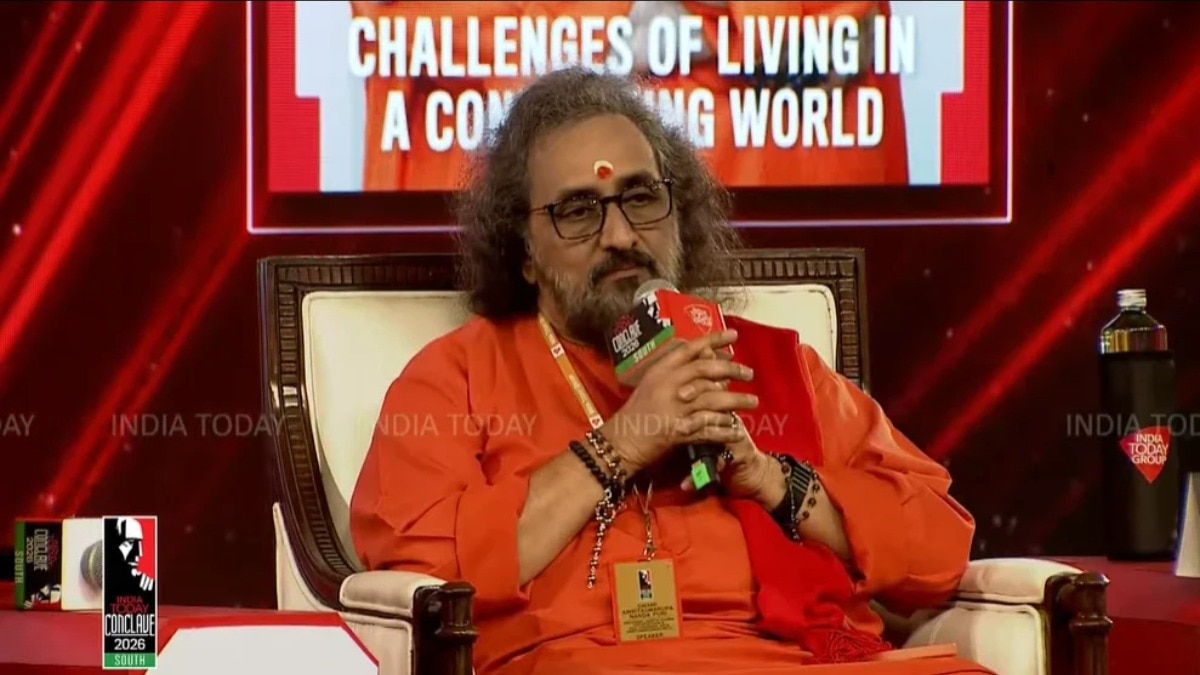
At a time when the world is grappling with wars across multiple fronts, Swami Amritaswarupananda Puri, President of Amrita Vishwa Vidyapeetham and and Vice-Chairman of the Mata Amritanandamayi Math, on Wednesday described Operation Sindoor as an example of how a nation can respond to repeated terror without allowing retaliation to spiral into a full-scale war.
“When an adversary repeatedly pursues terror, does a government not respond? Views may differ, but unlike so many conflicts continuing today, Bharat chose to deliver a measured response and then chose to halt hostilities before it escalated to full-on war,” he said, while reflecting on the difficult balance between responding to violence and preserving peace.
Yet, for Amritaswarupananda, the end of fighting cannot be mistaken for the end of conflict's human cost. “We must not forget families who saw their loved ones being gunned down. Their misery did not end with ceasefire,” he said.
Drawing lessons from the Mahabharata, the Kalinga War, Operation Sindoor and conflicts unfolding across the world, he said wars may begin for different reasons, but their consequences rarely remain confined to the battlefield.
His remarks came during a session on world peace at India Today’s Conclave South 2026, where he explored whether peace can ever be absolute in a world where violence, competing interests and conflict remain a reality.
In a world fractured by wars, Amritaswarupananda began the session with a deceptively simple question: who broke the world in the first place?
“There is no customer number, so we will have to repair world peace ourselves,” he said, arguing that peace cannot be treated as something that governments, institutions or international bodies alone are responsible for creating.RETHINING PEACE AND NON-VIOLENCE
Amritaswarupananda said that for centuries, peace has been closely associated with non-violence, with teachings across religions placing ahimsa and restraint at their core.
The Mahabharata says “ahimsa parama dharma”, while Christ taught against repaying harm with harm, and the Quran too echoes the importance of peace.
“But how many of us actually live by these teachings?” he asked.
The question, he said, becomes more complicated when violence is repeatedly directed at people or nations.
If complete purity is difficult for individuals and institutions, he said, perhaps complete peace too remains an ideal.
“Can any religion, leader be completely pure?” he asked. “Peace in this world can ever be relative. We need to accept this first.”
Rather than seeking to eliminate every difference, he said, the focus should be on learning to live with those differences while recognising what people have in common.
“Live and let live,” he said, suggesting that genuinely following this principle could help end conflicts at every level, from wars between nations to family feuds.
During the session, Amritaswarupananda also drew lessons from the Mahabharata, the Kalinga War and Operation Sindoor to examine how conflicts emerge when avenues for peace close. Wars, he said, rarely remain confined to battlefields, with their consequences spreading through economies and communities.- Ends