India launches three new AI models, including two that work without the internet
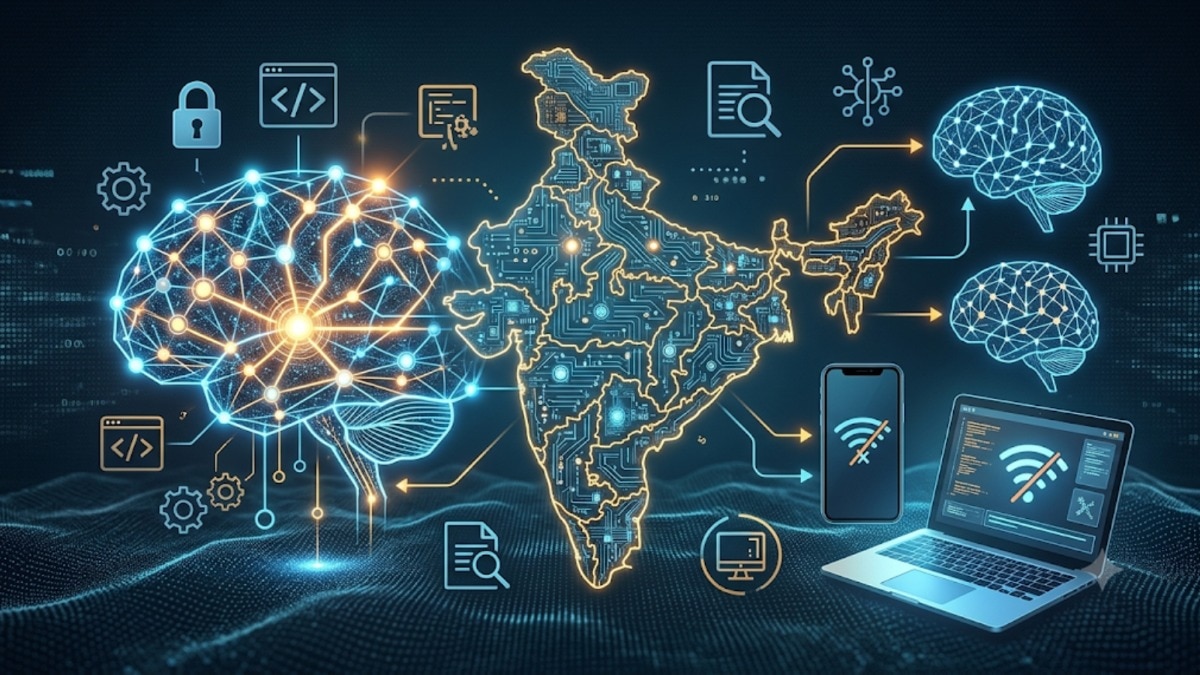
India has taken a massive step toward self-reliance in the technology sector. The IT ministry, with backing from the IndiaAI Mission, has just introduced three brand-new artificial intelligence models to the public. These tools were developed within the country to focus on Indian languages and local business needs, reducing the nation's reliance on technology from abroad.
The three models, named EKA-1, Dhir 2B, and Dhir 5B, were officially showcased during an event in New Delhi. Government officials, including IT Ministry Secretary S. Krishnan, noted that these tools are built to lift productivity across government offices, research facilities, schools, and private industries.
The most exciting part of this launch is that two of these models are compact enough to work directly on your devices without any internet connection.What does EKA-1 offer?
EKA-1 is the largest of the newly launched tools, created by a Bengaluru-based startup named Soket Labs. It is a highly powerful, open, and sparse hybrid language model designed to handle complex tasks like advanced mathematics, software programming, logical reasoning and acts as an AI agent that can complete a chain of tasks on its own.
The sheer size of EKA-1 is impressive. It is powered by 26.3 billion parameters and was trained on a massive 7.5 trillion tokens of text data. Its biggest selling point, however, is its language flexibility.
EKA-1 can easily understand English as well as all 22 scheduled Indian languages. Because of its heavy-duty reasoning skills, Soket Labs specifically designed this AI with major sectors like banking, financial services, and cybersecurity in mind.
While EKA-1 is a massive system, the Dhir 2B and Dhir 5B models are built for a totally different use. Created by ZenteiQ AiTech Innovations, these two open-source models are much smaller and are meant for local, everyday use. They can understand English along with 10 different Indian languages.
Instead of focusing on heavy coding or maths, the Dhir models are built to easily search through documents, pull out important information, and automate boring, routine jobs. While the exact parameter counts were not explicitly stated at launch, the numbers in their names likely point to their size in billions, keeping them compact enough for everyday gadgets.Why does working offline matter?
The biggest game-changer for the Dhir 2B and Dhir 5B models is that they do not need an active Wi-Fi connection or a massive cloud server to work. You can download them directly onto a mobile phone or laptop and run them entirely offline.
When an AI works locally on your device, your private data never leaves your machine. This makes the technology incredibly secure and attractive for organizations that handle highly confidential material.
Because of this strict built-in privacy, the Dhir models are perfect for sensitive fields like defence, government offices, and the education sector, where data security carries a lot of weight.Government Support for Local Tech
Building and training large AI models from scratch is extremely expensive because it demands heavy computing power from supercomputers. To help these Indian startups compete with global giants, the government's IndiaAI Mission stepped in to provide subsidized access to computing infrastructure and fund their research costs.
This backing is a major milestone for India's push to build homegrown technology that caters directly to the nation's unique languages, business environments, and security requirements.- EndsAlso Read | Anthropic warns it is nearing Self-Building AI, what it means for the futureAlso Read | Anthropic introduces FlashProve, a new open-source tool to verify AI modelsAlso Read | OpenAI says AI has made three major breakthroughs in maths, physics and computer science
I am a journalist covering the ever-evolving consumer tech landscape. From smartphones to laptops, I track the latest drops and decode the data to see if the newest gadgets are worth the hype.