India to boost fighter, helicopter engine production with new HAL capacity
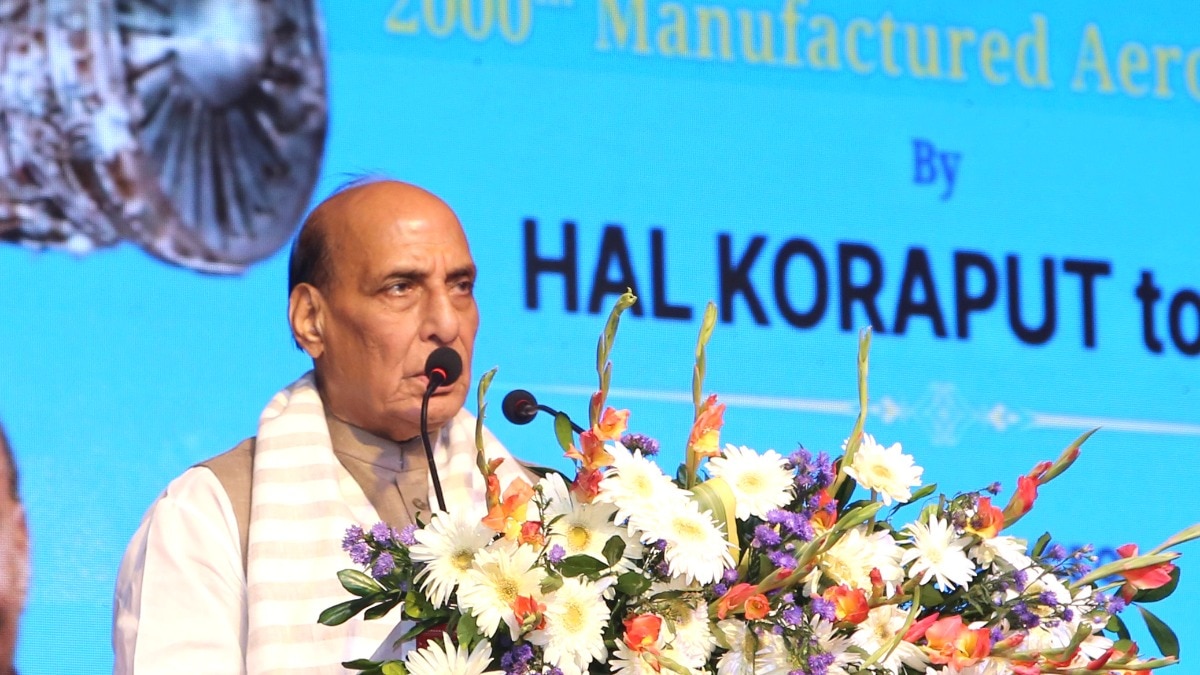
Hindustan Aeronautics Limited (HAL) will increase its annual production capacity for Su-30MKI fighter engines from 30 to 50 and set up a second Shakti engine production line for indigenous helicopters, Defence Minister Rajnath Singh announced on Tuesday.
Singh made the announcement at HAL’s Koraput Division in Odisha, where he witnessed the delivery of its 2,000th aero-engine.
The capacity expansion for AL-31FP engines, which power the Indian Air Force’s Su-30MKI fleet, will cost Rs 335 crore. The new Shakti line will cost Rs 218 crore and produce up to 100 engines a year once fully established by 2028-29.
Shakti engines power helicopters including the Dhruv Advanced Light Helicopter and the Prachand Light Combat Helicopter.
The government placed an order for 240 AL-31FP engines with HAL in 2024. Singh said the company delivered the first engine ahead of schedule despite supply-chain disruptions and raw-material challenges.
HAL has delivered 63 engines against a target of 60 by the end of the second year, he said.
Established in 1964, the Koraput Division has manufactured engines for the MiG-21, MiG-27, MiG-29 and Su-30MKI. It has also overhauled more than 9,000 engines, extending their service life.PUSH FOR INDIGENOUS ENGINES
Singh said India needed its own aero-engine design, manufacturing, testing and maintenance capabilities, particularly for the Advanced Medium Combat Aircraft (AMCA) programme.
He highlighted a proposed investment of around Rs 5,000 crore, plans for India’s first indigenous high-thrust engine testing facility and work with Mishra Dhatu Nigam Limited (MIDHANI) to develop raw materials domestically.
Describing the engine as the “heart” of an aircraft, Singh said reliable propulsion was essential for advanced aircraft systems to function effectively.
He called for sustained investment in engine development, specialised testing and critical materials, along with greater participation by private companies, MSMEs and research institutions.- Ends
Born in Pauri district of Uttarakhand, Manjeet Negi did his early schooling from his village school near Rishikesh and then moved to the town for secondary education. Later, he did his graduation from Hemavati Nandan Bahuguna University. In the year 2000, he did his journalism diploma from Kurukshetra University and started his career with Doordarshan News and started reporting on defence forces from the 2001 Bhuj earthquake. In his career as a defence correspondent, Negi has had the opportunity to report exclusives from world's highest battlefield Siachen Glacier in the north to the Andamans in the South and from the Rann of Kutch in the west to the Arunachal Pradesh border with China in the East.
A regular news-breaker on matters of national security and military affairs, Negi considers the coverage of he Kedarnath tragedy of 2013 as the highest point of his career. During the grave disaster at Kedarnath in June 2013, Manjeet Negi was the first and only TV reporter who walked for 55 Kms on the hilly track to reach the Kedarnath shrine. Spending his first night in the complex amidst several hundred dead bodies around him, Negi says he saw Lord Kedar in his dream. After the Kedarnath disaster, the writer got another opportunity to cover another disaster in the Nepal earthquake in 2015 for the Aaj Tak channel. During the reporting of that disaster for about 10 days, the writer got an opportunity to witness and report the large scale relief and rescue operations undertaken by the Indian Army and the Indian Air Force.
Besides reporting, he is also a skilled mountaineer. With Nehru Institute of Mountaineering and Garhwal Regiment, he has undertaken mountaineering expedition to Satopanth via Gomukh. Accompanying the Mount Manaslu mountaineering expedition of a Garhwal Regiment unit, he also reported about the expedition. He has also scaled the Dronagiri mountain near Joshimath in Uttarakhand. Manjeet Negi has also been honoured with a special award by the Union Home Minister, Shri Rajnath Singh for his reporting of Kedarnath disaster. He was awarded the best reporter award for his coverage of Nepal earthquake by India Today Group. At present, the writer has been working as Editor with Aajtak Channel of India Today Group.