Indian scientists discover how Mars 'breathes' and its climate changes
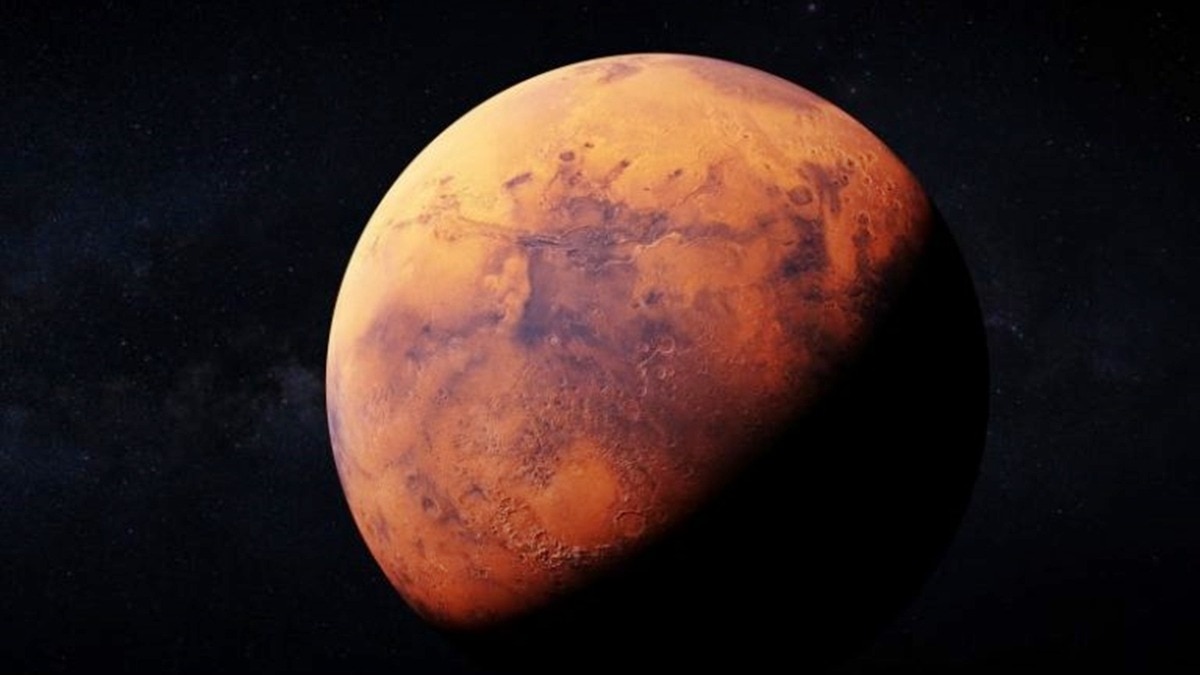
Mars may look like a frozen, barren world from space, but beneath its dusty surface lies a planet with a surprisingly dynamic climate.
Indian scientists have now mapped how temperatures rise, fall and ripple across the Martian surface, offering new clues about how the Red Planet’s thin atmosphere circulates and how its vast landscapes influence its weather.
The study, published in Current Science, uses observations from the Emirates Mars Mission’s Hope spacecraft to examine surface temperatures across two of Mars’ largest impact basins, Hellas and Argyre.
Scientists from the Physical Research Laboratory (PRL), Ahmedabad, analysed observations from the Emirates Mars Infrared Spectrometer (EMIRS), an instrument that measures infrared radiation from Mars.
The results reveal dramatic temperature swings. Across the studied regions, surface temperatures can range from around 150 Kelvin (-123°C) to nearly 295 Kelvin (22°C).
During summer, temperatures can approach 300 Kelvin, or about 27°C, while winter can push the surface down to around 160 Kelvin (-113°C).
The enormous swings are partly a consequence of Mars’ extremely thin atmosphere, which is unable to store and redistribute heat as efficiently as Earth’s atmosphere. As a result, the Martian surface heats rapidly under sunlight and loses heat just as quickly after sunset.
Mars also experiences a major seasonal imbalance. Its orbit around the Sun is considerably more elliptical than Earth’s, and the planet reaches its closest point to the Sun during southern summer.
This makes southern summer particularly intense, with temperatures in some regions about 25 Kelvin higher than during the corresponding northern season. Mars as captured by the Emirates Hope mission. (Photo: UA Space Agency)
But the researchers found that Martian temperatures do not simply rise and fall with the seasons. They also form large-scale patterns that resemble waves moving around the planet.
These so-called zonal waves provide scientists with an indirect window into Mars’ atmospheric circulation, almost like watching ripples on a pond to understand what is happening beneath its surface.
The contrast between the Hellas and Argyre basins was particularly striking.
Argyre was dominated by a large-scale wave-1 pattern, while Hellas showed more complex wave-2 and wave-3 patterns depending on the season. Scientists suggest that the immense depth and distinctive topography of these basins play an important role in shaping the temperature patterns.
The researchers also compared the observations with predictions from the Mars Climate Database. While the model broadly reproduced the observed patterns, it was often around 10 Kelvin cooler than the EMIRS measurements.
The findings provide a detailed picture of Mars’ thermal behaviour and atmospheric dynamics.
Such knowledge could become increasingly important as humanity plans future robotic and crewed missions to the Red Planet, where understanding extreme temperature changes and atmospheric behaviour will be critical for landing sites, habitats and surface operations.- EndsPublished By: Sibu Kumar TripathiPublished On: Sep 15, 2026 11:10 IST