Indian startup Astrobase plans to launch 1,000 tonnes into space every year
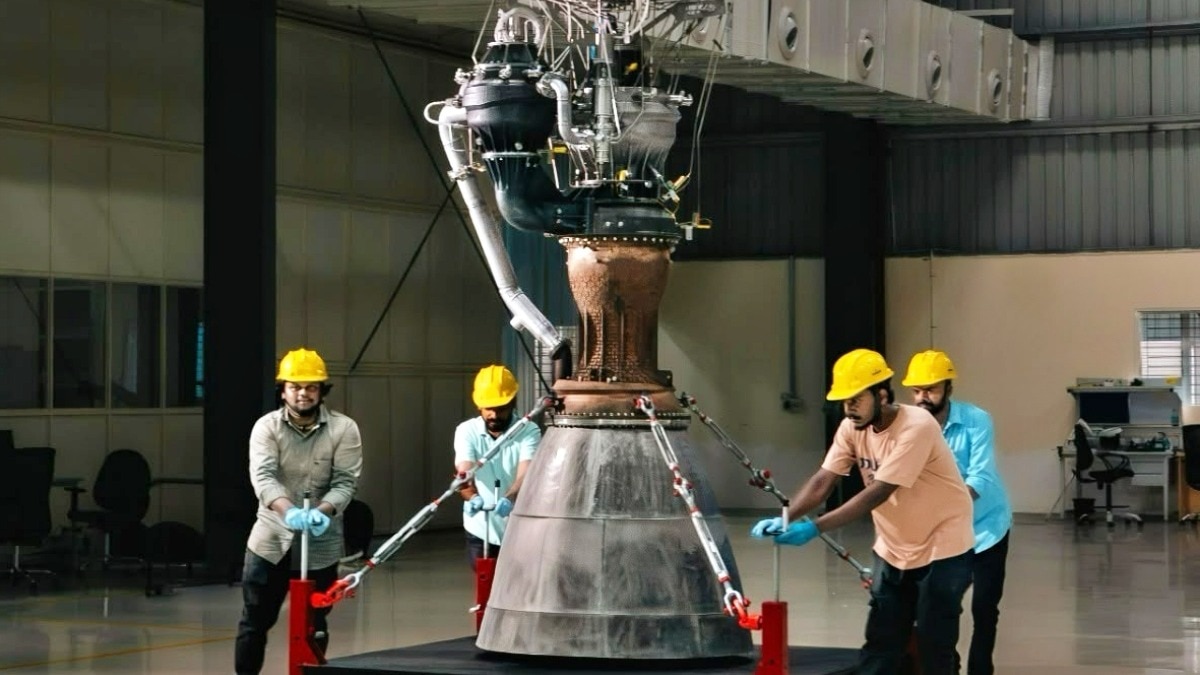
Indian space startup Astrobase is building its launch vehicle around an ambitious target: increasing India’s annual capacity to send payloads into orbit to 1,000 tonnes.
Astrobase founder Nereraj Khandelwal, in an exclusive conversation with IndiaToday,in, said that the amount of payload a country can launch is closely linked to the size of its space economy. He said the US launched around 2,700 tonnes in 2025, compared with about 370 tonnes for China and just 9.5 tonnes for India.
“Everything depends on how much tonnage you can send to space,” Khandelwal said, adding that launch capacity is also critical for national security and infrastructure.EVEREST — India’s first full-flow staged combustion (FFSC) rocket engine.80-tonne class. Fully integrated. Designed and manufactured in Bengaluru, India. pic.twitter.com/F8fjCsFntk— Astrobase Space (@astrobase_space) August 7, 2026
Astrobase is designing its rocket, engines and supporting infrastructure backwards from the 1,000-tonne target. At the centre of its effort is Everest, a methane-powered rocket engine that the company recently unveiled, and has been fully integrated. It is now undergoing physical testing.
The company has also built its own methane engine testing facility. Khandelwal said the facility is ready and will allow Astrobase to rapidly manufacture, test, identify problems and modify its engine design.
“Once the engine design is frozen, every engine we manufacture will undergo full testing before integration into the rocket,” he said.
Astrobase is targeting production of around 50 engines a year, requiring the testing of approximately one engine every week.
Everest will power a two-stage launch vehicle using the same engine architecture for both stages, including the second stage operating in vacuum. Khandelwal said this approach allows the company to mature a single engine design rather than developing multiple propulsion systems. The company has built its own methane engine testing facility. (Photo: Astrobase)
The engine uses methane instead of the kerosene commonly used in conventional liquid rocket engines. Methane is cryogenic and must be maintained at around minus 160 degrees Celsius, making its handling and testing more challenging.
However, Khandelwal said methane offers advantages for reusable launch systems. Everest also uses full-flow staged combustion, a complex rocket-engine architecture designed for high efficiency.
According to Khandelwal, the architecture is used by only a handful of companies globally and could help increase the payload capacity of the rocket.
Astrobase is targeting a manufacturing time of about 1.5 to two months for each engine, with a significant portion of the engine produced through 3D printing.It was cool explaining PM Modi about the Astrobase’s engine. He said - Tum itna bada bada soch rahe ho, log Vishwas karte hai kya?I said - Shuru mai nahi karte lekin jab progress hoti h tab krte hai.Then he said - Investaro ke saath kaisa h? I said we have good investments pic.twitter.com/VpbXUr5EI2— Neeraj Khandelwal (@neerajKh_) August 21, 2026
Reusability is being incorporated into Everest and the launch vehicle from the beginning. But Khandelwal said achieving reliable booster landings would require repeated flight experience, with the company expecting it could take five to 10 flights before successfully landing the first stage.
Astrobase does not plan to develop a much smaller suborbital rocket before attempting its full-scale vehicle, although hop tests will be conducted before the orbital flight.
Khandelwal said the first hot-fire test is “not very far away”, but the company is not announcing a specific date yet as component and subsystem testing continues.- Ends