
India's answer to bird flu: A vaccine for the chickens, but will it work?
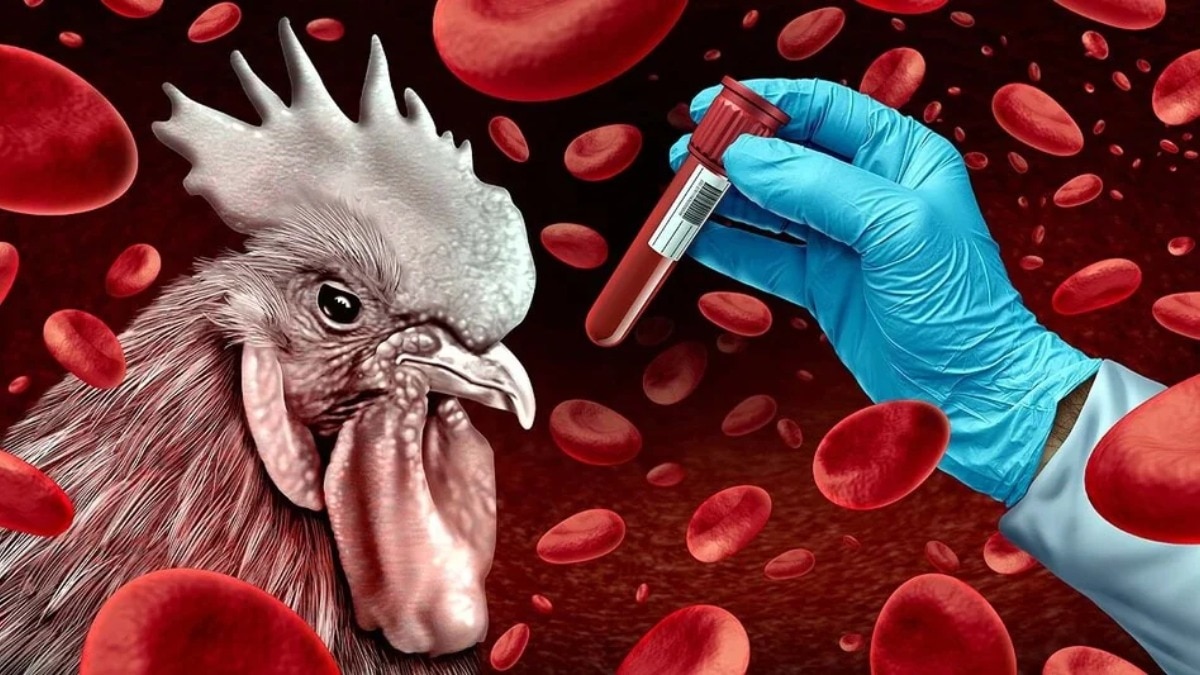
India has developed its first indigenous vaccine against H5N1 bird flu for chickens, marking a significant step in the country's efforts to tackle recurring outbreaks of avian influenza.
Developed by scientists at the Indian Council of Agricultural Research-National Institute of High Security Animal Diseases (ICAR-NIHSAD) in Bhopal, the inactivated vaccine targets the H5N1 Clade 2.3.2.1a strain circulating in the country. Union Agriculture Minister Shivraj Singh Chouhan is scheduled to dedicate the vaccine to the nation on November 20.
The development comes after years of research and trials, and could offer India's poultry industry another tool to tackle a disease that has repeatedly resulted in bird deaths, mass culling and financial losses.
Between 2006 and 2021, India recorded 341 bird flu outbreaks across 24 states. Of these, 284 were attributed to H5N1 and 57 to H5N8, according to a report by The New Indian Express.
The new vaccine also comes at a time when concerns are growing about H5N1 spreading beyond birds. The strain has been detected in other animal species, including mammals, alongside recent human cases.
But how much can vaccinating chickens actually help? Can it prevent the virus from jumping to humans? And should people be worried about eating chicken and eggs?
H5N1 is primarily a bird virus, but it can occasionally cross the species barrier and infect humans. Most human infections reported worldwide have been linked to direct or indirect exposure to infected birds.
According to Dr Amit Saraf, Director of Internal Medicine, Jupiter Hospital, Thane, vaccinating poultry could play an important role in reducing the risk of human infections.
"Yes, vaccination of poultry can be important in decreasing the risk of H5N1 infection in humans. Protecting birds against the virus can help reduce outbreaks in poultry populations and virus levels in the environment. This in turn reduces the risk of people coming into contact with infected birds," he said.
However, vaccination alone cannot eliminate the threat.
"But vaccines aren't the whole answer. It has to be backed up by routine testing, farm level biosecurity, proper disposal of infected birds and monitoring of poultry health," Dr Saraf said.
He added that vaccination can reduce the severity of an infection and the amount of virus shed without necessarily preventing all infections.
"The greater public-health benefit comes from combining vaccination with strong disease surveillance and rapid early outbreak control," he explained.IS INDIA AT RISK OF A BIRD FLU PANDEMIC?
The possibility of H5N1 spreading more widely has raised concerns about another pandemic. However, Dr Saraf said India needs to remain cautious without triggering unnecessary alarm.
"India needs to be cautious, but there is no cause for alarm among the general public at this stage," he said.
Poultry farming, backyard rearing and live bird markets can create opportunities for human exposure to infected birds. This makes surveillance, early detection and reporting of unusual bird deaths particularly important.
"The possibility of a pandemic can never be entirely excluded, but the evidence so far does not indicate that we are on the brink of one," Dr Saraf added.CAN BIRD FLU SPREAD FROM ONE HUMAN TO ANOTHER?
One of the biggest concerns surrounding H5N1 is whether the virus could eventually acquire the ability to spread efficiently between humans.
Dr Saraf said there has been no documented sustained human-to-human transmission of H5N1 so far.
For this to happen, the virus would need genetic changes that allow it to attach more efficiently to receptors in the human respiratory tract, replicate in human cells and spread through respiratory droplets or aerosols.
"Such changes can happen either by mutation or by genetic reassortment. That's why scientists are watching the virus closely, studying any changes in its behavior," he said.
He also pointed out that a virus causing severe illness in an individual does not automatically mean it can spread easily between people.CAN YOU GET BIRD FLU FROM EATING CHICKEN OR EGGS?
With the announcement of India's new poultry vaccine, consumers may also wonder whether eating chicken or eggs could expose them to H5N1.
Dr Saraf said there is no evidence that people can contract H5N1 from eating properly cooked chicken or eggs.
The greater risk comes from slaughtering or preparing poultry without sufficient protection, or coming into contact with infected birds, their secretions or contaminated surfaces.
Consumers should purchase poultry and eggs from reliable, regulated sources. Chicken should be cooked thoroughly, while eggs should be fully cooked rather than consumed raw or undercooked.
Raw poultry should also be kept separate from other food items. Hands, knives and chopping boards must be washed properly after handling raw chicken.
People should avoid handling sick or dead birds and report unusual bird deaths to local authorities.
Anyone who develops fever, cough, breathing difficulty or eye irritation after exposure to potentially infected birds should seek medical attention promptly and inform their doctor about the exposure.
India's indigenous H5N1 vaccine could strengthen the country's ability to control bird flu outbreaks. However, its wider impact will depend on effective vaccination, continued surveillance, farm-level biosecurity and rapid outbreak response. For consumers, proper cooking and food hygiene remain essential.- Ends
Vaishnavi has been chasing stories the way most people chase coffee, which means daily, relentlessly, and with an occasional dash of drama. From national infrastructure projects to festive rituals, she writes about everything. Apart from writing, she adores community animals and feeding them gives her a boost of endorphins.
She even bagged the 'Best Article on Animal Welfare' award from the Newspaper Association of India (NAI) which proves that her soft corner for four-legged friends also makes for hard-hitting journalism. She’s equally at home covering politics and pets, development and animal welfare, because why should journalism come in one flavour? Nature is her peace and food is her first love. She is also a follower of biographies.
When she isn’t writing, she’s usually plotting her next article in her head while sipping her cold coffee, binging on spiritual podcasts while driving, or hunting for the perfect metaphor, preferably one that doesn’t involve foods, though food show up often enough at work. She lives by one motto: Be Kind to All Kinds!


