India's killer diseases have changed, but TB and infections still won't go away
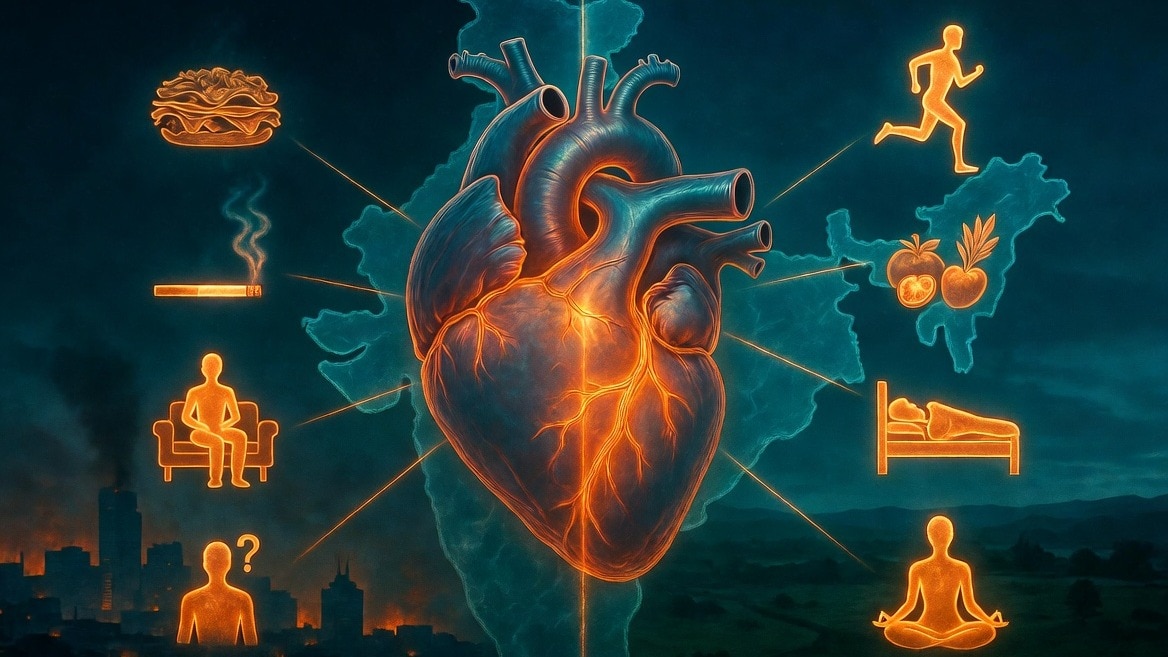
India’s health profile has undergone a dramatic shift over the past two decades. Diseases of the heart, lungs and metabolism now dominate the country’s mortality landscape, but infections that once defined India’s health burden have not disappeared.
The latest World Health Organisation (WHO) Global Health Estimates, covering 2000 to 2023, show that ischaemic heart disease has emerged as India’s biggest killer, with an estimated 138.5 deaths per 100,000 population in 2023.
Ischemic heart diseases are marked by reduced blood flow and less oxygen reaching heart muscles, mainly due to narrowed arteries that often lead to acute heart attacks, cardiac arrests and chronic heart failure.
Chronic obstructive pulmonary disease (COPD), stroke and diabetes followed, with death rates of 83.19, 74.8 and 49.01 per 100,000, respectively.
The change is stark when compared with 2000.
At the beginning of the century, tuberculosis and diarrhoeal diseases were the two leading causes of death, with estimated rates of 92.4 and 87.8 deaths per 100,000, respectively. By 2023, the mortality profile had tilted decisively towards chronic diseases.
Yet India has not reached a point where infectious diseases can be treated as a problem of the past. TB, diarrhoeal diseases and lower respiratory infections remain among the country's top 10 causes of death, alongside cardiovascular and metabolic diseases. Road injuries also remain a major cause of premature mortality.
The WHO groups causes of death into communicable diseases, non-communicable diseases and injuries. Its latest estimates show how these three categories increasingly coexist in India rather than replacing one another neatly.HEART DISEASE TAKES LEAD
The rise of ischaemic heart disease is perhaps the clearest marker of India's epidemiological change.
At 138.5 deaths per 100,000, its estimated mortality rate in 2023 was substantially higher than the rates of the other leading causes. Stroke, another cardiovascular disease, was responsible for an estimated 74.8 deaths per 100,000, making cardiovascular disease the dominant force within India's mortality profile.
COPD, at 83.19 deaths per 100,000, adds another major chronic disease burden.
The condition is closely linked to smoking and other exposures, including household and ambient air pollution.
A recent analysis of the Global Burden of Disease 2023 estimates found COPD, ischaemic heart disease and stroke among the largest contributors to tobacco-attributable deaths in India.
Diabetes, meanwhile, has moved far higher up the mortality rankings. Its estimated death rate reached 49.01 per 100,000 in 2023. The significance goes beyond deaths attributed directly to diabetes: the disease also raises the risk of cardiovascular, kidney and other complications.
The pattern reflects a country where people are living longer, urbanisation has expanded, lifestyles have changed and exposure to metabolic and behavioural risk factors has grown. Globally, too, the shift is unmistakable: WHO says eight of the 10 leading causes of death in 2023 were non-communicable diseases.INFECTIONS STILL PERSIST
India's mortality transition, however, is incomplete.
TB, diarrhoeal diseases and lower respiratory infections continue to sit among the top 10 causes of death. That means India is simultaneously dealing with diseases associated with longer life and chronic risk factors and illnesses closely tied to infection, sanitation, nutrition, housing and access to timely treatment.
The decline in diarrhoeal mortality nevertheless represents substantial progress. A recent India analysis using GBD 2023 estimates found that diarrhoeal deaths fell from about 1.46 million in 1990 to 462,220 in 2023, while the crude death rate fell to 32 per 100,000.
Improvements in sanitation, safe water, vaccination and access to treatment have contributed to the decline.
TB presents a different challenge. Despite years of national and global control efforts, it remains one of India's major causes of death. WHO's latest estimates also show that globally TB remains a major killer, particularly in regions such as South-East Asia.
The coexistence of these diseases has practical consequences. “A health system designed mainly around infectious disease control cannot by itself manage a growing population of people who need long-term treatment for heart disease, diabetes or COPD. Conversely, an expansion of chronic-disease care does not remove the need for TB detection, vaccination, sanitation or infection control,” said an epidemiologist from the All India Institute of Medical Sciences (AIIMS) in New Delhi.
This is India's dual burden: the country has moved decisively towards NCD-dominated mortality without completing the infectious-disease transition.
The numbers underline the scale of that change. WHO estimates that in 2000, communicable diseases accounted for nearly 62% of the combined death rate from India's top 10 causes, while NCDs accounted for about 34%.
By 2023, NCDs accounted for nearly 75% of the combined death rate from those top 10 causes, while communicable diseases accounted for about 16%; the remainder came from injuries.ROADS ADD ANOTHER BURDEN
Road injuries make India's mortality picture more complicated still.
The latest estimates put road injuries as the 10th leading cause of death in India in 2023. India accounted for an estimated 1.74 lakh road-crash deaths, or a little over 14% of the roughly 12.2 lakh road deaths estimated globally.
The sex difference is revealing. Among Indian men, road injuries ranked eighth among causes of death. Among women, falls ranked eighth, while road injuries were tenth.
Road deaths therefore sit outside the conventional infectious-versus-chronic disease debate. They are preventable injuries requiring interventions far beyond the health ministry - safer roads and vehicles, enforcement, speed control, trauma care and faster emergency response.
The broader picture emerging from the WHO estimates is consequently not of one disease replacing another. It is of multiple mortality regimes operating at the same time.
India has made major gains against several infectious diseases and has seen a sharp reduction in deaths from conditions such as diarrhoeal disease.
But cardiovascular disease, COPD and diabetes now account for a much larger share of mortality, while TB, respiratory infections and diarrhoeal diseases remain entrenched enough to feature among the country's leading killers. Injuries, particularly road crashes, add another preventable source of deaths.
“The estimates draw on multiple sources and should help understand mortality patterns and set priorities accordingly,” the AIIMS epidemiologist underlined.- Ends
Sumi Sukanya Dutta writes on health and pharma for India Today - Health and Wellness. With over 17 years of experience in journalism, she has extensively covered a wide spectrum of issues-from pandemics and public health crises to the growing obesity epidemic and advancements in medical science.
Prior to her current role, Sumi held reporting positions at ThePrint, Moneycontrol, The New Indian Express, The Telegraph, and The Times of India, where she focused on governance and public policy at both state and national levels. She has also contributed to The British Medical Journal (BMJ).