India's rivers had higher flows in 2025, but groundwater crisis deepened
India experienced above-normal water flows across several major river basins in 2025, even as groundwater levels remained under persistent stress in the northwestern part of the country, according to the World Meteorological Organization’s (WMO) State of Global Water Resources 2025 report.
The report assesses river discharge, groundwater, soil moisture, reservoirs, terrestrial water storage, snow and glaciers using ground observations, satellite data and hydrological models.
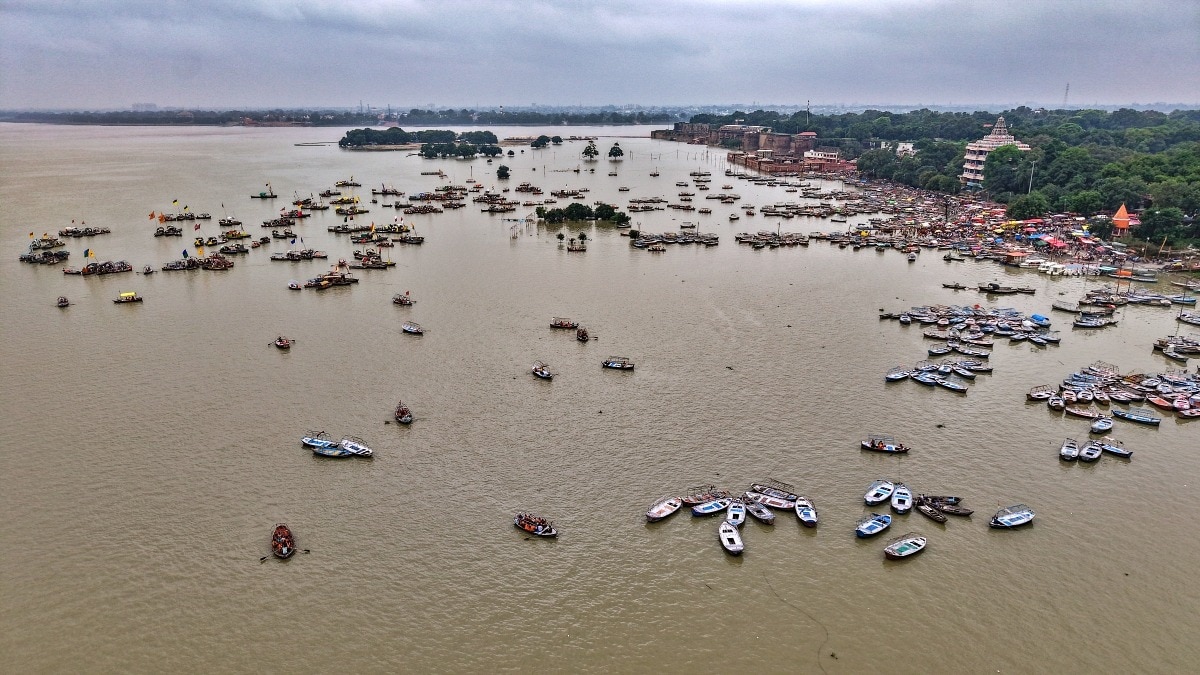
Among India's major river systems, the Ganges, Godavari, Krishna and Indus recorded above-normal to much-above-normal discharge in 2025.
The report also found above- to much-above-normal reservoir inflows across India, while soil moisture was above or much above normal during both the December-February and June-August assessment periods. A fisherman casts a net in the swollen Ganga river, in Prayagraj, Uttar Pradesh. (Photo: PTI)
However, the higher river flows did not translate into a broad recovery of India's deeper water reserves.
The WMO found persistent groundwater deficits in India during 2022-2025, with widespread below-normal to much-below-normal groundwater levels particularly in northwestern India. The report said the pattern points to cumulative depletion and a multi-year drying trend.
“Persistent groundwater deficits were observed during 2022–2025 in parts of the Americas, Europe, the Middle East, India, southern Africa and Australia,” the report said, adding that over-abstraction was an important driver in several regions.
India also recorded below-normal terrestrial water storage in 2025, particularly across the northern part of the country. Terrestrial water storage includes water held in groundwater, soil, rivers, reservoirs, snow and ice.
The report also highlights a longer-term concern for India's water security. The Ganges-Indus headwaters have repeatedly experienced below-normal terrestrial water storage during 2021-2025.
The findings come against a global backdrop of declining freshwater reserves. WMO Secretary-General Celeste Saulo described groundwater, glaciers and other slow-moving water reserves as the planet's “savings account” that provides a buffer during dry periods. The findings come against a global backdrop of declining freshwater reserves. (Photo: PTI)
“We are depleting that savings account,” Saulo said, noting that global terrestrial water storage has shown a declining trend since around 2014-2016.
The report also found that glaciers globally lost 408 132 gigatonnes of ice in 2025, with South Asia West recording one of its three most negative annual glacier mass balances on record.
Thus, India's 2025 water picture was marked by a sharp contrast: more water moving through rivers and soils, but continued depletion of some of the country's critical long-term water reserves.- EndsPublished By: Sibu Kumar TripathiPublished On: Sep 21, 2026 13:03 IST