Influenza Positivity Rate Hits 56% in Indonesia: What to Know - Tempo.co English
TEMPO.CO, Jakarta - Indonesia’s Health Ministry recorded an influenza positivity rate of 56 percent in the 38th week of 2026, but said the figure remains within the medium range and does not yet indicate a concerning situation.
Health Minister Budi Gunadi Sadikin said in Jakarta on Monday that the increase in influenza cases should be addressed by strengthening surveillance and preparedness rather than triggering panic.
Budi said influenza activity detected through surveillance at community health centers, known as puskesmas, has reached the medium category, while surveillance at hospitals remains in the low category.
“There has indeed been an increase in influenza cases, particularly in Indonesia and Southeast Asia. But based on the surveillance data we have, the situation remains within the medium range. Therefore, what we are doing is strengthening surveillance and preparedness so that developments in cases can continue to be monitored,” Budi said, as quoted by Antara.
According to Health Ministry data, the increase in influenza activity in August and September remains consistent with the seasonal pattern typically observed in Indonesia.
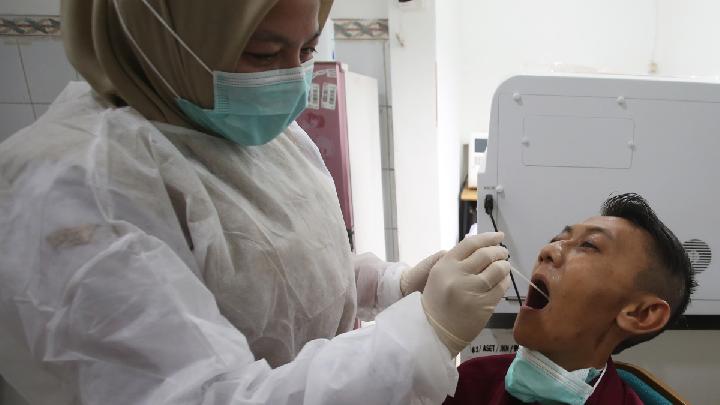
In the 38th week of 2026, 148 of 265 specimens tested through sentinel surveillance were positive for influenza. Influenza A (H1N1pdm09) was the dominant strain.
The Health Ministry is also monitoring the spread of Influenza A (H3N2) subclade K, which has recently drawn public attention and has been referred to as “superflu.”
The term “superflu” is not an official nomenclature used by the World Health Organization (WHO) or the U.S. Centers for Disease Control and Prevention (CDC) to refer to subclade K.
The ministry therefore said influenza developments should be assessed based on test results and surveillance data rather than solely on terminology circulating among the public.
Budi said surveillance data showed that detections of subclade K this year were lower than last year.
“For what is being referred to as ‘superflu’ or H3N2 subclade K, the data we are monitoring actually show that the number of detections this year is lower than last year. So, we need to distinguish between information circulating among the public and conditions reflected in surveillance data,” Budi said.
Based on ILI-SARI sentinel surveillance, 188 subclade K detections were recorded from 2025 through the 38th week of 2026. Of these, 166 were recorded in 2025 and 22 in 2026.
The Health Ministry continues to monitor subclade K through sentinel surveillance involving puskesmas, hospitals, and laboratories and health quarantine centers.
According to Antara, Budi said most influenza cases can recover with supportive care and do not require hospitalization. Antiviral drugs such as oseltamivir are not intended for every influenza patient.
“Oseltamivir must be used appropriately. Based on input from experts, the drug should be used selectively for patients with severe conditions or those with comorbidities who require antiviral treatment,” Budi said.
Restricting oseltamivir use is necessary to prevent antiviral resistance, he said, comparing the risk to inappropriate antibiotic use, which can contribute to antimicrobial resistance.
“We must not overuse antivirals because there is a risk of resistance. If resistance develops, we could lose treatment options when facing a more severe and life-threatening outbreak, such as H5Nx influenza,” he added.
The Health Ministry is continuing to strengthen influenza surveillance, healthcare facility preparedness, laboratory capacity, and risk communication with the public.
The ministry urged people to remain vigilant by maintaining good hygiene, wearing masks when sick or in crowded places, practicing proper cough and sneeze etiquette, and seeking medical attention if symptoms worsen.
Vulnerable groups, including infants and young children, older adults, pregnant women, and people with underlying health conditions, require greater attention because they face a higher risk of complications.
“Recognize the symptoms, prevent transmission, and seek medical attention promptly if the condition worsens,” Budi said.
*]:pointer-events-auto R6Vx5W_threadScrollVars scroll-mb-[calc(var(--scroll-root-safe-area-inset-bottom,0px)+var(--thread-response-height))] scroll-mt-[calc(var(--header-height)+min(200px,max(70px,20svh)))]" dir="auto" data-turn-id="request-6a6c680a-51e4-83ec-b85a-76f2b465166c-94" data-turn-id-container="request-6a6c680a-51e4-83ec-b85a-76f2b465166c-94" data-testid="conversation-turn-192" data-turn="assistant">Read: How Dangerous Is Influenza A? All You Need to Know About the Illness