Inside Redeemer’s Village robotic surgery - Punch Newspapers

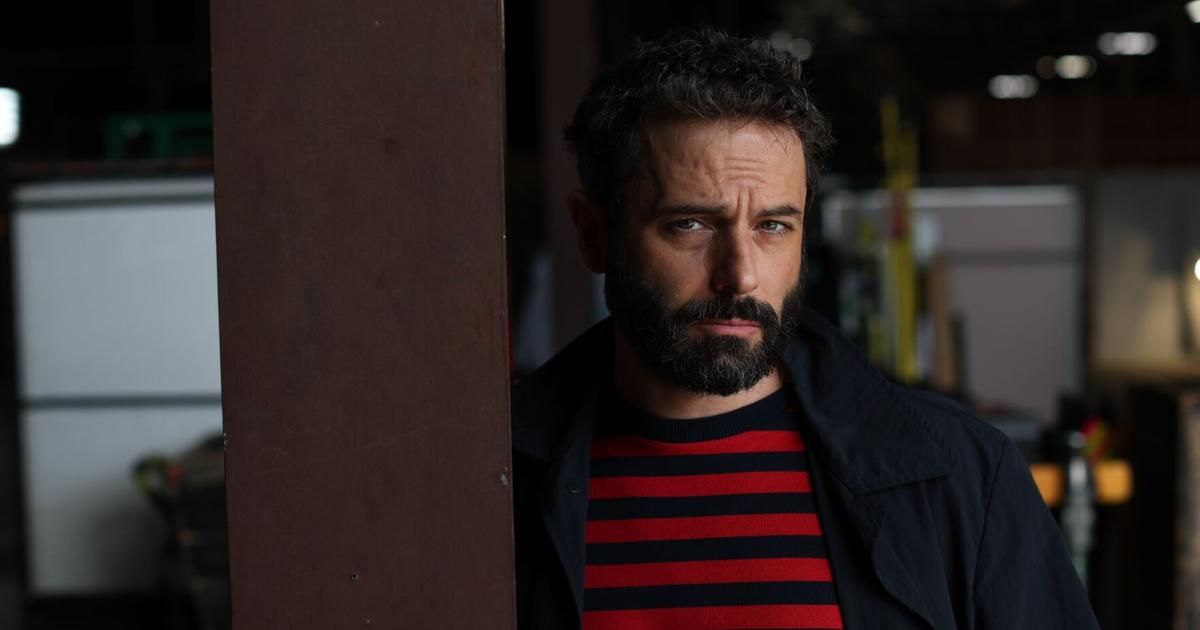
On an operating table in Abuja, a patient lay undergoing surgery for kidney cancer. Hundreds of kilometres away, the surgeon controlling the procedure was seated at a console inside Redeemer’s Health Village in Redemption City, Mowe, Ogun State. Through a combination of surgical robotics, telecommunications and specialist expertise, the surgeon was able to guide robotic instruments inside the patient’s body and successfully remove the cancerous tumour. For the former Medical Director of the Federal Medical Centre, Ebute Metta, and now Chief Executive Officer of Redeemer’s Health Village, Dr Adedamola Dada, the procedure was more than a technological demonstration. Speaking with Sunday PUNCH during a recent visit to the sprawling RHV, he said the recent tele-robotic and other robotic surgeries performed at the hospital offered a glimpse into what could become a new chapter in Nigeria’s healthcare system, one in which sophisticated medical procedures are performed locally at substantially lower costs, while patients remain close to their families and support systems. The orthopaedic surgeon described telerobotic surgery as “the peak of medical services now in the world.” “We have been able to successfully do it. We just don’t want it to happen only once; we want it to become a routine,” he said. Dada said the recent breakthroughs in robotic surgery aligned with the vision of the founders of the project, the General Overseer of the Redeemed Christian Church of God, Pastor Enoch Adeboye, and his wife, Pastor Mrs Folu Adeboye. He said the facility was established around a broad mandate: to make world-class healthcare available and affordable to Nigerians, irrespective of religion, ethnicity, state of origin or creed. “The vision is from both Daddy, Papa Enoch Adeboye, and our mother, Mama Folu Adeboye. RHV is an arm of the Redeemed Christian Church of God. They have given us the vision, and they have given us the commission,” Dada said. He explained that the commission was built around four central principles: world-class services, affordability, availability and sustainability. “If there are credits to be given for the services that are rendered in this institution, it’s actually to the visioner. The vision actually predates our coming in. Our objective basically is to provide affordable healthcare, healthcare that is world-class, yet affordable, and in a sustainable way, for all Nigerians. Not just the members of our church, but all Nigerians, regardless of religion, creed, state of origin or ethnicity, and even beyond,” Dada said. The orthopaedic surgeon revealed that the heavily equipped health institution has five operating theatre suites and performs a wide range of procedures, including joint replacement, neurosurgery and complex orthopaedic operations. Dada described the hospital’s radiology department as one of its major strengths. “If you look at our Radiology Department, it’s, without question, the best in the country, in terms of equipment, in terms of personnel, in terms of outcome,” he said. Dada revealed that several international organisations conducting studies and research on Africans use the facility for their work, particularly in radiology. “As I’m talking to you now, we’re doing research on the brains of Africa, which would involve us capturing maybe about a thousand brains in conjunction with the University of Ibadan. “The reason why they have chosen us as a partner for that is because our MRI is the only one in the country that can capture those parameters that they want. So, it’s not just about robotics,” he said. Dada said RHV also has five world-class operating theatres where surgical procedures are regularly performed. “We do all manner of surgeries, including joint replacement, brain surgeries and complicated orthopaedic procedures. We are also into IVF; our services have just kicked off,” he said. The facility, the orthopaedic surgeon added, has one of the largest intensive care capacities in the state, with a 16-bed adult intensive care unit and a neonatal intensive care unit with almost 20 beds. He also disclosed that RHV had received accreditation from the National Universities Commission in conjunction with Redeemer’s University and would soon commence a medical school.See more Punch stories on Google.Add Punch on Google “We have started training house officers. We’re in the process of getting accreditation for postgraduate training. So, it’s a functional, heavily equipped and highly performing tertiary hospital,” Dada said. The orthopaedic surgeon said the hospital’s robotic surgery programme was a natural extension of its mandate to deliver healthcare at international standards. “If you’re going to deliver world-class services, which is part of the mandate handed over to us by the visioners, it means that you must be at the cutting edge of technological advancement,” he added. Robotic surgery, he explained, offers greater precision because robotic instruments can perform movements beyond the natural range of the human wrist while reducing some of the tremor associated with conventional surgery. According to him, the technology also allows surgeons to work through very small incisions. “If it’s an abdominal surgery, you create like a two-centimetre incision, about four of them. And through those two-centimetre incisions, you’ve taken the hands of the robot into the abdominal cavity,” he explained. The potential benefits, according to Dada, include reduced blood loss, less postoperative pain, shorter hospital stays and faster recovery in appropriately selected procedures. He pointed to five recent robotic operations as examples, noting that the procedures included prostate cancer surgery, treatment of benign prostate enlargement and treatment of a complex urinary condition in a 28-year-old doctor who had lived with a congenital obstruction affecting the tube that carries urine. “She had challenges with the tube that brings urine. For a long time, she couldn’t pass urine, and that led to severe pain in her loin,” Dada said. “After the robotic procedure, the patient was able to return home the following day. She went home the next day. Some of the patients were even saying they wanted to go back to work,” he added. Dada said the reduced trauma associated with robotic surgery was another significant advantage. “Ordinarily, if that surgery, the prostate surgery, were to be done through the usual open procedure, patients may stay in the hospital for 10 to 14 days. And even by the time they go back home after two weeks, they are still not able to function. “But all the patients who were operated on in this particular episode were discharged the next day. Almost all of them spent less than 24 hours in the hospital, and they were not discharged on a trolley; they were discharged walking on their own. The pain was almost absent,” the orthopaedic surgeon said. He added that none of the five patients operated on during the recent episode required a blood transfusion. “But if it were to be the normal surgery, they probably would have taken maybe two, three, four units of blood. And, of course, the outcomes of the surgeries are also a lot better. So, these and many more are the advantages,” Dada said. Yayi changed name after converting to Christianity – Aide Xenophobia: 105 more Nigerians return home from S’Africa FG evacuates another 105 Nigerians from South Africa He noted that the development could also help reduce medical tourism, which has become a significant concern in Nigeria as patients travel abroad for specialised treatment and spend scarce foreign exchange in the process. He said RHV was positioning its robotic programme as one way of keeping some of that expenditure within the country. According to Dada, the cost of robotic surgery at the facility is about 10 per cent of what patients would pay abroad for comparable procedures, although costs vary by country, procedure and hospital. He recalled the case of a colleague who underwent a similar robotic procedure in the United States, adding, “A colleague recently told me that he had the same robotic surgery in the US and, for the surgical intervention alone, excluding the institutional fee and others, he paid $70,000,” Dada said. “But that same surgery done in this institution, including the surgical fee and everything, is about N20m. And in all the other places where it is done in the country, it’s about N30m.” He said the objective was not primarily profit but expanding access to advanced healthcare. “So it is not about the profit; it is about affordability and availability of high-end, internationally recognised, world-class healthcare services. “These world-class services are more of a social service to the Nigerian people. It also speaks to the Christian ethos of being your neighbour’s keeper,” Dada added. If robotic surgery is remarkable, the orthopaedic surgeon said telerobotic surgery takes the concept a step further. In the procedure recently undertaken, Dada said the system nevertheless included safeguards, with a medical team physically present with the patient in Abuja and prepared to intervene should a complication occur. “You must also make contingency arrangements that if something goes wrong, then somebody there is able to immediately intervene,” he said. For Dada, the tele-robotic procedure demonstrated what could eventually become a powerful solution for countries and communities where specialist expertise is scarce. Dada said RHV planned to repeat the procedure between Lagos and Abuja. “We’re going to repeat what we did, that’s the telesurgery, on the 18th and 19th of October, so that people don’t think that the one we did last was for a demonstration or publicity stunt. It is actually a demonstration for the sake of offering it as a service to Nigerians,” he added. Dada said the hospital was also in discussions with partners in Angola to conduct a similar procedure. “Robotics even on the continent of Africa is very, very limited and very few,” he said, adding that RHV also hoped to demonstrate the technology with partners in the United States. “If we have been able to do those demonstrations, it therefore just simply means that, for some of the conditions that a lot of our people go abroad for, depleting the country’s forex, they can come here, and those experts can operate on those patients from here,” Dada said. He, however, stressed that technology alone cannot transform healthcare and that technology cannot function without people. Dada revealed that RHV was preparing to establish a Robotic Academy to train surgeons, nurses and biomedical engineers and help build the manpower required for advanced medical practice. The academy, scheduled to commence soon, is being developed in partnership with the National Postgraduate Medical College of Nigeria and Redeemer’s University. He said it would train about 150 specialists within two years, noting that the initiative was critical because sustaining robotic surgery would require a steady pipeline of trained professionals. Dada, who spent eight years in public-sector hospital leadership, also said government had an important role to play in expanding specialised healthcare. He argued that investment should be directed towards critical areas of healthcare infrastructure, manpower and professional development. “There is a need to invest more in the right sector, the critical sector. We know from research that there is a direct nexus between the health of a people and the economic well-being of the nation. The more investment we make into the right sector of healthcare services, the better our economic indices would become,” Dada said. He suggested that government-backed scholarships could help expand the pool of specialists by supporting doctors and other healthcare professionals through the proposed robotic training programme before deploying them across the country. Also speaking with journalists, the robotic surgeon who led the procedure, Prof Obi Davies-Ekwenna, said the feat could help Nigeria overcome geographical barriers to specialised healthcare. He described the remote surgery as a demonstration of the potential of technology to expand access to precision healthcare. “We were able to operate on a patient in Abuja, 500 kilometres away. We were able to operate on a patient with a kidney tumour, a cancer tumour. And so that was successful. It means access to experts from within and outside the country. Telesurgery can be done from any part of the world with precision, with excellent results.” The RHV Board Chairman, Dr Kunle Onokoya, said robotic surgery was also expanding the range of procedures that could be performed successfully. “The kind of surgery that otherwise would have been inoperable, meaning that the risk from surgery was too great, is now being done with robot-assisted surgery,” Davies-Ekwenna said. For Pastor Alexander Idachama, the first patient to undergo robotic-assisted surgery at RHV for a radical prostatectomy, the experience offered a personal demonstration of what the technology could mean for patients. In a Facebook post, Idachama said he learnt about the hospital through Dada and decided to seek treatment there. He said he arrived at the hospital in the last week of August and underwent a series of orientation sessions to familiarise him with the surgical process. Idachama subsequently met Dr Ifeanyi and other members of the surgical team, who explained what he should expect before, during and after the procedure. He described the robotic system as world-class and said choosing RHV saved him the cost and inconvenience of travelling abroad for treatment. Reflecting on his recovery, Idachama said robotic-assisted surgery offered greater surgical precision, significantly less pain and a gentler impact on patients. He also said he would recommend RHV to his friends and family, describing its facilities as comparable to the best in the world. Taiwo Bankole
All rights reserved. This material, and other digital content on this website, may not be reproduced, published, broadcast, rewritten or redistributed in whole or in part without prior express written permission from PUNCH.
Stay informed and ahead of the curve! Follow The Punch Newspaper on WhatsApp for real-time updates, breaking news, and exclusive content. Don't miss a headline – join now!
Stay in the know—fast. Get instant alerts, breaking headlines, and exclusive stories with the Punch News App. Download now and never miss a beat.