
Inside the second Mchunu raid: Warrant targeted phones identified by numbers and IMEIs - IOL
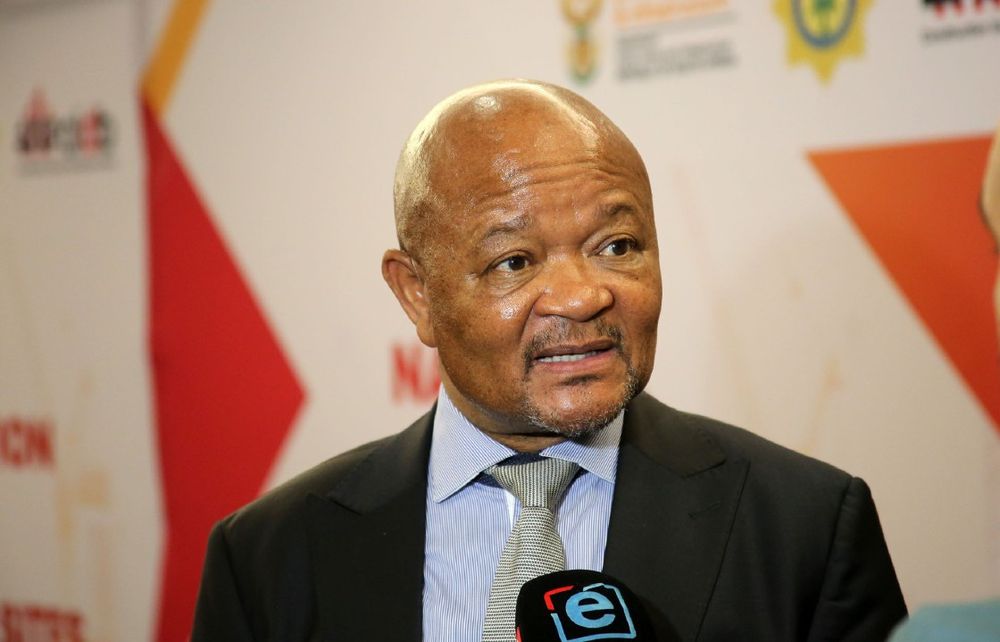
Suspended Police Minister Senzo Mchunu.
The second police raid on properties linked to suspended Police Minister Senzo Mchunu was built around a narrow target: At least six devices, including cellphones and an iPad, identified by telephone numbers, IMEI numbers, and periods of use.
However, only one phone was confiscated during the raid.
The warrant authorised searches for those devices in connection with allegations including corruption, fraud, and obstructing the course of justice.
The Gauteng Division of the High Court in Johannesburg authorised the search, access, and seizure warrant on Monday, September 21, 2026.
The warrant was issued in terms of the Cybercrimes Act after an ex parte application by Brigadier Sipho Kunene of the KwaZulu-Natal Serious and Violent Crime Investigation Unit.
The operation forms part of a criminal investigation registered at Durban Central under CAS 820/12/2025. Mchunu is listed as one of the suspects under investigation.
The warrant also names the rape accused Deputy Police Commissioner Lieutenant-General Shadrack Sibiya, identified as Mchunu’s co-accused, corruption accused Sergeant Fannie Nkosi, North West political fixer Brown Mogotsi, alleged cartel member Vusimuzi Matlala, and his adviser Cedrick Nkabinde.
The warrant states: “The issue of the Search, Access and Seizure Warrant in terms of section 20(1)(a) and 29(2) of the Cybercrime Act 19 of 2020, attached hereto and marked ‘B’, be and is hereby authorised.”
The document does not provide a full account of the earlier raid, including whether police recovered any devices or why investigators believed a second search was necessary. But its focus is clear: police continued to regard Mchunu’s phones as potentially important evidence.
Police were not authorised to seize every cellphone found at the properties. The warrant identifies particular devices through telephone numbers and IMEI numbers, the unique technical identifiers used to distinguish one mobile phone from another.
One of the listed numbers is associated with Mchunu’s Vodacom cellphone contact details. The warrant links that number to more than one IMEI number and records different periods during which the devices were believed to have been used. Another number also appears in the document, with historical device use extending into the period covered by the investigation.
The significance of the IMEI numbers is that they gave investigators a precise target. The operation was not simply about finding a phone belonging to Mchunu. It was about locating devices that police believed could be connected to the alleged offences and confirming their identity through technical details.
Mchunu, through his spokesperson, Sthembiso Mshengu, has confirmed handing over his phone to the police.
The warrant says: “The articles referred to in paragraph 4.1 are, as contemplated in section 1(1)(a) to (d), read with paragraph 1(i) of the definition of ‘article’, on reasonable grounds believed to be concerned with or connected to the commission or suspected commission of the following offences.”
The devices were allegedly linked to offences including defeating or obstructing the course of justice, conspiracy to commit an offence involving justice, fraud and corruption. The warrant also refers to a possible contravention of the Powers and Privileges and Immunities of Parliament and Provincial Legislatures Act 4 of 2004.
The warrant authorised searches at several properties linked to Mchunu. The addresses listed include his residence at Bryntirion Estate, in Panorama, Empangeni, Brakfontein in the AbaQulusi rural area, and in Ngwelezana.
The spread of the addresses shows that investigators were not dealing with a single-property search. Police were authorised to move across several locations both in Gauteng and KwaZulu-Natal, where the specified devices were believed to be located or controlled by people connected to the investigation.
The warrant specifically authorises police to “Search Mr. Edward Senzo Mchunu”.
That wording places Mchunu himself directly within the scope of the operation. Police were authorised to search him, the listed premises and people found at or near those premises where they had reasonable grounds to believe those individuals possessed information material to the investigation or controlled one of the specified devices.
The search powers were therefore broader than simply entering a house and looking for a phone. Investigators could search people believed to have relevant information, as well as individuals who used, possessed, or had direct control of the cellular devices identified by their IMEI numbers.
The warrant draws a clear line between identifying a phone and examining its contents. A digital forensic investigator could check the make, model, and IMEI number of a device to determine whether it matched one of the phones listed in the court order.
The warrant states: “Search for the cellular phones identified in this warrant, to the extent expressly authorized by this warrant.”
The order further provides that a seized phone may undergo only the limited forensic examination, access, downloading, and extraction reasonably necessary to establish its make, model, and IMEI number. The purpose is identification, not an immediate review of the information stored on the device.
The warrant states: “Such limited forensic examination, access, downloading, and extraction as is reasonably necessary to establish its make, model, and IMEI number.”
It also says that the forensic examination may not extend to the examination, search, retrieval, analysis or use of communications, photographs, videos, and other information stored on the devices.
The operation was assigned to a team drawn largely from the KwaZulu-Natal Provincial Head Office’s Serious Violent Crime Investigations Unit. Kunene is identified as one of the officials involved in the execution of the warrant.
The investigation’s focus on phones suggests that police believed the devices could provide a connection between people, communications, and alleged conduct. However, the warrant does not disclose the contents of any messages, calls, or files. It records only the basis for believing that the devices could be relevant.
The warrant also refers to conspiracy involving an offence against the administration of justice and possible parliamentary privilege-related offences.
The second raid raises questions about whether the police found evidence during the first operation. During that raid, Mchunu, his adviser Nkabinde, and Sibiya also had their devices confiscated.
KwaZulu-Natal Police Commissioner Nhlanhla Mkhwanazi, a complainant in the Mchunu case, has previously told parliamentarians that the police were capable of retrieving “deleted” information.
At the time, Mkhwanazi said: “You delete… we retrieve.”
Mshengu said: “This serves to confirm that on Monday (21 September 2026) a group of police officials served the minister at his private family home in KwaZulu-Natal Province with a High Court (Johannesburg) search and seizure warrant of cellular phones with specific IMEI numbers as mentioned in the document.”
Mshengu said Mchunu handed over the handset in line with the directive of the court.
“It must be noted that this is the second time the police have seized these communication tools without having returned the first set. Minister Mchunu will address these developments and many other matters that evolve around his name in the coming weeks,” he said.
