Inspired by UK sanctions on Israel, US Democrats want to work with Labour - Middle East Eye

As US President Donald Trump reels from Tuesday night’s election wipeout, victorious Democrats are praising British Foreign Secretary Ed Miliband for inspiring new US policies towards Israel.
Democrats have told MEE that they plan to take advantage of their new hold over Congress to introduce sanctions aimed at settlers in the occupied West Bank, which would be in line with British sanctions introduced last month.
There is also talk on both sides of the Atlantic of reviving the traditional alliance between Labour and Democrats as the 2028 presidential election approaches.
One source told MEE that informal talks are already taking place between Democrats and the Burnham government amidst expectations of a “strong relationship between a progressive Democratic president and a progressive UK prime minister”.
Democrat sources told MEE they watched British Prime Minister Andy Burnham and Miliband break with Keir Starmer’s foreign policy towards Israel - and noted how popular it has been in Britain.
Even before last night’s momentous results, some Democrats have been publicly calling for the US to copy Labour’'s sanctions policy.
Texas Congressman Joaquin Castro described Miliband’s sanctions announcement as “a step in the right direction”.
He denounced settlement expansion as a “land grab carried out through violence and terrorism” before calling on the US to follow Britain’s lead.
Congressman Ro Khanna, who was held at gunpoint by settlers in the West Bank last summer, praised the UK’s “important moral step”.
Matt Duss, a Washington Middle East expert with strong links to the progressive wing of the Democratic Party, told MEE on Tuesday night that “seeing key allies taking these steps gives a real boost to colleagues in the US”.
He added that, “A new class of progressive Democrat is coming into Congress who wants to support Palestinian rights.”
Democratic member of Congress, Greg Casar, has already urged a US ban on trade with the settlements.
Democratic Senator Chris Van Hollen, meanwhile, declared that “Congress can and must act”.
Emily Thornberry, the chair of Parliament’s Foreign Affairs Select Committee, told MEE that if "brave and thoughtful leaders such as Reps Khanna, Casar and Castro are put into a position to develop US policy toward Israel and the occupied territories, real progress could be made."
Thornberry added: “I would recommend what we have done [on Israeli settlements] as a model, and I dearly hope that we’re able to work together on this in the near future.”
In a sign that the Democrats have been inspired by Britain, 19 Senate Democrats - including Castro and Casar - introduced legislation in late September to sanction people or companies facilitating settlement construction as part of the Israeli government’s E1 plan.
The plan involves building thousands of new housing units between Jerusalem and the existing West Bank settlement of Maale Adumim, 7km east of the city. It would effectively cut the West Bank in half, making a Palestinian state unviable.
Congresswoman Madeleine Dean, one of the lawmakers behind the sanctions bill, said when it was unveiled: “It is time that the United States joined our allies - such as the United Kingdom, France, and Canada - in taking action to help preserve dignity and self-determination for the Palestinian people, which is essential for progress toward peace.”
Labour MP John McDonnell told MEE: "Ed Miliband shifting Labour’s policy on Palestine has been a sizeable breakthrough for the campaign to secure international action against the genocide.
"There is the potential for an international coalition to emerge that isolates Israel politically, economically and militarily. The result of the US elections opens up the opportunity of effective [sanctions] measures to be secured cross the Atlantic."
A former US state department official, speaking on condition of anonymity, told MEE: "A real energy with the Democratic caucus to make this a real focus could develop. In 2024, US sanctions officials were told not to coordinate with the UK, Canada, or the EU. That goes against how sanctions implementation normally works, where multilateral approaches are preferred.
"The situation in the West Bank is a perfect sanctions target environment and coordination is impactful," he added.
"The Knesset has convened to consider how to evade sanctions. If there are Israeli plans to evade sanctions then that is another sign they have credibility and impact."
Both the Sunak and Starmer governments pursued a general policy of alignment with the US. Then came Burnham’s startling break with the Trump administration over Israel, with Britain leading middle-ranking powers including France and Canada in sanctioning settlements in September.
This bold move opened up a new interest in Britain from the US Democrats, who have emerged victorious in the American midterms this week.
Polls have shown most of the British public, including a narrow majority of Conservative voters, supported the sanctions package.
Democrats are hoping to distance themselves from former US President Joe Biden’s support for Benjamin Netanyahu over Gaza.
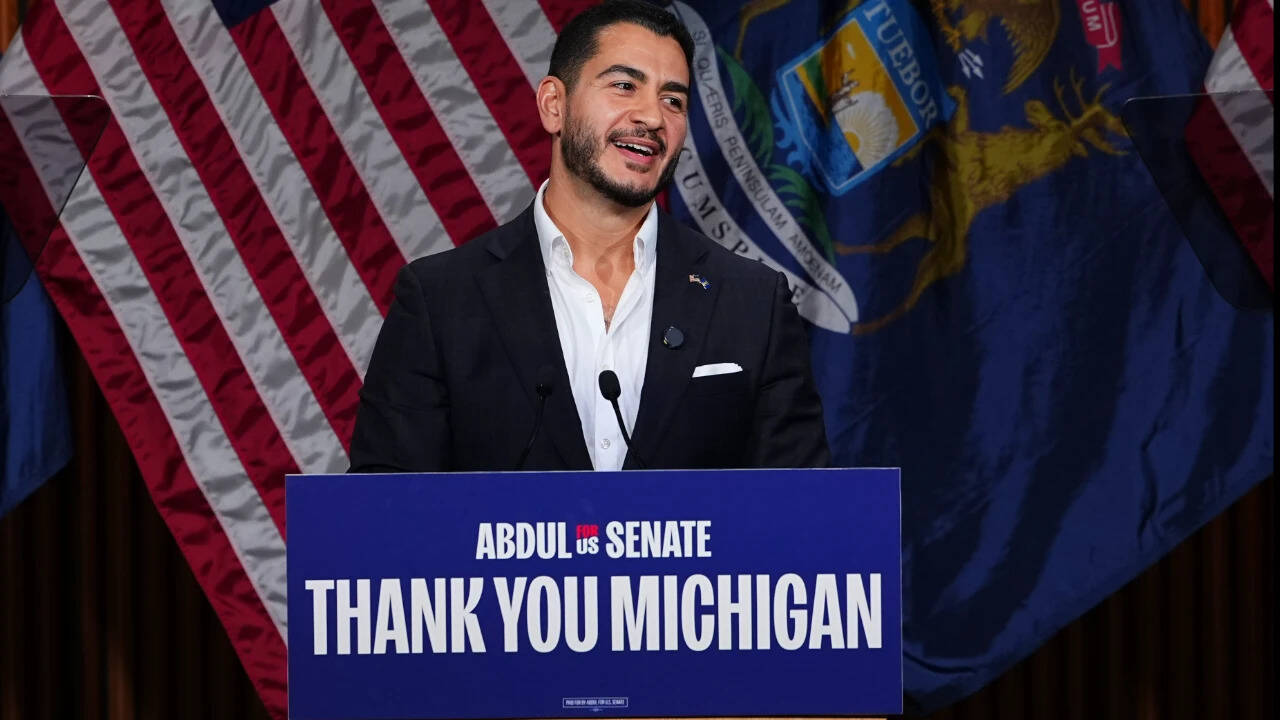
With high-profile Democratic candidates critical of Israel - in particular Abdul El-Sayed in Michigan, who was relentlessly attacked by Trump but endorsed by former Democratic President Barack Obama - storming to victory in the midterms this week, the appetite within the Democratic Party to take a tougher stance on Israel is nearly certain to increase.
This may especially be so if Trump now launches a fresh assault with Israel on Iran - which the midterm results indicate most Americans do not support.
In some ways, the burgeoning alliance between the Democrats and Labour recalls the close ties built up between US President Bill Clinton and Tony Blair before he became prime minister in 1997.
The relationship between Harold Wilson and Lyndon Johnson in the 1960s is another example.
A close relationship between the Democrats and Labour would therefore mark a return to traditional British foreign policy, which has been strongly tied to the United States.