
Insurgency: As military considers technology, local arms production - The Guardian Nigeria News
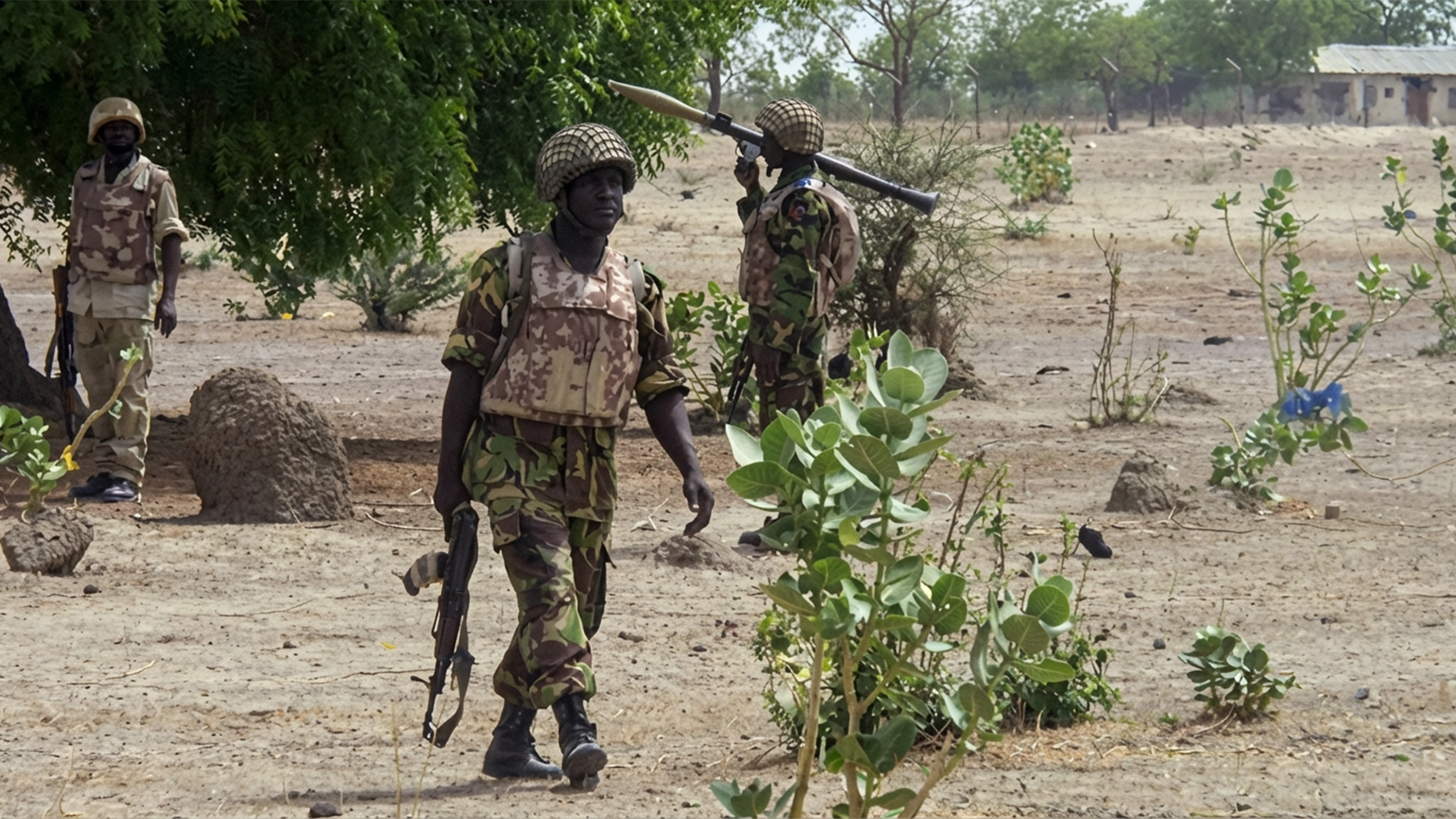
The thrust of the message delivered by the Minister of Defence, General Christopher Musa (rtd), the other day is that the country’s road to fully overcoming insecurity remains unclear and will require more hands on deck, including those of technologists and academia. Beyond the obvious need to leverage technology to fight insurgency, Musa’s advocacy for local production of arms for the country’s security agencies cannot be overstated. Indeed, it raises questions about past government efforts aimed at self-reliance in military defence. For a long time, Nigerians have been disappointed by the Federal Government’s seeming inability to end insecurity, which has continued to ravage the country for close to two decades. This is despite warnings from the outset that fighting terrorism was not a conventional war whose end could be more easily predicted. In the last 15 years or so, terrorism and insurgency have taken many forms that have invariably overstretched the military and other security agencies. Nevertheless, Nigerians expect that, given the years the insurgency has taken and the human and material resources so far expended on the war against terror, an end ought to be in sight. Unfortunately, this is not the case. On the contrary, reports indicate that more troubles lie ahead for the nation, as the security crisis now extends beyond the traditional conflict hotspots. A new threat assessment identifies 31 states and the Federal Capital Territory as facing elevated, high or critical risks, while no state falls into the low-risk category.
If it is any consolation, the Defence High Command believes that well-informed policies, credible institutions, technological innovation, and a comprehensive understanding of the human dimensions of conflict are needed. Arising from the concentrated attacks in the North-East and a host of isolated attacks in different parts of the country, the latest assessment of the country’s security milieu suggests a nationwide network of interconnected threats in which insurgency, organised criminal activities, communal violence, separatist pressure and weak institutional capacity reinforce one another. In its state-by-state risk heat map, the Nigeria Threat Assessment 2026 identifies seven states as facing critical security risks, 11 of which are high risk, 13 states experiencing elevated risk, while six states have to contend with moderate-risk. Sadly, no state or territory in the country received a low-risk rating. The findings, which are based on analytical ratings as of March 2026, place the country’s overall national threat level at high, with critical conditions concentrated in Borno and parts of the North-West and Middle Belt. The seven states that occupy the highest-risk category are Borno, Benue, Zamfara, Kaduna, Katsina, Niger and Plateau. Figures already suggest that the country’s security challenges are considerably dire and much more widespread than what geographical assessment of individual attacks might indicate. The fact that 31 of the 36 states and the Federal Capital Territory have elevated or worse risk ratings is a very troubling development given that 84 per cent of the country’s federating units are affected. It is heartening, therefore, that government may be contemplating informed policies and technological innovation as part of anti-insurgency measures. This should go beyond theoretical analysis. According to the Minister of Defence, solving Nigeria’s insecurity “requires informed policies, credible institutions, technological innovation and a comprehensive understanding of the human dimensions of conflict.” Musa, who spoke during the commissioning of the CG Musa Security Management Hub donated to the Tertiary Education Trust Fund (TETFund) Centre of Excellence in Security Management, at the University of Ibadan, emphasised that the country had stepped up its game and was gradually improving the security situation. The minister added: “The academia occupies a strategic place in our national security management architecture … the battlefield may reveal the immediate manifestations of insecurity, but the university provides the intellectual environment to interrogate its causes, evaluate responses and develop sustainable solutions.” He hinted that insecurity is getting prolonged because it is becoming difficult to get the needed security weapons and ammunition, adding that Nigeria needs to begin to produce what it requires to end it. “Our intention is to expose our local producers to foreign and international manufacturers so that we can continue to produce what we need or what we rely on. Why insecurity continues to be prolonged is that we do not produce all we need. “Most times when we go to buy, even with cash at hand, you can’t get them off the shelf. And now with the wars going on in Ukraine, Russia and the Strait of Hormuz, it became extremely difficult buying as little as ammunition to use not to talk of Armoured Personnel Carriers (APCs). Since our local manufacturers are doing their best, we need to escalate to an international level. “The threats we face continue to test our national resilience. Equally concerning are the underlying conditions that sustain insecurity, including extremism, weak governance systems, political manifestations and social exclusion, among others. These realities remind us that security cannot be achieved through military operations alone. It requires informed policies, credible institutions, technological innovation and a comprehensive understanding of the human dimensions of conflict,” Musa said. Among other things, Musa’s analysis of how to address the dire security situation in the country, the drawbacks, and the grounds that can be covered by embracing technology and developing sustainable solutions cannot be more correct. Nonetheless, Nigerians are weary of the seemingly endless war on terrorism, despite the commendable strides that the military has recorded. Besides the heavy toll this takes on government resources and the emotions and well-being of Nigerians, it is also sending a negative signal to the rest of the world that the country is unsafe for investment. In addition to being seen as a country that is incapable of protecting its citizens, Nigeria’s pariah status has forced many foreign countries to routinely issue travel advisories to their citizens about visiting the country. At this point of the country’s development, the government should ensure that the Defence Industries Corporation of Nigeria (DICON) is leveraged to make arms and ammunition readily available in the country. Important as it is to partner with academia in seeking a lasting solution to widespread insecurity, the recognition by the defence would amount to nothing if urgent and important steps are not initiated to translate these far-reaching thoughts into concrete measures that would safeguard the country.
