Intel chief says US-China chip gap is narrowing - Bangkok Post
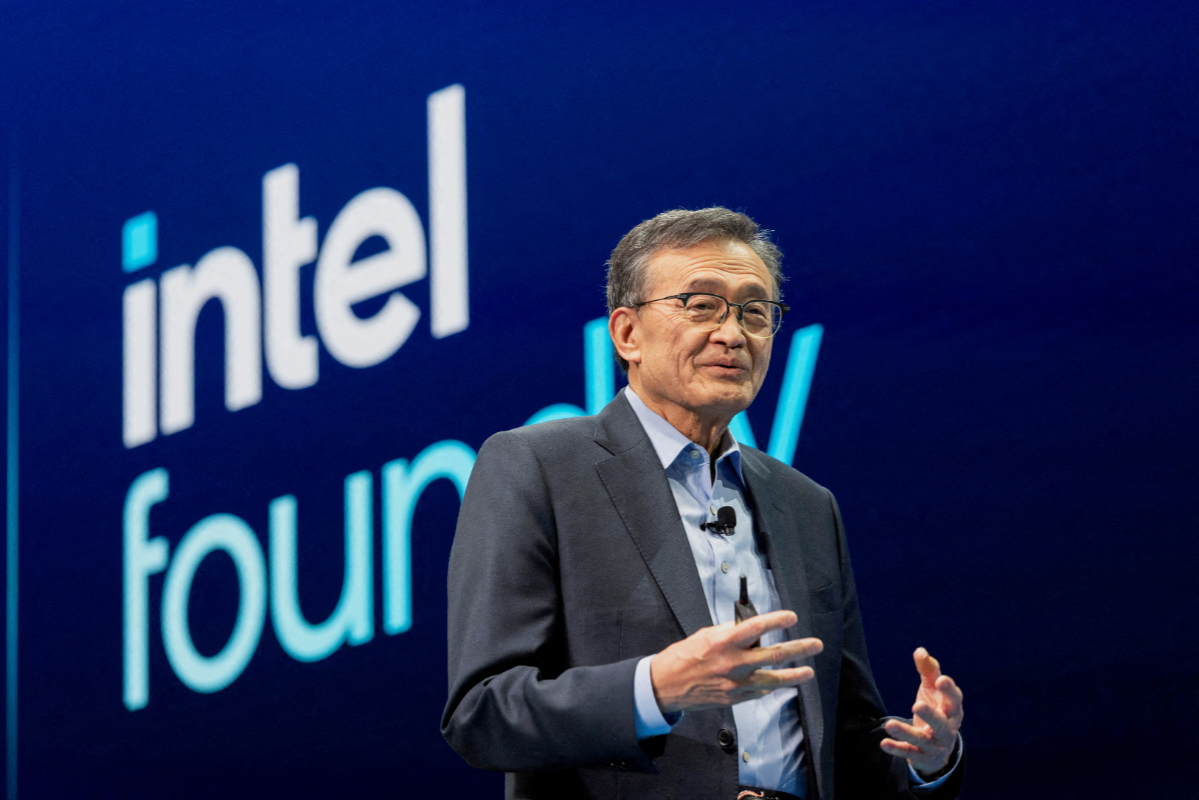
China is not as far behind the United States in chip technology as many think, Intel CEO Lip-Bu Tan believes. Despite restrictions on accessing advanced Western manufacturing equipment — particularly EUV systems — China continues to find ways to develop its technology independently, he said.
In an interview with Nikkei Asia, when asked if China could catch up with the US within five to 10 years, Mr Tan said China was no longer that far behind, while praising the research capabilities of top Chinese universities that can compete with leading institutions in the United States.
The core issue is that manufacturing advanced chips at 7, 5 or 3 nanometres normally relies on high-precision equipment, especially extreme ultraviolet (EUV) lithography machines, which can efficiently print tiny circuit patterns on silicon wafers.
However, China is unable to purchase EUV machines, which can cost $200 million or more, from sole supplier ASML of the Netherlands due to technology export controls.
Nevertheless, the major Chinese chipmaker SMIC has managed to use older-generation deep ultraviolet (DUV) machines alongside multi-patterning techniques — printing circuit patterns multiple times — to successfully produce 7nm chips, despite facing more complex steps, higher costs, and higher defect rates compared to using EUV.
Analysis by SemiAnalysis of the Huawei Kirin 9030 chip, fabricated using SMIC’s N+3 process, revealed that the metal pitch on certain layers measured just 32.5nm. This is narrower than parts of Intel’s 18A process, though it does not mean SMIC has overtaken Intel, as China still lags behind significantly in terms of overall transistor density, performance and production costs.
Beyond processing chips, China is also developing memory chips. CXMT, a major domestic RAM manufacturer, has begun mass production of new DRAM on its G5 platform alongside 24GB LPDDR5X chips, relying on multi-patterning techniques.
At the same time, China has begun developing its own EUV technology. Langdao Silex disclosed a prototype EUV light source generating over 15 watts, which the company claims can operate continuously for more than 100 hours.
Although this remains far short of the 250-watt output required for commercial EUV systems and is not yet a complete chipmaking machine, it reflects efforts to reduce reliance on foreign technology.
Developing functional EUV systems remains difficult because it requires other highly complex, high-precision components. An executive at the German optics firm Zeiss previously estimated that China might need around 15 years to catch up in this technology, while ASML noted that tighter US restrictions on DUV sales could push China to accelerate its self-reliance efforts even faster.
The Intel chief’s comments do not imply that China has caught up with TSMC, Samsung or Intel — particularly regarding cost efficiency and volume production of advanced nodes — but rather demonstrate that the absence of EUV machinery will not halt Chinese development.
In the AI era, chip performance is no longer measured solely by feature size or process node, as technologies like chiplets, advanced packaging, memory and software increasingly boost capabilities, shifting competition away from simply making the smallest transistor.