Interactive: Flydubai cockpit incident, Smit Machchhar and the story so far - The Indian Express
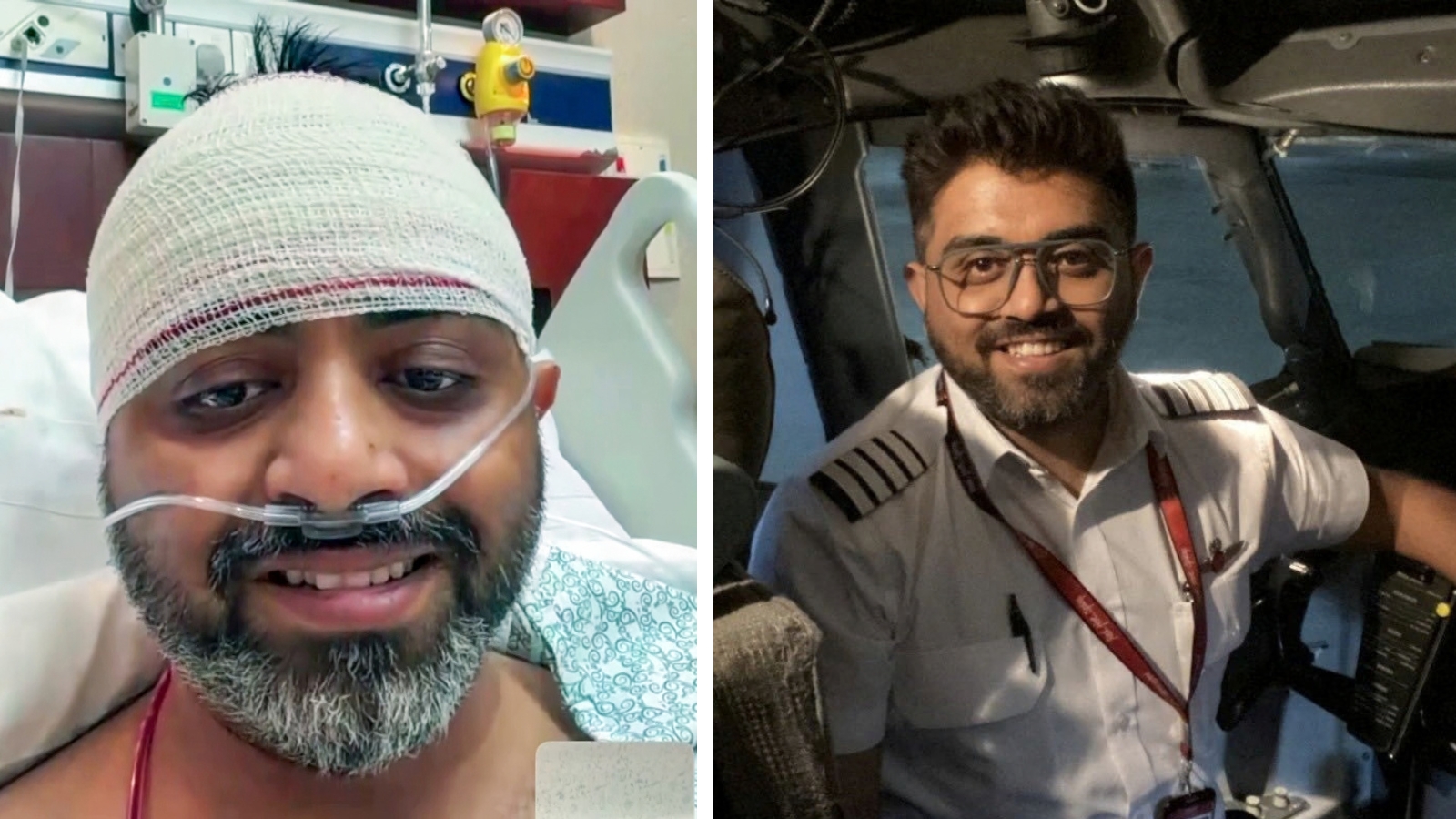
A pilot was injured. The aircraft was plunging. Inside the cockpit, passengers had no idea what was happening. Flydubai Flight FZ1073 descended thousands of feet before Captain Smit Machchhar managed to open the cockpit door, allowing others to intervene. Days later, the Indian pilot has described those terrifying moments to Prime Minister Narendra Modi. Meanwhile, investigators are examining the co-pilot’s identity, motive and possible links.
Flydubai flight FZ1073 left Dubai at 03:05 GMT, bound for Tel Aviv. The aircraft was a Boeing 737 MAX 8 carrying 182 people on board, AP reports.
For more than two hours the flight was uneventful, cruising across Saudi Arabia towards Israel.
The red line shows the path flown. The flight never reached Tel Aviv: it turned back over Jordan and made an emergency landing in Tabuk, Saudi Arabia.
At 05:42 the aircraft turned west, briefly entering Jordanian airspace at 15,000 ft. At 05:46 it made a 180-degree turn towards Tabuk.
Why it took that route is one of the questions investigators are expected to examine.
The descent began at 05:21:09. By 05:22:40 the aircraft had dropped to 16,600 feet — more than half its altitude.
The aircraft climbed back to 21,725 ft, then dropped again to 15,000 ft at 05:24:29 — the height it held until landing. AP describes about 200 seconds of steep descents and climbs.
Indian captain Smit Machchhar was seriously injured. The co-pilot, identified by Israeli officials as an Omani national, is accused of attacking him.
Footage shared from inside the cabin shows passengers on their feet in the aisle as the crisis unfolded.
Video has not been independently verified by The Indian Express. No injuries are shown.
Despite his injuries, Machchhar managed to open the locked cockpit door, allowing passengers and crew to rush in and restrain the attacker. A reserve pilot on board took control.
An artist’s reconstruction of the moment the wounded captain reached for the cockpit door, based on accounts from witnesses and Israeli authorities. This image was generated with AI. It is not a photograph of the incident, and the people shown are not the real crew.
At 05:28 the crew squawked 7700, a general emergency. At 05:35 it changed to 7500 — unlawful interference, or hijacking — and held it for about an hour, before returning to 7700 at 06:28.
Nearly four hours after take-off, the aircraft made an emergency landing at Tabuk airport.
The Indian Embassy in the UAE says the captain is recovering. He was treated in Tabuk and later airlifted to the UAE, where India’s envoy visited him. He is in hospital in Abu Dhabi.
At 05:35 the aircraft’s transponder switched to 7500, the code for unlawful interference, including a possible hijacking. Crews use such codes when speaking over the radio may not be possible or wise.
Early reports described a suspected hijacking of the Tel Aviv-bound flight.
AP now describes the incident as an apparent attempt by the co-pilot to crash the aircraft — not a takeover of the plane. Witnesses and Israeli authorities say the captain was stabbed and the Boeing 737 descended sharply before passengers restrained the attacker.
Netanyahu has said the co-pilot appeared to intend to bring the aircraft down. That remains his claim; no evidence has been published.
“All possible scenarios, from terrorism to mental disorders, are being looked into. Nothing is ruled out for now,” a regional official said.
The UAE, where the aircraft is registered, is examining whether the attack was linked to any terrorist purpose. Flydubai said the aircraft was “secured by on-duty crew members who diverted and landed the aircraft safely.”
Sources: AP, Reuters, Flightradar24, Indian Embassy in the UAE, Gulf News. All times GMT. The co-pilot is accused; his motive has not been established. Illustrations are stylised.