INTERVIEW - World Food Program calls for earlier action, funding to tackle climate-driven hunger - Anadolu Ajansı
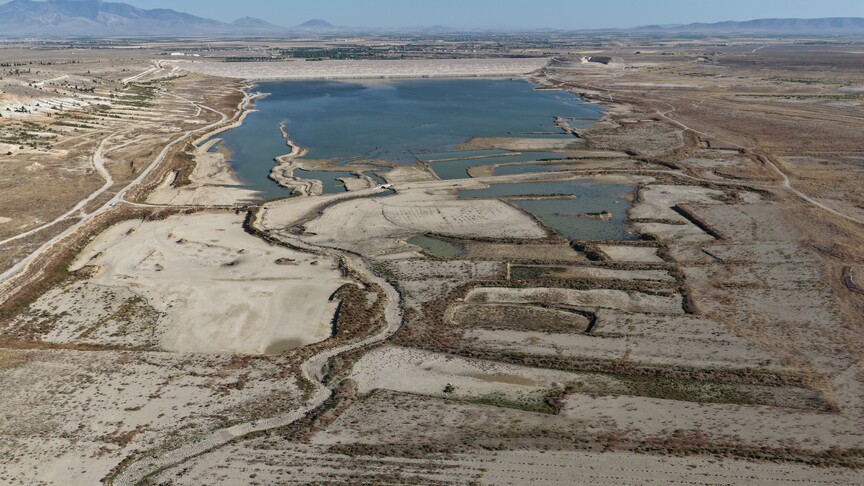
The World Food Program (WFP) called for greater prearranged climate financing to prepare for extreme weather events as climate change intensifies food insecurity worldwide.
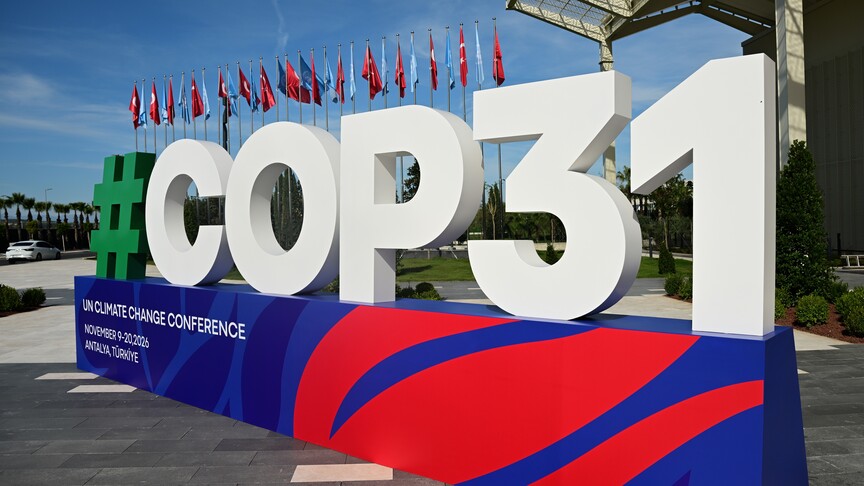
Speaking to Anadolu on the sidelines of the UN climate conference COP31 in Antalya, WFP Director of Climate and Resilience Richard Choularton said only 2% of global crisis financing was arranged in advance.
He pointed out that this left countries and humanitarian organizations with limited resources to anticipate and mitigate the impacts of climate-related disasters and called for more funding.
Choularton said 266 million people worldwide were currently experiencing acute hunger, with around 88 million of them facing food crises last year primarily due to extreme weather events.
“Climate change is making those extreme events more frequent, more severe. They impact more people,” he explained.
He pointed to the ongoing El Nino phenomenon, which is affecting communities worldwide through severe droughts, floods and changing storm tracks.
“The impact of floods, droughts and storms is worst in places that are already experiencing severe food insecurity and malnutrition. Many of those places are places where we also see conflict,” Choularton added.
He identified Sudan, South Sudan, Somalia and Yemen as countries facing famine risks, noting that drought impacts linked to El Nino were already being observed in Sudan, Somalia and South Sudan.
“What happens is people are already on the edge. They’re already struggling. And then they get hit by another drought, another flood, another storm,” Choularton underscored.
He explained that additional climate shocks could destroy crops and livelihoods, prevent people from earning an income and result in the loss of livestock, homes and food supplies.
Choularton stressed that humanitarian responses must increasingly focus on anticipating climate-related disasters rather than relying primarily on assistance delivered after they occur.
He said WFP first tested its anticipatory action approach during the 2015-2016 El Nino event, providing assistance to communities based on drought forecasts before the impacts materialized.
Since then, the organization has expanded its programs considerably.
“This year, we have those programs operating in over 50 countries. They’ve triggered in 18 countries and we’ve already supported 1.5 million people,” Choularton said.
He noted that governments were also increasingly taking preventive measures, including repairing irrigation systems, improving drought management practices and strengthening social protection systems.
However, Choularton said these efforts were not enough.
“We need more of that kind of action to deal with the scale of the current food crises in the world and the scale of impact of floods, droughts and storms,” he explained.
Choularton said COP31 offered an important opportunity to address the financing gap, with countries discussing efforts to triple adaptation finance.
He emphasized that discussions should focus not only on how much funding is mobilized but also on where it is allocated and when it becomes available.
“We need much more to be able to really anticipate and reduce the impact of these shocks,” Choularton said.
“That’s something that parties here at COP 31 can really focus on as they think through how to mobilize climate finance and how to turn this COP into the implementation COP,” he added.
Choularton also highlighted the difficulties faced by countries most vulnerable to climate-related food crises in accessing international climate finance.
“The most vulnerable countries, the ones that have the highest levels of food insecurity and experiencing the worst food crises are often the ones with the least institutional capacity to access climate finance,” he said.
Choularton said WFP focused its efforts on helping such countries mobilize climate finance and ensure that resources reach vulnerable populations.
“That’s a critical issue for parties here at COP 31 to think through. How do we make it easier and faster to get climate finance to those communities?” he underscored.
Beyond international climate funds and development assistance, Choularton pointed to domestic revenue generation as another important source of financing, welcoming the growing number of countries investing in their own resilience, climate adaptation and transformation.
Choularton said COP31 could help maintain momentum in improving early warning systems while encouraging countries to develop the institutional capacity needed to translate forecasts into preventive measures.
“We need to make sure that countries are connecting early warning systems to early action systems so that when we know a flood or a drought or a storm is coming, we can take action before and right after,” he explained.
Choularton added that national disaster management agencies needed to be ready to respond and social protection systems needed to be capable of supporting households affected by climate shocks.
“The impact of a climate disaster can take years to resolve. It can take one or two or even three years for poor households to return to their pre-shock levels of food consumption,” he cautioned.
Turning to the draft COP31 decision, Choularton welcomed its recommendations on climate finance, early warning systems and early action, expressing hope that these elements would remain in the final text as negotiations continue.
He also emphasized that adaptation efforts must be accompanied by stronger mitigation measures to prevent further escalation of climate-related disasters.
“We don’t want to see a world that has even more floods, droughts and storms affecting the most vulnerable people,” Choularton added.