Iran Push To Control World Oil Indicated By Pipeline Attack - Newsweek
A drone attack that closed a critical oil pipeline in Saudi Arabia shows a coordinated effort by Iran and its allies to control regional oil exports as part of Tehran’s ongoing fight with the U.S., according to analysis.
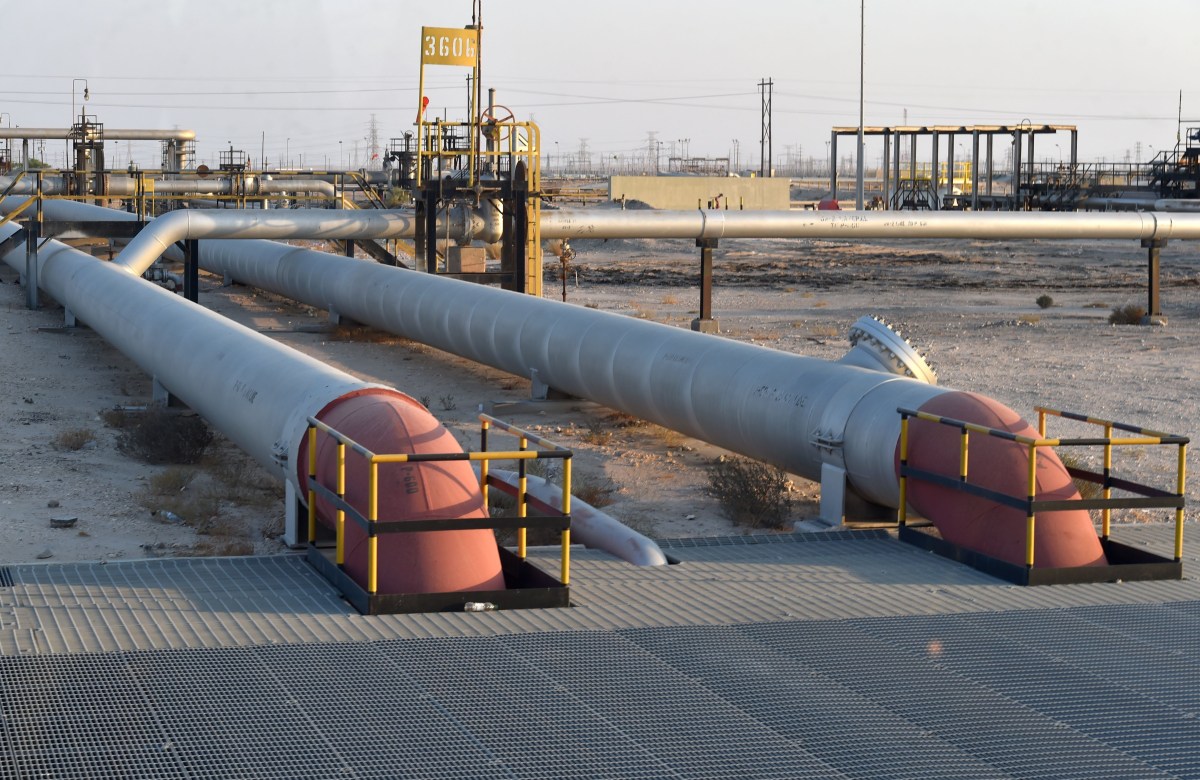
Drones hit the 745-mile East-West pipeline which Riyadh announced it had closed as a precaution. The pipeline allows Saudi oil to bypass the blockaded Strait of Hormuz and be exported via the Bab el-Mandeb Strait and the Red Sea.
Satellite images on Friday showed scorched ground and smoke near the pipeline, which moves five percent of global oil supply, adding further pressure to volatile energy markets.
Riyadh said the attack had originated in Iraq, later confirmed by Baghdad, which has launched an investigation. Traces of explosives and drone launchers had been discovered in Iraq's Maysan province near the border, according to agencies.
The Institute for the Study of War said on Friday the incident showed that the Houthis are working with other Tehran-backed Axis of Resistance actors in the region—including in Iraq—to force Saudi Arabia to meet its demands.
“The Houthis are able to launch attacks on Saudi Arabia from Iraq because Iranian-backed Iraqi militias allow the Houthis to operate in areas that the militias control,” the ISW said.
Newsweek has contacted the Iranian foreign ministry for comment.
Iran-backed Iraqi militias have carried out strikes on U.S.-linked targets inside and outside Iraq since the start of the Iran War and Baghdad is under pressure to stop local militias from aiding Iran proxy groups.
The Houthis have coordinated with the Islamic Revolutionary Guards Corps (IRGC) and Iraqi militias to attack Saudi Arabia since July 28 and a lengthy shutdown of the pipeline could put further pressure on Saudi oil exports, the ISW said.
However, Berlin-based energy analyst Thomas O’Donnell told Newsweek that hitting a pipeline may not have an immediate effect on oil exports, noting that in the Ukraine War, Kyiv targets Russian oil facilities but sees less benefit in hitting pipelines.
“Pipelines are relatively easy to repair,” he said. "If you really want to shut a pipeline, the thing to do is to hit the pumping station,” he said, although these are harder to damage due to the protection they have.
It comes amid mounting pressure on Saudi Arabia, following rapid gains by Tehran-backed Houthi rebels in Yemen, which include the capture of a strategic island at the southern entrance to the Red Sea.
Trump said on Saturday during a visit to Ireland that Iran was probably responsible for the pipeline attack and said that the situation in the Strait of Hormuz and Saudi Arabia would “work out just fine.”
Meanwhile, Brent crude, the global benchmark, has hit $105 a barrel but analysis by Oxford Economics provided to Newsweek described a geopolitical supply shock, rather than a sign that inventories were at stressed levels or that oil-market fundamentals had deteriorated.
The think tank said that if there were sustained disruption in which flows through the Strait of Hormuz fall to near zero and Middle East exports remain heavily constrained until alternative export routes (particularly new pipelines) are developed, Brent could rise to around $110 per barrel for the rest of the year.
Saudi crude exports dropped from five million barrels per day (mbpd) in July to three million barrels per day in August.
“With limited storage capacity and storage facilities themselves exposed to attack, these export constraints have also forced production lower, to around six mbpd,” Oxford Economics said.
However, O’Donnell said that there was no urgency from OPEC members to increase supply. “There's a lot of other oil in the world coming online,” he said, and “my understanding is the Saudis, even with the less oil that they're pumping, they're making more money than they made before.”
Contact Newsweek editor on this story: Edward Pearcey.