Iran's Revolutionary Guards ready to change nuclear doctrine if Mojtaba orders
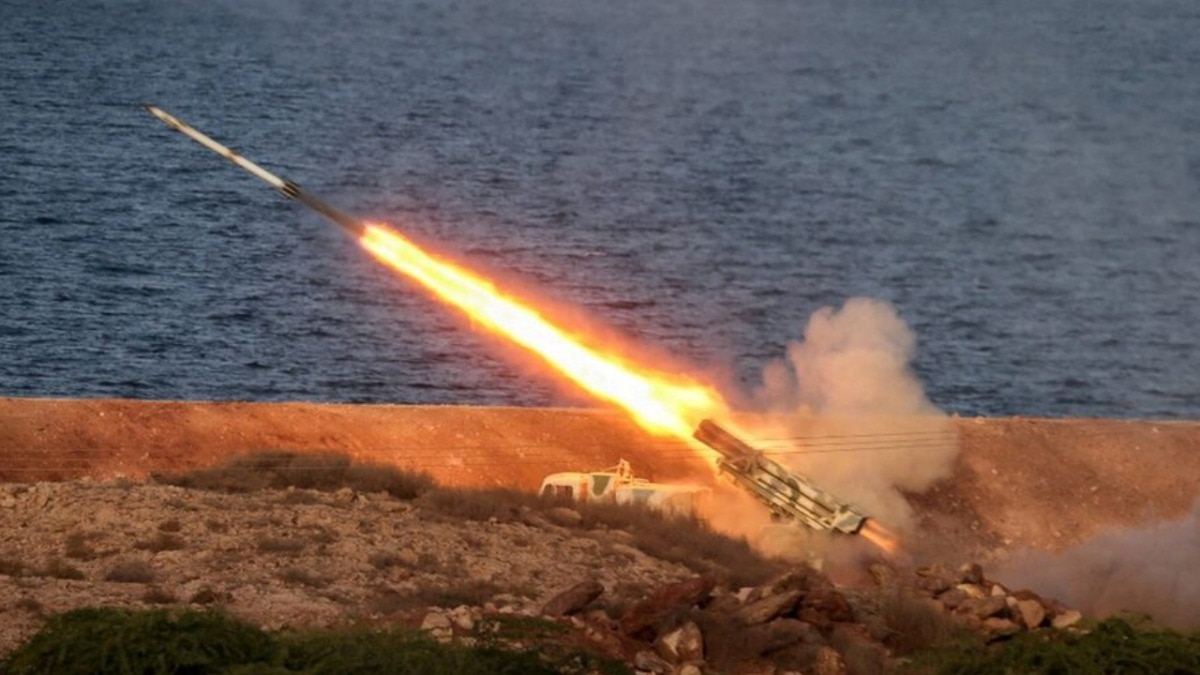
Amid boiling tension with the US, Iran's Islamic Revolutionary Guard Corps (IRGC) has warned that Tehran is prepared to make the necessary military preparations if the country's leadership decides to change its nuclear doctrine. IRGC spokesperson Brigadier General Hossein Mohebbi made the remarks on Saturday, stressing that any change would depend on a decision by Iran’s leadership.
"If the country's leadership decides to revise its nuclear doctrine, the necessary preparations will be made," Mohebbi said, according to Fars news agency.
The statement does not mean Iran has decided to abandon its long-standing position against nuclear weapons. Mohebbi did not say that Tehran had changed its policy, nor did he explain what a revised nuclear doctrine would look like.
Instead, his warning appears to signal that Iran's military establishment is preparing for the possibility of a policy shift if the country's top leadership gives the order.
The remarks follow comments last week by Major General Mohsen Rezaei, secretary of Iran's Supreme National Security Council, who said officials were considering possible changes to Tehran's nuclear policy. Rezaei, however, also made clear that no decision had been taken.
That distinction is important. Iran has for years maintained that its nuclear programme is intended for peaceful purposes and has repeatedly denied seeking a nuclear weapon.
Iran's slain Supreme Leader, Ayatollah Ali Khamenei, had also issued a religious decree, or fatwa, declaring the acquisition, development and use of nuclear weapons forbidden under Islamic principles.
The latest IRGC warning therefore marks a significant shift in rhetoric rather than a confirmed change in policy.WHAT IS IRAN'S NUCLEAR DOCTRINE
A nuclear doctrine refers broadly to how a country views nuclear weapons, including whether it intends to develop, possess or potentially use them.
Iran's longstanding position has been that it does not want nuclear weapons. But the issue has become increasingly sensitive after years of confrontation with Israel and the US over the nuclear programme. The situation has become even more tense following the recent US military escalation against Iran.
US President Donald Trump confirmed on Friday that American forces had carried out limited strikes on Iran's Qeshm Island, targeting what he described as an Iranian anti-aircraft installation. Trump has repeatedly framed his Iran policy around preventing Tehran from acquiring a nuclear weapon.MIDDLE EAST WOULD NOT EXIST WITHOUT US ACTION: TRUMP
Trump has gone further in describing the importance of his campaign against Iran's nuclear programme.
In a post on his Truth Social platform, Trump claimed that Israel and the Middle East would not exist if his administration had not stopped Iran from obtaining a nuclear weapon.
"Israel and, in fact, the entire Middle East, WOULD NOT EXIST TODAY if I did not stop Iran from having a Nuclear Weapon. Nobody wants to say that, but everybody knows it's true!" Trump wrote.
Trump has repeatedly presented US and Israeli military strikes on Iranian nuclear and military infrastructure as an effort to prevent Tehran from developing a nuclear bomb. However, the exact state of Iran's nuclear programme remains difficult to establish.
A Congressional Research Service assessment published in October said it remained unclear how severely military strikes had affected Iran's ability to produce a nuclear weapon. It also noted that earlier assessments had concluded Iran was not actively building a nuclear weapon.IRAN HAD LARGE STOCKPILE OF ENRICHED URANIUM
The concern surrounding Iran is therefore not simply that Tehran had already built a bomb. The bigger issue has been its accumulation of uranium enriched far beyond the level normally required for civilian nuclear power.
A Reuters analysis in October reported that the International Atomic Energy Agency (IAEA) believed Iran could still have more than 200 kg of uranium enriched to up to 60 per cent stored in an underground tunnel complex at Isfahan. That is below the roughly 90 per cent enrichment level generally associated with weapons-grade uranium, but 60 per cent material can theoretically be enriched further.
The uncertainty has been compounded by the difficulty international inspectors face in determining exactly where Iran's enriched uranium and centrifuges are located after military strikes on nuclear facilities.
The IAEA has not been able to fully verify the status of Iran's nuclear material following the attacks.
Iran has consistently rejected accusations that it is secretly building a nuclear weapon.
A 2026 US assessment cited by Congress said Iran had halted its nuclear weapons programme in 2003 and found no established evidence that Tehran had restarted a structured programme aimed at building a nuclear weapon.
Iran's ability to enrich uranium to high levels and maintain a large nuclear infrastructure has raised concerns about its potential to develop a weapon. But that does not establish that Iran had actually built a nuclear bomb.
It is against this uncertain backdrop that Trump's claim that he "stopped Iran from having a Nuclear Weapon" must be viewed.US PREPARES FOR POSSIBLE FURTHER ACTION
The nuclear issue remains at the centre of the confrontation between Washington and Tehran.
The Trump administration has demanded that Iran surrender its uranium enrichment capabilities and accept sweeping restrictions on its nuclear programme, while Tehran has sought an agreement that would allow it to continue its nuclear activities.
At the same time, Washington has continued preparing for the possibility of renewed military action. Trump met with his national security team on Thursday to discuss Iran and the possibility of resuming military operations. US Central Command has also stepped up preparations for a potential new round of strikes.
However, Washington has not issued a formal order to restart major combat operations.
US officials cited by Fox News said key meetings on Iran took place at the White House on Wednesday and Thursday. Thursday's meeting, held during Trump's weekly intelligence briefing, was reportedly the first involving Trump and his senior national security advisers on Iran since the US midterm elections. Trump later told reporters in the Oval Office that Washington would soon decide whether to launch further attacks against Iran's nuclear programme.- Ends