Iraq: US troops withdraw from their Iraqi US-led Operation Inherent Resolve mission against ISIS after 12 years as Baghdad delays militia disarmament
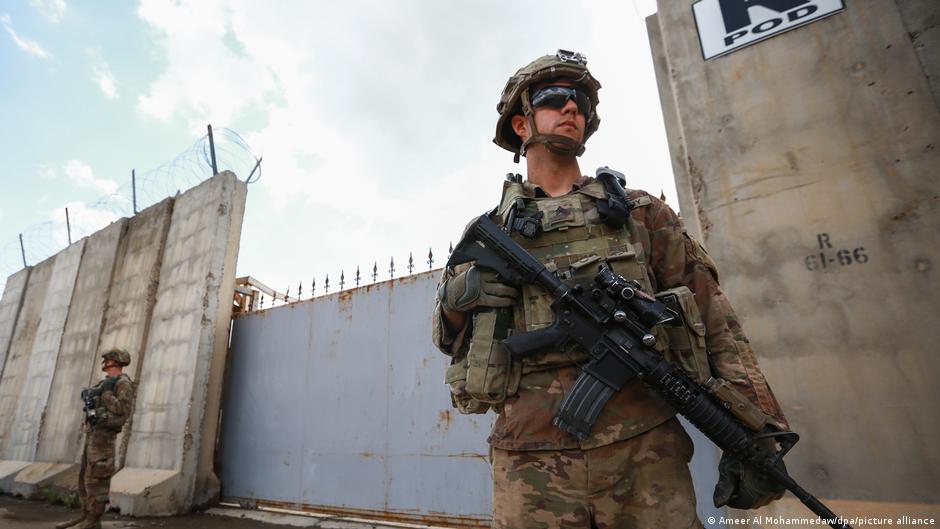
All US troops will are to leave Iraq by September 30Image: Ameer Al Mohammedaw/dpa/picture allianceAdvertisementFor Iraq's government in Baghdad, September 30, 2026, marks the end of an era. "October 1 will be a new day in the course of the Iraqi state, with the country free of any foreign military presence and the completion of national sovereignty over its territory," Iraq's Prime Minister Ali al-Zaidi said in a statement.
The occasion will be celebrated as "Independence Day" with four official public holidays.
By Wednesday, the United States will have completed the withdrawal of its remaining 2,500 troops from Iraqi territory according to a 2024 agreement. Their departure concludes 12 years of the US-led Operation Inherent Resolve mission against the Islamic State group, or ISIS, which at the time was advancing across the country and in neighboring Syria.
The withdrawal also marks the end of more than two decades of US military involvement in Iraq. Following the US invasion in 2003, US forces withdrew in 2011 and returned in 2014 to fight the Islamic State group. The withdrawal also follows the broader US strategy of reducing its military presence in the Middle East.
However, the US withdrawal does not mean an end to all foreign military deployments in Iraq. Turkey still has troops in Iraq, even though Ankara said earlier this week that it would gradually hand over a military base in northern Iraq to Baghdad.
"In 2024, Baghdad and Washington agreed to what they called a normalized relationship," Renad Mansour, deputy director for the Middle East and North Africa program and director of the Iraq Initiative at the London-based think tank Chatham House, told DW. "For Baghdad, the political aim will be now to make clear that Iraq wants to remain an ally of the US," he said.
In his view, Iraqi Prime Minister Ali al-Zaidi is concerned that Washington could start viewing Iraq and its Iran-backed non-state militias as too close to Iran, given that the US and Israel are at war with Iran.
Initially, Baghdad had linked the end of the US military mission to the disarmament of Iraq's numerous armed groups and militias. The plan also included bringing these paramilitary groups under state control.
Iraqi Prime Minister Ali al-Zaidi said last week that the new deadline was June 30, 2027. The revised plan includes a 90-day period during which armed groups would refrain from attacks in exchange for assurances that US forces would not target them, followed by a gradual handover of weapons that is due to be completed by June 30, 2027.
Yet not all armed groups are likely to follow this plan as several powerful armed groups have rejected disarmament or demanded conditions that could delay the process.
"The hardest-line armed groups — Kata'ib Hezbollah, Harakat al-Nujaba and Kata'ib Sayyid al-Shuhada — have so far given no indication that they are prepared to surrender their weapons to the state and integrate into Iraq's armed forces," Alina L. Romanowski, distinguished fellow with the Scowcroft Middle East Security Initiative at the Atlantic Council's Middle East program, said.
Renad Mansour told DW that he was not surprised by the extension of the deadline. Iraq's political landscape has been highly fragmented since the US invasion that toppled Saddam Hussein in April 2003. There have been more than eight years of war, the rise and fall of ISIS, and the US withdrawal in 2011 and return in 2014. "Many political movements are associated with armed organizations, so it is hard to see a revolution in the security sector happening any time soon," he told DW, predicting that "even next year, many armed groups will continue to remain free of the central government."
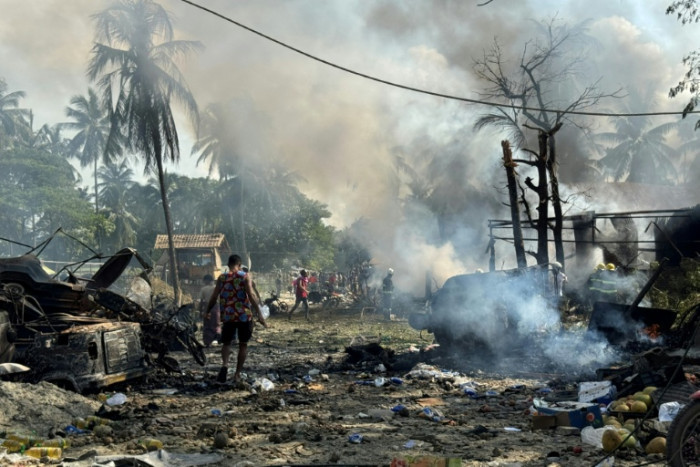
The withdrawal of US troops also includes the departure of military personnel and the removal of US air defense systems in Erbil, the capital of the semi-autonomous Kurdistan Region in northern Iraq. Kurdish Prime Minister Masrour Barzani has already called on Baghdad for protection against missile and drone attacks from Iran. Since the beginning of the US-Israeli war with Iran in February, attacks by Iraq's Iran-backed armed groups on US-linked targets in Erbil have been on the rise, while Iranian attacks on infrastructure belonging to Iranian Kurdish opposition groups in Iraq have also increased.
On Monday, Kurdish officials in Erbil said that three drones targeted a camp affiliated with Iran's Kurdish opposition. Local officials said the drones were Iranian-made, but responsibility for the attack was not independently confirmed.
Yerevan Saeed, a nonresident senior fellow with the Iraq Initiative at the Atlantic Council and the director of the Global Kurdish Initiative for Peace at American University, is concerned that Iraq's vulnerable ethnic and religious minorities, such as Christians and Yazidis, as well as Kurdish communities, could be left more exposed from October 1, 2026, onward. "The withdrawal signals the end of an era in which foreign boots provided a buffer against central and regional predation," he said.
Chatham House's Mansour, meanwhile, notes that US-Iraqi ties will not end on September 30, but rather shift toward "other arenas, including economic ties rather than having a security-focused relationship."
In July, US Defense Secretary Pete Hegseth said after meeting with Iraqi Prime Minister al-Zaidi, that they had discussed how a sovereign, stable and strong Iraq would pave the way for mutually beneficial commercial and defense cooperation.
However, in the statement following the meeting, Hegseth added that "building a normal US-Iraq bilateral defense relationship requires a secure environment free from terrorist coercion."