Is Russia’s plague scare Putin’s Chernobyl crisis? - Newsweek
On the morning of April 28, 1986, the alarms at Sweden’s Forsmark nuclear power station went haywire. The facility’s radiation detectors found workers at the plant had been contaminated, and officials began to panic that a major nuclear disaster was unfolding.
They were right. A disaster was unfolding … just not in Forsmark. Nearly 700 miles away, Reactor 4 at Chernobyl in Ukraine—then a Soviet Socialist Republic—was spewing radioactive material into the sky, two days after explosions exposed the reactor core and triggered a meltdown.
No one beyond the Iron Curtain knew, because Moscow tried to cover it up. It was only after the Swedes realized their nuclear reactors were safe and the radioactive contamination was coming from abroad that the game was up, and the USSR was forced to reveal the disaster to the world.
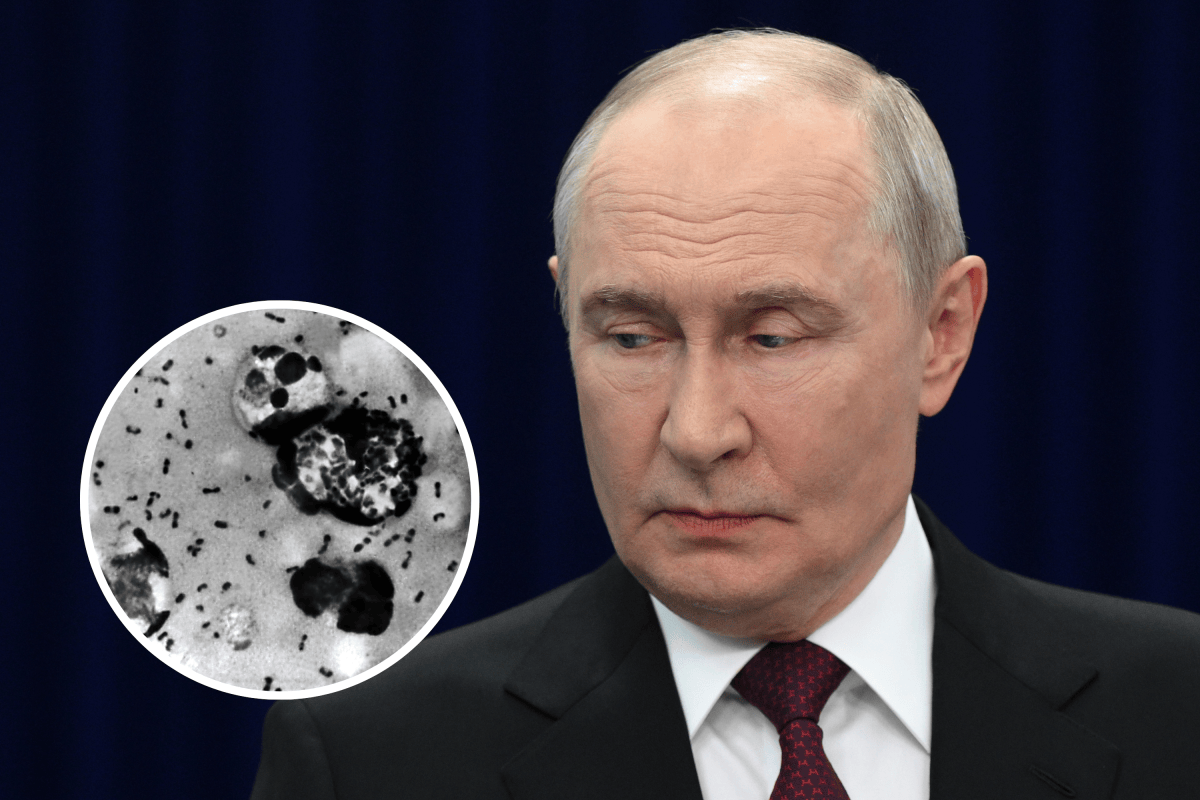
Forty years later, Moscow faces another disturbing information battle over something arguably more terrifying than a nuclear reactor meltdown—a suspected case of pneumonic plague. Reports emerging from Siberia describe the death of a young lab technician working with deadly bacteria at a facility engaged in biological security and counter-bioterror research, a hospital quarantine, and extraordinary public-health precautions.
Russia’s public health body, Rospotrebnadzor, insists otherwise; there was no laboratory accident in the first place, and no plague outbreak. But Moscow has offered scant evidence for anyone beyond Russia’s borders to establish that for themselves.
The saga began on September 25, when lab worker Darya Shipilova allegedly broke a tube containing Yersinia pestis—the official, less catchy name for the bacteria that causes the plague—according to multiple Russian media reports.
Her workplace, the Irkutsk Anti-Plague Research Institute, is no ordinary lab. It is a federal research center under Rospotrebnadzor—Russia’s public health agency—which, since the 1930s, has conducted research on the plague and other infectious diseases, and is engaged in biological security research, supposedly to prevent bioterrorism. A document published on the institute’s website dated November 2022 reveals Y. pestis was one of many pathogens undergoing active research.
Shipilova reportedly began exhibiting symptoms of pneumonia and was hospitalized at District Hospital in the town of Shelekhov near Irkutsk on September 29. On October 1, the hospital’s inpatient unit was quarantined. By October 2, Shipilova was dead.
That’s what we know—or at least, what we think we know, based on all available Russian media reporting. But Russian authorities are offering competing narratives about the chain of events while refusing to publish detailed information about what really happened in Irkutsk.
An official statement from Rospotrebnadzor carried by Russian state media challenges the reported version of events. It says that an institute employee was diagnosed with "pneumonia of undetermined etiology," and that a specialist commission investigating biological-safety compliance found "no emergency situations involving pathogenic microorganisms" at her lab.
A second commission dispatched by Russia’s public health chief Anna Popova drew the same conclusion—but the agency has not published any details or evidence to support this at the time of writing.
Meanwhile, statements from other Russian officials have only served to cloud the picture further.
Irkutsk Governor Igor Kobzev said authorities were investigating a suspected case of an "especially dangerous infection" but offered no diagnosis, while Alexei Tsydenov, governor of neighboring Buryatia, published a post via Russia’s MAX messaging service in which he referred to a woman who had died "of plague"—before editing it to say she had "possibly" died of plague. Then, officials from the city of Baikalsk in the Irkutsk region published a notice on Telegram advising its residents not to travel to Shelekhov amid reports of the plague. That warning was later deleted.
Perhaps the initial Russian media reporting was false, and Rospotrebnadzor’s account—that there was never a laboratory emergency in the first place—is accurate. But whatever happened in Irkutsk, Putin’s system is not behaving as if transparency were a virtue.
The world only learned about Chernobyl because the Soviets were betrayed by the wind. Soviet authorities had near-total control over the media and information networks, while the KGB restricted international telephone connections and monitored outgoing correspondence as soon as the explosion had been reported.
Without the Swedes and other Scandinavian countries raising the alarm, it may have taken weeks or even months for the disaster—which killed more than 30 workers and emergency responders, forced hundreds of thousands of people from their homes and likely caused a surge in thyroid cancers—to be revealed by the work of intelligence agencies, spy satellites, or horrified dissidents.
That world no longer exists. Russia’s FSB security service and state communications regulator Roskomnadzor still maintain extensive control of the national digital ecosystem; today, they can throttle mobile internet networks, crack down on VPN usage and degrade social media platforms to slow the transmission of information. But they can’t recreate the Soviet information monopoly.
Hyperconnectivity has changed the balance. As proven in Irkutsk, Buryatia and Baikalsk, a post shared by a local official can be recorded in the annals of internet history before it is deleted or amended.
People can share what they experience and see in real time; this subjects official accounts to scrutiny much faster and, crucially in the case of possible public health catastrophes, gives communities and governments time to prepare for the worst before the full picture is clear.
Kazakhstan’s Health Ministry has declared it is already monitoring Irkutsk, conducting sanitary-quarantine controls at its borders and assessing the risk that an infectious disease could be imported. Kyrgyzstan has likewise put all of its sanitary-quarantine border checkpoints on heightened alert. Neither government is claiming that Russia has a plague outbreak, but both are taking precautions before the uncertainty is resolved.
Washington is watching, too. The State Department says it is monitoring the suspected case alongside the CDC and has urged Russian authorities to "share accurate information quickly and openly."
But governments should not have to assess a potentially catastrophic biological threat by piecing together media reports, parsing contradictory statements from Russian politicians and archiving public warnings before somebody deletes them. If there was no laboratory accident and no plague infection, Rospotrebnadzor should be able to demonstrate that. If they’re still uncertain, they should say so.
We have a much more recent example than Chernobyl of what can happen when authorities’ desire to control the message collides with their obligation to protect the public.
COVID-19 may have been circulating in China as early as November 2019, and by December, Chinese doctors were warning their colleagues about a SARS-like illness.
The authorities’ response was hardly a model of openness. On December 31, Wuhan officials acknowledged 27 cases of unexplained viral pneumonia but said there was "no obvious human-to-human transmission" and no infections among medical workers.
The following day, Wuhan police began investigating people they suspected of spreading "rumors" about a viral outbreak. Among them was Dr. Li Wenliang, who shared a report to a group of medical colleagues on Chinese messaging app WeChat about an outbreak of a viral infection that was subsequently leaked publicly.
Police issued him a formal reprimand and sent him back to work. A month later, Dr. Wenliang was dead, and the world had a new pandemic to contend with.
This isn’t a suggestion that the events unfolding in the shadows cast by the Russian authorities will trigger the second pandemic of the decade. There is still no public evidence that Shipilova contracted the plague at all; even if pneumonic plague were confirmed, Y. pestis is far less easily transmitted under ordinary conditions.
The CDC says person-to-person spread of the plague typically requires close exposure to large respiratory droplets, and historical U.S. data puts its basic reproduction number at around 1.18—considerably lower than the so-called "R-number" associated with the initial COVID-19 variant that plunged communities worldwide into lockdown. But that’s beside the point.
Ten days after the alleged incident in Irkutsk on September 25, Rospotrebnadzor has issued one tight-lipped statement claiming there is no public health emergency and that the situation is stable. What it hasn’t done is publish the underlying diagnostic data, incident records or full commission reports that would allow anyone outside the Russian system to judge whether that reassurance is justified.
If "everything is under control," prove it.
Irkutsk may not become another Chernobyl, or another COVID. But Moscow should not expect the world to learn the truth the same way it did in 1986: by accident, and against official wishes.