
Ishq Wala Love to After Dark, director Reema Maya on reinventing Student of the Year
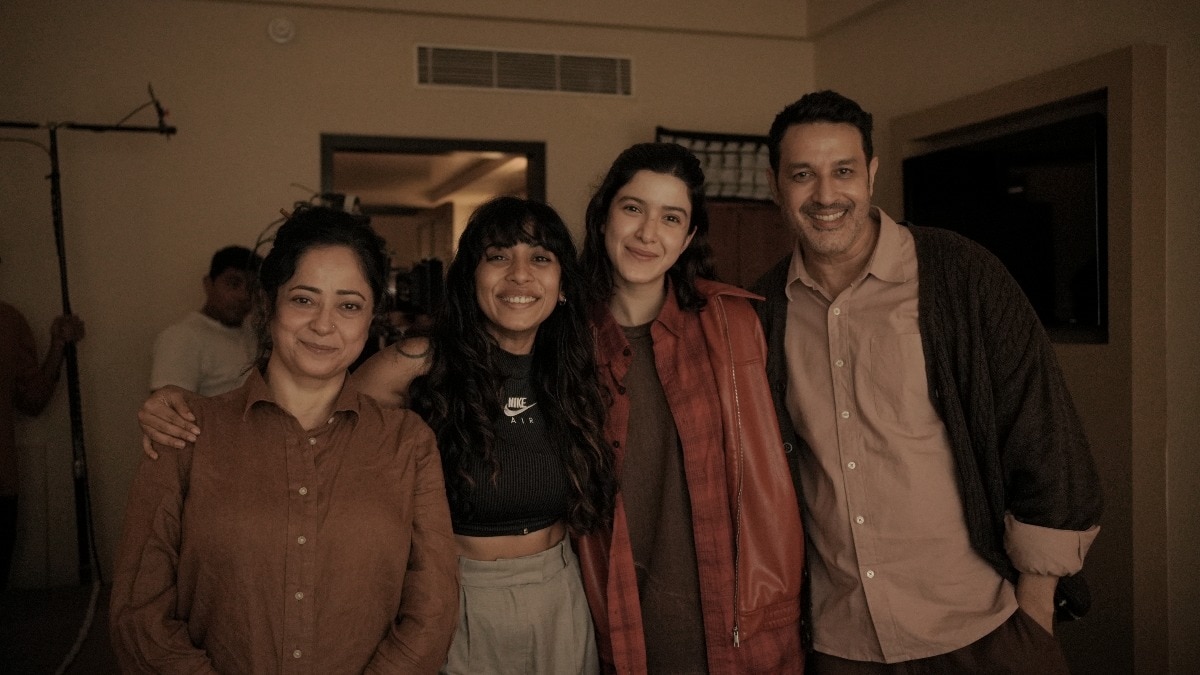
From Ishq Wala Love to Student of the Year: After Dark, Dharma's popular franchise has clearly travelled a long way. With its latest instalment, director Reema Maya takes the familiar world of campus rivalries and youthful ambition into a darker, more psychologically layered space. For the filmmaker, who comes from an independent background of music videos, advertising and short films, the series was also an opportunity to step outside her comfort zone and experiment with commercial storytelling.In an exclusive conversation with India Today, Reema opened up about the challenges of reinventing an established franchise, the pressure of writing young characters authentically, working with Shanaya Kapoor, and comparisons with Stranger Things and 13 Reasons Why.
Excerpts:Student of the Year: After Dark is quite a departure from the world audiences associate with the franchise. What drew you to this project?When I came on board, a couple of strategic decisions were already in place. But for me, the most exciting thought was that I had an opportunity to understand and play in the commercial playground. I come from a very independent background, and the decision really was whether I wanted to continue being in my comfort zone or challenge myself. I chose the latter. This project has also been a way for me to understand what really comprises commercial storytelling. What is the combination of relatability, accessibility and experimentation, or uniqueness of voice, that works? It's my first series, so there has been a lot of learning and a lot of fun challenges.How much freedom did you have from Karan Johar and the Dharma team to reinvent the franchise?I think they were very clear. Karan, Somen Mishra and the team at JioHotstar, including Neha, were all clear that they wanted to do something radically different. They wanted to reinvent the franchise and have a conversation that was contemporary and relevant to today's youth. I am so thankful that they put their faith in my voice and vision. They trusted me with the reimagination and really let me go wild a little bit and play. You can't bring someone on board and constantly hold them back. They were wonderful collaborators on both sides. They allowed not just me, but my crew and the very young cast, to come out and play.The show has already invited comparisons with Stranger Things and 13 Reasons Why. How do you look at these comparisons?(Laughs) Whenever I do a project, it always starts with what I really want to say through it. Everything else, the style, tone, pacing and visual design, is built from that intention. For me, this project was a very exciting opportunity to speak to the youth of India. If I have this massive scale to actually have a conversation with our youth, what is the conversation I want to have?The one thing that kept coming to me was how we live in such competitive times. We are constantly pitted against each other and made to feel that the world doesn't have enough resources for all of us. So we must fight, compete and remain hyper-focused not just on living, but on succeeding. There is this intense sense of comparison that is constantly present. I can't even imagine how intense that must feel for children growing up on social media today.But what did you consciously want to say about today's young generation through the show?High school is a tough time for many of us. We have all gone through a lot during that coming-of-age period when we were trying to understand our identity. The feeling of how I felt when I was around that age is something I wanted to hold on to. Even when I look at the world right now, one thing I see is a lot of good kids stuck in tough situations. That emotional resonance is what I wanted to bring to the table.The conversation is about the hyper-competitive nature of the lives our youth lead today and the systemic push to constantly make them compete with each other. It is supposed to be about friendships, interpersonal relationships and the idea of family. Competition affects all of those things, and I wanted to keep the conversation focused on that.How long did the writing process take, especially considering this is also a murder mystery?I think I ended up spending about a year on it. And even while we were shooting, we were constantly making changes and doing all of those things. I honestly believe you can't separate writing and editing. You have to write from an editor's lens and then edit from a writer's lens. In that sense, the writing process continues through editing.Before writing the screenplay, there is a lot of preparatory work. You make elaborate detail sheets, work on narrations and, especially with a murder mystery, graph out everything. It is like a big board with all the clues, suspects, what happens where and how everything connects. It is only after all that homework is done that you actually attempt the screenplay.
Tell us about the casting process. You have a fairly young ensemble, with Shanaya Kapoor leading the cast.The casting process was quite extensive. Kabir Sinha, the casting director, and his team worked really hard. We also followed an unconventional process where the same people were tested for multiple roles. We wanted to understand how naturally they interpreted different characters. I didn't want to go in with preconceived notions that a rich kid looks a certain way or someone from a middle-class background should look a particular way. I don't believe in those things. It was a visually neutral casting process based purely on performances.It was really fun to build these characters with my actors through rehearsals. It was like having a bunch of college kids running around the office and playing out scenes while everyone else was working. The cast got along really well, and a lot of natural friendships formed.Shanaya Kapoor was attached to the project from the beginning. What was your experience of working with her?I actually had a lot of fun working with Shanaya. She was so prepared. She never forgot a line, had all her continuity marks in place and reacted to every little nuance. I was pleasantly surprised by that. When we were shooting and prepping, she was also juggling a couple of different projects. But she was hyper-focused and completely invested, wanting to give her best at every moment.When I came on board, I was told to meet Shanaya, talk to her and spend time jamming together. We had many long conversations. I like talking to my actors about their life experiences, finding the truths they carry within themselves and seeing how I can intervene. I follow that exercise with all my actors, and it was the same process with Shanaya. The rest of the cast, including Devik Sharma, Mania Grover, Diya Damani, Abhinav Singh and Adi Malik, are also really great talents.What has working with such a young cast taught you about today's generation?There is a beautiful sense of optimism and stamina that our youth have, and it is infectious. It has been a real honour to work with such an incredible cast and crew who put so much hard work into the vision of the show.And what has the experience taught you about filmmaking?It has taught me to keep pushing myself and doing things that are outside my comfort zone. It has also taught me that one of your biggest strengths is the crew you choose. Always work with a cast and crew who want to push themselves and experiment in the same way.Student of the Year: After Dark drops on JioHotstar on November 13.- EndsALSO READ | Student of the Year After Dark to Jailer 2: 10 OTT binge-worthy releases this week
Growing up immersed in the enchanting realm of movies and television, Sana's fascination with all things on-screen quickly blossomed into an irrevocable love affair. While words continue to be her greatest strength, Sana has discovered a penchant for stepping into the spotlight, engaging in profound dialogues with celebrities on camera.


