“It was like operating on a malignant tumor” “I acted forthrightly according to the Constitution”…A torrent of sophistry at the final insurrection trial - 경향신문

This article was translated by an AI tool. Feedback Here.
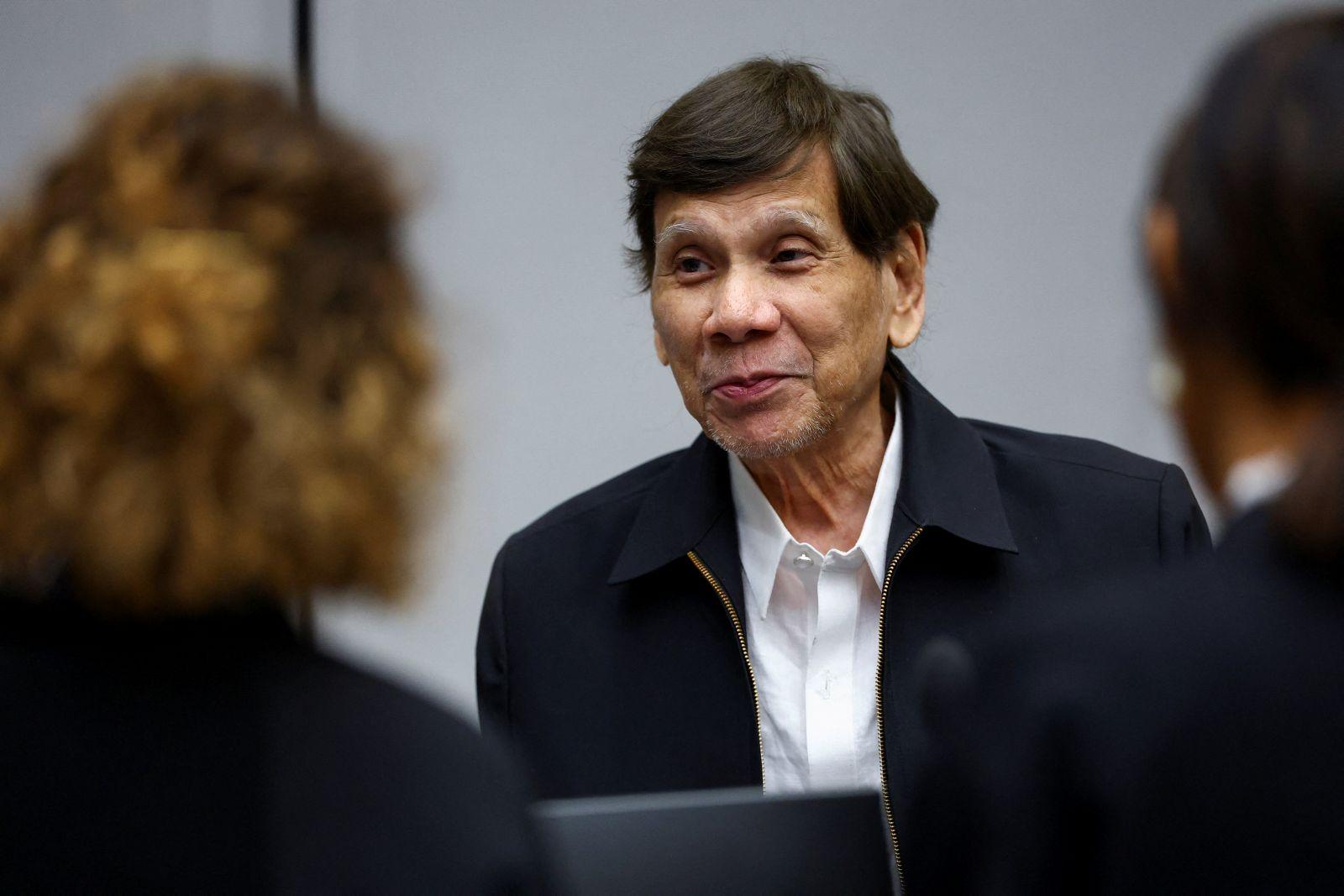
Former President Yoon Suk-yeol, indicted on charges of leading an insurrection, listens to the court’s reasoning at the first-instance sentencing hearing held at the Seoul Central District Court in Seocho-gu, Seoul, on February 19. On that day, the court of first instance sentenced Yoon to life imprisonment. Provided by the Seoul Central District Court
“The reason I declared martial law on a weekday was so that both sides would act forthrightly in accordance with the Constitution. The main opposition had said, ‘If martial law is declared, we will nullify it immediately,’ so the president was to declare it under constitutional authority, and the National Assembly was to demand its lifting under its authority.”
At the final hearing of his appeal in the insurrection ringleader case, former President Yoon Suk-yeol spent more than an hour insisting it was ‘martial law to expose the outrages of the main opposition.’ Kim Yong-hyun, the ‘No. 2’ in the insurrection and former Minister of National Defense, said, “It was a choice to surgically remove the cancer of the main opposition’s so-called ‘legislative dictatorship.’”
Criminal Division 12-1 of the Seoul High Court (Presiding Judge Lee Seung-cheol) on the 5th held the closing hearing for Yoon’s insurrection-ringleader case and for the remaining seven defendants, including former minister Kim Yong-hyun, on charges of engaging in essential duties in an insurrection. With today’s arguments, all fact-finding procedures to determine the substance of the insurrection case have been concluded. It comes about two years after the 12·3 insurrection.
Yoon again repeated the specious claim that it was martial law to inform the public of a crisis. He said, “I pressed my pen onto a notebook in my cell to write down what I wanted to say,” and, wearing reading glasses, read out the manuscript he had written himself.
Before declaring martial law, he said he was aghast to see “a string of ‘orchestrated impeachments’ and ‘shield impeachments,’ and to see that key budgets for responding to North Korea’s nuclear weapons and missiles were being unilaterally slashed,” adding, “I thought we had to let the sovereign people know that constitutional government had collapsed and the nation was in crisis, and that we had to awaken them.”
He went on to claim that he knew the National Assembly would immediately lift martial law and that this was the outcome he intended. He said he had merely exercised the president’s constitutional authority in declaring martial law and had sought, in the process of resolving it, to expose the ‘excesses of the opposition.’ Yoon said, “If martial law were lifted, it was clear that (the Democratic Party) would ignore their own faults that had led to the declaration and attack me,” adding, “At that point, I, too, would in earnest begin criticizing the opposition’s outrages, which I had thus far refrained from doing, while informing the public in detail of the crisis and responding.” However, he said that immediately after the illegal 12·3 martial-law incident, he was suspended by impeachment and had no opportunity to give a full explanation.
Former Minister of National Defense Kim Yong-hyun claimed, “In the Republic of Korea there were three cancers: the outrages of the main opposition, anti-state forces hidden throughout society, and fraudulent elections,” asserting that martial law was declared to stop them. He added that just before declaring martial law Yoon said, “Do you think I, too, do not wish to compromise somehow and spend my later years in comfort? For my comfort alone, I cannot simply look on while the main opposition’s ruinous outrages continue,” and continued, “The president’s eyes, brimming with tears, were filled only with profound anguish that liberal democracy must be defended for the sake of the people.”
No Sang-won, regarded as the insurrection’s ‘civilian backchannel,’ said, “At the minister’s request regarding martial law, I tried, in my own way, to help sincerely, and I have no regrets at all.” He said he was “sorry to have caused unexpected concern to many people,” offering an apology only to some supporters. No said, “I thank those who, over a long period, sent much encouragement at the entrances of the detention center and the court, and who demonstrated their patriotism at patriotic rallies and at Olympic Park.”
Cho Ji-ho, former National Police Agency Commissioner, said, “When the president said he would declare emergency martial law, I thought, ‘He must be very angry,’ yet I also thought it would not become a reality, so I regret that I did not say, ‘Absolutely not.’ I am deeply reflecting on the fact that, by failing to take an active role, I contributed to the result of control by the National Assembly.”
The court decided to hand down the second-instance verdict on January 26 of next year. The court said, “This case is grave and involves a variety of detailed issues, and, taking into account that a considerable portion was examined on appeal, we set the date for pronouncement,” it said.
Earlier, on the 29th of last month, Special Counsel Cho Eun-seok’s insurrection team sought the death penalty for former President Yoon. The special counsel said that the first-instance court had treated as a favorable factor the absence of casualties during the insurrection, arguing, “You cannot reduce the sentence on the ground that a prearranged plan went awry,” and, “Please hand down the most resolute judgment stipulated by law so that no ‘second Yoon Suk-yeol’ emerges.”
The team also sought life imprisonment for former minister Kim Yong-hyun and 30 years in prison for former commander No Sang-won. For former commissioner Cho Ji-ho it sought 20 years, for former commissioner Kim Bong-sik 15 years, and for the remaining defendants it requested heavy sentences of at least 10 years.