It’s likely you’re going to see gas prices go even higher. Here’s why
Want to bookmark your favourite articles and stories to read or reference later? Start your Independent Membership today.
If you think your energy costs are high now, the situation may be about to get a whole lot worse.
With traffic in the Strait of Hormuz – normally the primary route for oil leaving the Middle East – hovering below 15% of prewar levels, oil prices have increased from US$65 a barrel before the conflict in Iran began in February 2026 to more than $100 a barrel in mid-September.
When the U.S. and Israel first attacked Iran, analysts feared prices would soon reach $150 or even $200 a barrel. That hasn’t happened yet. But seven months into the conflict, with no clear end in sight, the global oil market has now largely exhausted the safety measures that exist to keep a lid on petroleum prices.
As researchers who study the relationship between energy and national security, we have been following these dynamics throughout the conflict, and the oil market is now showing signs that significant price hikes – and perhaps even shortages – may be on the way.
Some oil has been able to make it out of the Persian Gulf despite the closure of Hormuz. Saudi Arabia increased output via its East-West pipeline, which runs from Abqaiq on the Persian Gulf overland to Yanbu on the coast of the Red Sea. At full capacity, that pipeline can carry as much as 7 million barrels per day, although only about 4 million to 5 million barrels per day are typically exported.
But attacks on the pipeline in mid-September that Saudi Arabia blames on Iran-backed militias based in Iraq forced the Saudis to temporarily halt oil shipments through that pipeline. The pipeline has now restarted operations at very low volumes, but it will likely take at least six to eight weeks to regain full capacity. Even this short cessation has tightened already constrained oil markets, and the threat of further Houthi attacks on Red Sea oil exports will only add to inflationary pressures.
Meanwhile, in Russia, Ukrainian drone attacks have damaged refineries, reducing Russian production of diesel fuel and prompting the country to ban exports of it. That has removed another 3% of the global daily supply of diesel, an important fuel for trucking and shipping. When diesel costs go up, the result is inflation in the cost of goods across the global economy.
In the U.S., 47 states experienced record-high diesel prices on Sept. 22, with the national average reaching $6.52 per gallon.
The high prices prompted President Donald Trump to threaten to ban diesel exports, a move analysts suggest would make matters worse by accentuating global supply shortages and driving world prices upward.
Beyond diesel, motor oil prices have quadrupled, and supply shortages are starting to take hold. For instance, Costco has almost doubled its prices for motor oil and has limited the amount customers can buy.
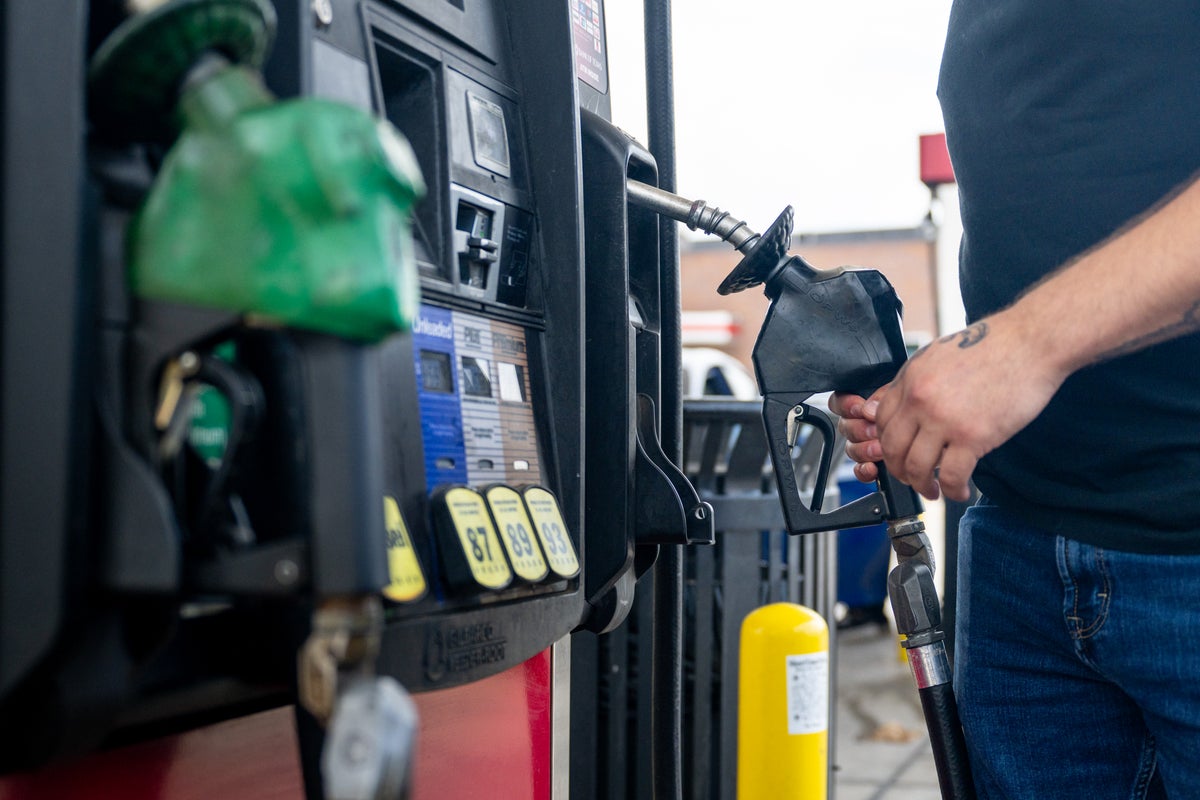
The upshot from all this is that Americans are spending a lot more on fuel in 2026 as compared to 2025. Between March 1 and late September, Americans spent an additional $72 billion on gasoline compared to the same period a year ago, as well as $45 billion more on diesel. That’s $117 billion in additional fuel costs, above and beyond the costs of the war itself, which the Pentagon estimated at $45 billion as of early September.
These shocks are even more acute outside the United States, which is the world’s largest energy producer. South and Southeast Asian countries, which were more reliant on imports from the Persian Gulf than the United States, were hit hard soon after the war broke out. Some of them have had to ration fuel, while others enacted emergency measures like shortening the work or school week to reduce fuel use.
These challenges are now hitting Europe hard as well. On Sept. 20, some 15% of French service stations had reportedly run out of either diesel or gas.
The international community has already taken most of the measures available to curb oil demand and boost its supply. Those moves have reduced the scale of oil price increases, but they did not prevent them entirely. Now, the toolbox is largely empty, leaving prices on the brink of spiking again.
In March 2026, a coordinated effort among 32 countries released more than 400 million barrels of oil into the global market from those countries’ strategic reserves. Those stockpiles are now substantially depleted, and it is not clear how much additional oil that countries will be willing or even able to release as the war continues.
Since the war began, the United States alone has released 130 million barrels, leaving its reserves at a 40-year low. The U.S. may not be able to release much more without compromising the structural integrity of the salt caverns where the Strategic Petroleum Reserve is stored.
China has played the largest role in containing global oil prices to date by releasing official reserves as well as what now seem to be massive additional reserves not previously disclosed to the public. The country reduced its crude oil imports by nearly 50% between February and June 2026.
The increased electrification of the Chinese economy played a key role in reducing Chinese demand for oil during this period. More than 60% of new passenger car sales in China are electric vehicles or plug-in hybrids, and 30% of its heavy truck sales are now electric.
Overall, China’s electrification of its transport sector allowed it to reduce oil consumption by 1.35 million barrels per day in the first half of 2026.
Other countries are looking to China for help as well. The country’s international sales of electric vehicles, batteries and solar panels have skyrocketed, as other countries seek to insulate themselves from oil market shocks.
Less encouragingly when it comes to greenhouse gas emissions, China has used more coal to offset oil demand and as an alternative means of petrochemical production as well.
Of perhaps more immediate concern, China’s oil demand is now starting to creep up again, with crude imports rising 6.2% in August 2026 as compared with the previous month. Even if its imports don’t reach prewar levels any time soon, increased Chinese demand, coupled with a tighter oil market, may result in additional price hikes over the next few weeks.
This article is republished from The Conversation under a Creative Commons license. Read the original article.