I've covered climate policy for years. The haze over Toronto finally shattered my optimism - Toronto Star
The wildfire smoke has choked my faith in Canada's climate future, writes Adam Radwanski. We used to at least be trying. Now we're betting against the energy transition we desperately need.
The wildfire smoke has choked my faith in Canada’s climate future, writes Adam Radwanski. We used to at least be trying. Now we’re betting against the energy transition we desperately need.
Adam Radwanski is a business columnist for the Star, focused on the intersection of the economy, politics and public policy. Reach him via email: aradwanski@thestar.ca
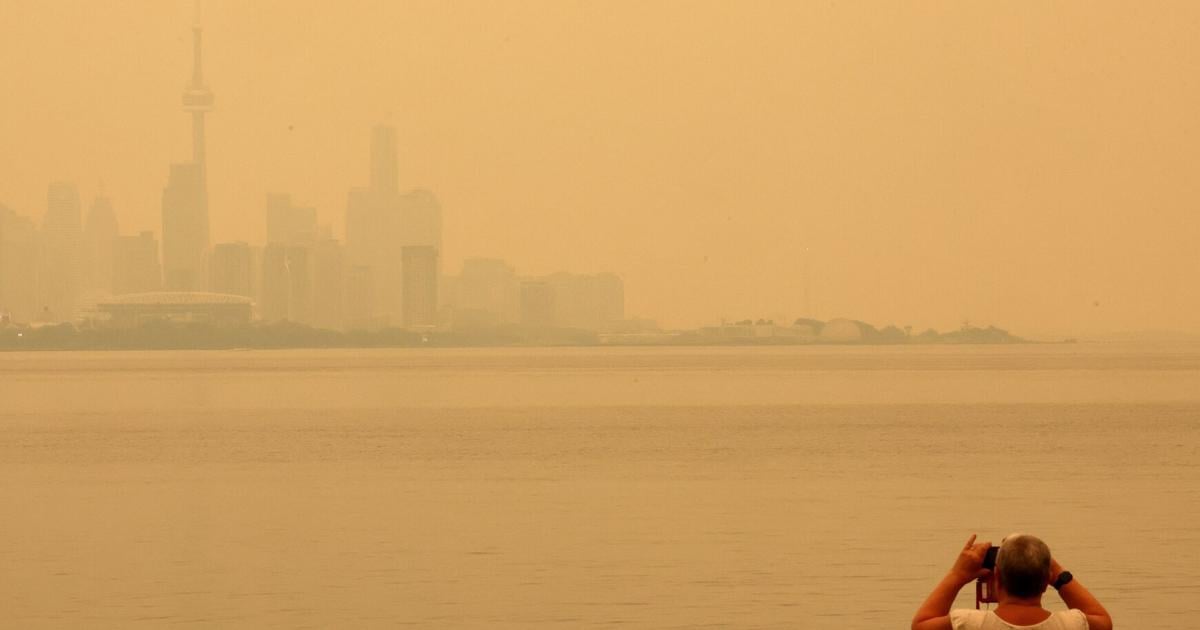
Under the dystopian haze that settled over Toronto this week, I could feel my frustration boiling over.
It’s a sensation I was mostly able to avoid, while spending more than five years — late 2019 until early 2025 — writing primarily about policies to address climate change. Despite mounting evidence that we weren’t acting quickly enough to address worsening consequences of our greenhouse gas emissions, at least Canada — like many countries — was moving far more ambitiously than previously toward a low-carbon economy.
Good luck telling myself that story this week.
Partly it was personal. When three days in a row you have to pull your six-year-old from the baseball camp he’s been excited about for months — first because of extreme heat, then because burning forests are creating some of the worst air quality anywhere in the world — you can’t help but feel down about the world he and his peers are growing up in.
Partly it was visceral. When the sky is a colour you’ve rarely seen before, when the sidewalks of your normally bustling neighbourhood are nearly empty save for people whose mental health crises are exacerbated by the heat or smoky air, it’s hard not to feel like you’re living in a dystopian sci-fi movie.
Partly it was knowledge that we weren’t seeing anything near the worst of it. That was reserved for northern communities — mostly First Nations — evacuating as fires blazed through.
I acknowledge these sorts of extreme conditions have happened in the past, and no one can prove any single event is due to climate change. It’s also impossible to ignore that they’re becoming more frequent and more intense, to the extent that summer is depressingly at risk of becoming a season we dread.
But what really made it hit so hard was that it came amid a sharp pivot from Canada at least attempting to be an international leader in reducing emissions. Instead, we’re now actively betting against a global energy transition from the fossil fuels contributing to these events.
It’s one thing to accept that for as long as there’s international demand for Canadian oil and gas, government should not stand in the way of meeting it. That was, to some extent, the approach under Justin Trudeau — even if there was some validity to sectoral complaints about regulatory processes being clunky or needlessly overlapping.
It’s quite another to try to push that industry beyond investments in new capacity that it would make if left to its own devices, which is where we’re at now.
A new west-coast oil pipeline, which only makes economic sense if there’s a predictably strong Asian market for that product for decades to come, found no private-sector backers when Mark Carney’s newish federal government expressed conditional openness to it.
So now, Ottawa plans to pair with Alberta to pay for almost the whole thing, while prodding and potentially subsidizing oil-sands giants — which have in recent years been more interested in profiting from existing assets than expanding them — to build enough new wells to fill the pipeline with up to a million barrels daily.