‘J&K is vanishing’: PDP’s Waheed Para tables Bill on falling fertility - The Indian Express
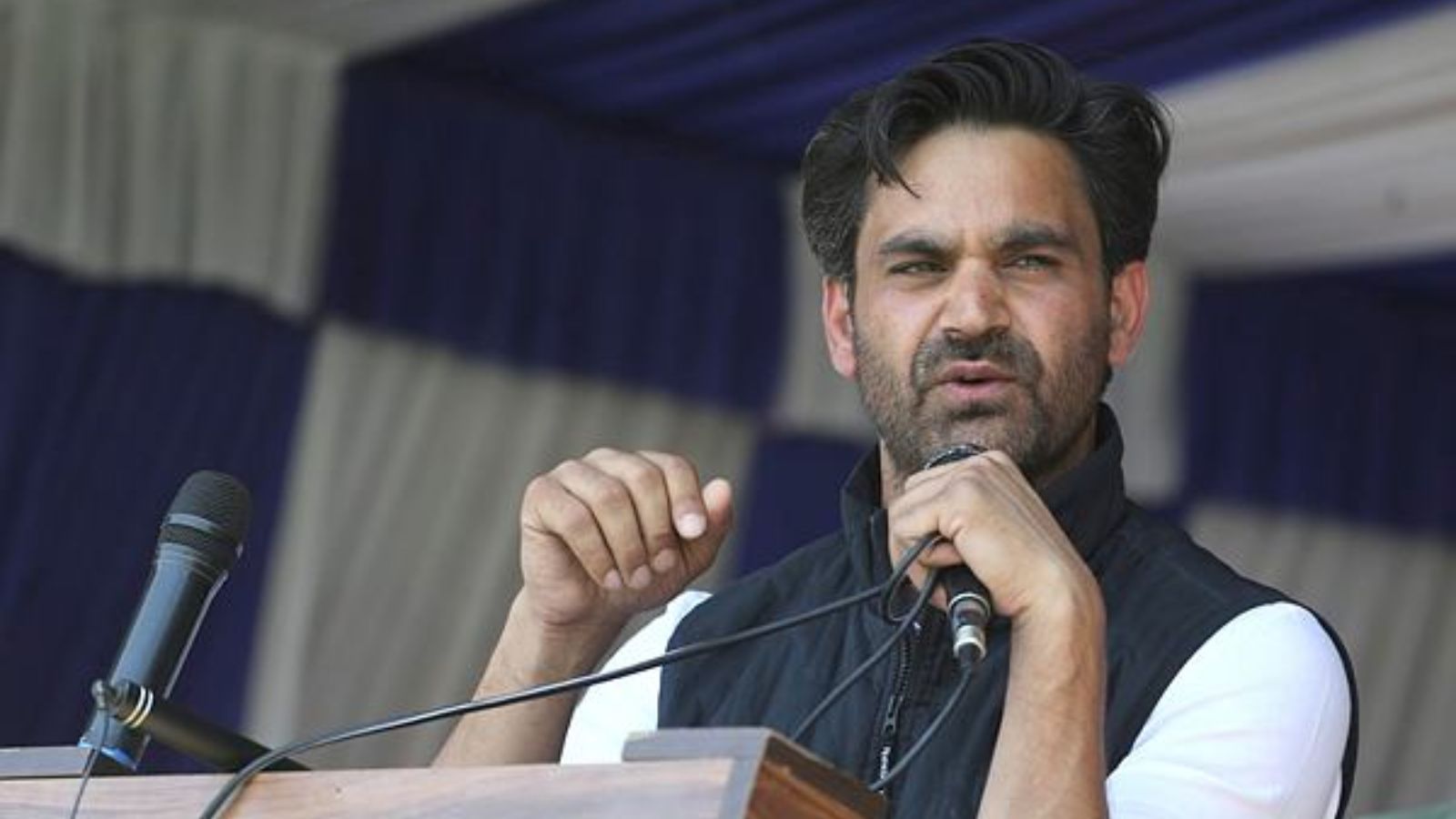
Peoples Democratic Party (PDP) legislator Waheed Para has submitted a Bill seeking to address the long-term consequences of “sustained below-replacement fertility” through voluntary, rights-based and non-coercive measures.
The Bill, submitted during the ongoing Monsoon Session, seeks to strengthen enforcement against sex selection and sex-selective practices in Jammu and Kashmir, which has seen a declining fertility rate over the last many years.
Citing the National Family Health Survey-5, the Bill states that the total fertility rate in Jammu and Kashmir is around 1.4 children per woman, below the conventional replacement-level fertility rate of 2.1.
Named ‘Ma-Beti aur Aane Wali Naslein Bachao Bill’, it seeks protection of Kashmir’s future generations from demographic decline and advancement of women, adolescent girls, maternal health and child health.
“Jammu and Kashmir is vanishing, and it has nothing to do with politics,” Para told The Indian Express. “Our fertility rate has collapsed to 1.4 children per woman. It is among the lowest in India. Even India’s national average of 1.9 sits below the replacement level, but we are sinking faster than anyone.”
Calling it an extinction of time that nobody is talking about, Para said soon there will be no youth to work, no children to carry culture forward, only an ageing, shrinking, traumatised society disappearing in silence.
“Late marriages, mass voluntary bachelorhood, rising divorce, crushing financial pressure, and rising infertility are gutting the next generation before it’s even born,” he said. “At the same time, over 70,000 cancer cases are killing more of us than anything else, and lakhs of PTSD cases flood mental hospital OPDs every single year. A population that cannot reproduce, cannot heal, and cannot speak”.
The Bill says the decline in fertility in Jammu and Kashmir is not merely a demographic statistic. “It has implications for the future age structure of society, intergenerational support systems, rural communities, labour-force availability, social security and the sustainability of families and communities,” reads the Bill submitted by Para.
It goes on to say: “Menstrual health and hygiene remain matters which many adolescent girls are compelled to manage in silence. Lack of access to sanitary products, inadequate sanitation facilities, absence of private changing spaces, menstrual stigma and inadequate health education may result in school absenteeism, reduced educational participation and avoidable health problems”.
While drawing attention towards Polycystic Ovary Syndrome (PCOS), Para said menstrual irregularities, anaemia, nutritional deficiencies and other reproductive-health disorders require early awareness, screening, counselling and appropriate medical referral. He said girls should not be compelled to abandon education because of menstruation, marriage, pregnancy, motherhood, poverty, disability or family circumstances.
“The State has a legitimate interest in ensuring that every girl and young woman has a meaningful opportunity,” the Bill said. The State must also create an enabling environment in which individuals and couples are able to make voluntary and informed reproductive choices without coercion, discrimination or economic compulsion.
Saying that the purpose of legislation is “not to compel any woman to marry, conceive or bear a particular number of children”, Para said it seeks to remove the economic, educational, healthcare and social barriers which may prevent women and couples from making free and informed choices regarding marriage, family formation and parenthood”.
The Bill has sought to “establish a comprehensive statutory framework for reproductive-health awareness and healthcare; menstrual hygiene and dignity; free sanitary products in educational institutions and public healthcare facilities and awareness and early intervention concerning PCOS, menstrual disorders and anaemia.
It further seeks age-appropriate reproductive and child-health education, continuation and completion of education by girls and young women up to thirty years of age; maternal and child healthcare; financial and educational support for families raising children; and protection of the dignity, privacy, autonomy and reproductive rights of women.
Bashaarat Masood is a Special Correspondent with The Indian Express. He has been covering Jammu and Kashmir, especially the conflict-ridden Kashmir valley, for two decades. Bashaarat joined The Indian Express after completing his Masters in Mass Communication and Journalism from the University in Kashmir. He has been writing on politics, conflict and development. Bashaarat was awarded with the Ramnath Goenka Excellence in Journalism Awards in 2012 for his stories on the Pathribal fake encounter. Expertise and Experience Two Decades of Frontline Reporting: Bashaarat has spent 20 years documenting the evolution of Kashmir, from high-intensity conflict and political shifts to socio-economic development. Award-Winning Investigative Journalism: He is a recipient of the prestigious Ramnath Goenka Excellence in Journalism Award (2012). This honor was bestowed for his reporting on the Pathribal fake encounter, a series of stories that highlighted his ability to handle sensitive human rights and security issues with investigative rigor. Specialized Beats: His authoritative coverage spans: Political Transitions: Tracking the shift from statehood to Union Territory, electoral dynamics, and the pulse of local governance. Security & Conflict: Providing nuanced reporting on counter-insurgency, civil liberties, and the impact of the conflict on the civilian population. Development: Documenting the infrastructure, healthcare, and educational landscape within the Valley. Academic Background: He holds a Masters in Mass Communication and Journalism from the University of Kashmir, providing him with a localized academic and professional foundation that is rare in regional reporting. ... Read More
![[Vantage Point] How the Philippines lost its salt - Rappler](https://www.rappler.com/tachyon/2026/09/0-6.jpeg)