
Jaime Watt: Five things Pierre Polievre’s Conservatives must do to gain a foothold this fall - Toronto Star
Since Prime Minister Mark Carney walked away from “a bad deal” with the U.S. in August, his popularity has reached new heights. This makes the Opposition’s role in Parliament even more important.
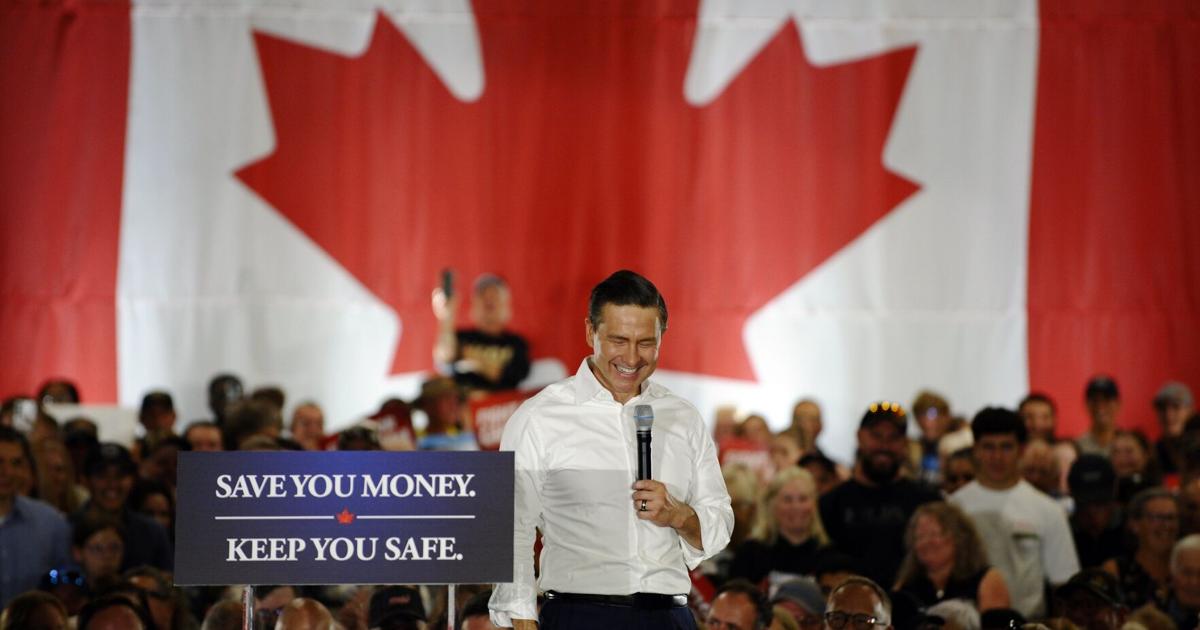
Conservative Party leader Pierre Poilievre appears at a rally in Brantford, Ont. on Sunday, September 20, 2026. THE CANADIAN PRESS/Ian Stewart
Jaime Watt is the Chairman and Founder of Navigator Ltd. and a political strategist. He is a freelance contributing columnist for the Star.
Parliament is back with a substantive legislative agenda that reminds us: Democracy is nothing without accountability. For shame, then, that His Majesty’s Loyal Opposition is distracted by internal schisms and online echo chambers.
This fall, Pierre Poilievre’s Conservatives must gain a foothold. The party’s own MPs know it. Conservative deputy leader Melissa Lantsman told reporters, “This is not the position we want to be in.”
Since Prime Minister Mark Carney walked away from “a bad deal” with the U.S. in August, his popularity has reached new heights. What’s going unsaid is that this makes the Opposition’s role in Parliament even more important. Poilievre’s Conservatives owe it to their voters, and Canadians writ large, to unite as a principled counterweight to Carney’s power. They owe it to themselves, too. Recall that Paul Martin was once cruising to a “supermajority.” Fortunately, the Conservatives weren’t asleep at the wheel when the Sponsorship Scandal hit.
First and foremost, Poilievre must boost caucus morale and lay to rest internal spats. So long as there are rumblings and rumoured floor crossings, he won’t make headlines about anything else. Plain and simple. So, he must do what embattled leaders before him have done. Sit down with his detractors and agree to a détente. Show respect to his shadow cabinet. Be generous to his backbenchers. And if the rumblings continue, Poilievre will have to make the hard choice to remove caucus members who aren’t team players. Otherwise, who’s really leading the party?
Second, the Conservatives must put down their phones and look at the polls. Poilievre’s online activity suggests he still thinks X is a modern-day town square. It is not, and it hasn’t been for a long time. It is a place where influencers are rewarded for divisive commentary. Anyone who uses it as a barometer for public opinion does so at their peril.
Case in point: polling shows eight in 10 Canadians back the idea of closer relations with the European Union. Yet no sooner could young Canadians picture themselves studying abroad in Paris than they saw Poilievre come out swinging against European bureaucracy and taxes. He declared Canada will “never be the 28th state,” as though that was a concern around the water cooler.
What’s peculiar about this type of knee-jerk reaction is that the Conservatives know all too well how much time they have. Carney has a majority government that may well grow larger in the months ahead. There is exactly one silver lining to that. The Conservatives can take a breath and speak when there is something worth saying.
Third, the Conservatives must capitalize on the government’s forceful overhaul of environmental and labour rules — by giving the New Democrats ample room to voice opposition. To be clear, the Conservatives should maintain their pro-worker position and protect that ground. But the NDP could chip away at Carney’s left-leaning supporters who are concerned about the right to strike and environmental protections, and the Conservatives gain by letting them.
Fourth, get a range of Conservative MPs in front of the cameras this fall — such as Lantsman, Adam Chambers, and Shuv Majumdar. People who can intelligently contribute to the public dialogue. People who reflect Canada’s diversity. When the government introduces the fall budget, finance critic Michael Chong should lead the reaction. He can help the party reconnect with those centre-right voters who have taken a shine to Carney but are keeping a close eye on the Liberals’ spending habits.
Lastly, a note on tone. The Conservatives are facing off against a historically popular prime minister, who voters trust to defend the country against U.S. threats. So, Poilievre and his team need to be careful in their criticism. Carney’s chronic absences from Question Period are fair game. Once the media don’t have floor-crossing rumours to cover anymore, this could get more uptake. The Conservatives should also look for openings to propose. The upcoming budget is an obvious one. Other issues will emerge, like public concern around artificial intelligence. Discuss, debate. Then position the party accordingly.
In the words of John Diefenbaker, who spent years in opposition before forming government: “Freedom always dies when criticism ends.” The Conservatives must position themselves as the government-in-waiting — whether that wait is long or short.
Error! Sorry, there was an error processing your request.
There was a problem with the recaptcha. Please try again.
You may unsubscribe at any time. By signing up, you agree to our terms of use and privacy policy. This site is protected by reCAPTCHA and the Google privacy policy and terms of service apply.
Opinion articles are based on the author’s interpretations and judgments of facts, data and events. More details
Jaime Watt is the Chairman and Founder of Navigator Ltd. and a political strategist. He is a freelance contributing columnist for the Star.


