Jane Leeves on Frasier: ‘I became a part of the problem back then, with all these fat jokes’ - The Independent
Want to bookmark your favourite articles and stories to read or reference later? Start your Independent Membership today.
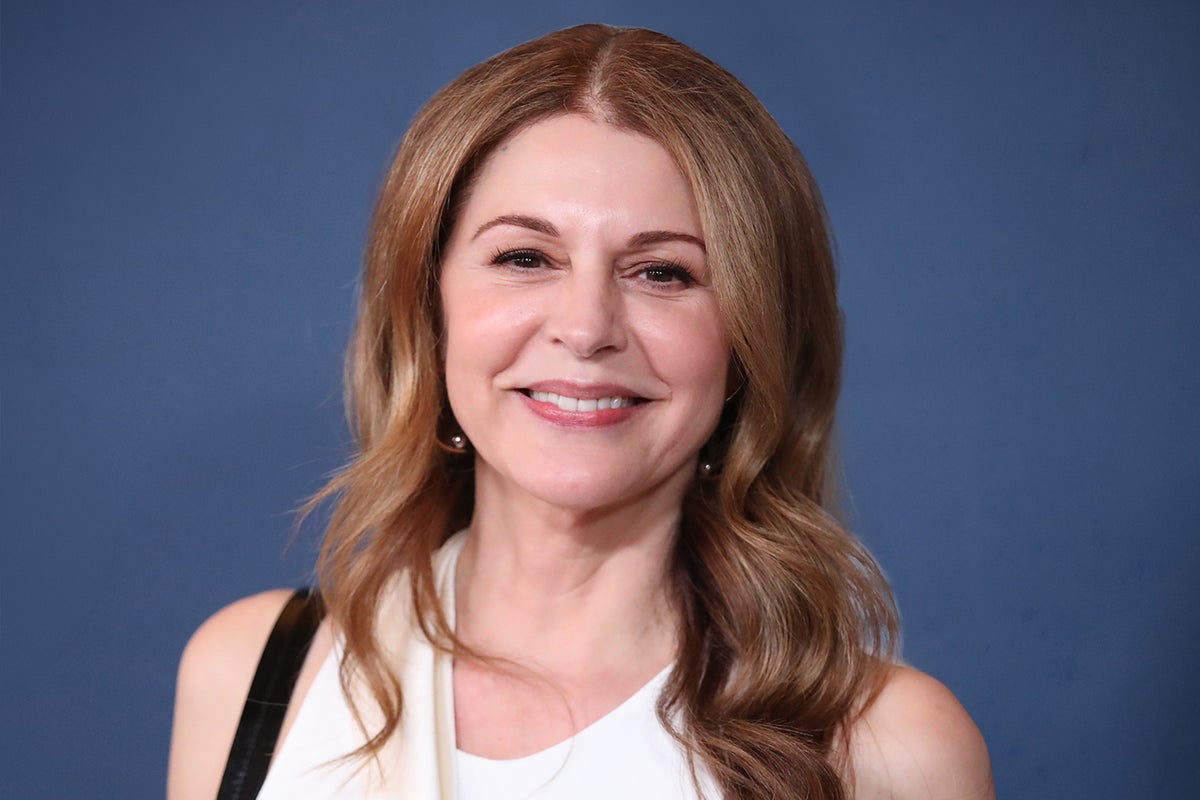
Quiet” is not really a word you would associate with Daphne Moon. When you think of Jane Leeves’s character in Frasier, you think of a woman of eccentricity and colour, possibly shouting “Doctor Crane!” or drawling “I’m a little bit psychic”, in that elastic Mancunian accent of hers. Today, though, Leeves, 65, speaks (sans accent) with a kind of hushed serenity. I shake her hand in the lounge of a West London hotel in a state of fluster, having forgotten my interview notes. “Notes, schmotes,” she says, waving a hand.
Leeves spent 11 years playing Daphne, living in the chic Seattle apartment of radio psychiatrist Frasier Crane (Kelsey Grammer) as a live-in physiotherapist to his blue-collar dad Martin (John Mahoney). Having spun off from the long-running sitcom phenomenon Cheers, Frasier shifted Grammer’s haughty shrink from a Boston dive bar to urban Seattle, in the process creating one of the biggest sitcoms in TV history – an awards juggernaut (with 37 Emmy wins) that holds up astonishingly well decades later. In Daphne’s slow-burn will-they-won’t-they relationship with Frasier’s effete brother Niles (David Hyde Pierce), Leeves was at the centre of one of TV’s great love stories. She could more or less write the book on Frasier – which is exactly what she’s done.
Daphne and Me is part memoir, part TV history book, looking at Leeves’ life mostly as it pertains to the show that made her famous. Co-written with her daughter, Isabella Kathryn Coben, the memoir was, she says, “very challenging”. Before she began research, she hadn’t seen the show in years. “It would come on TV and I would change the channel,” she says. “But having enough space between when we filmed it meant I was able to look at it more objectively.”
Given that space, it can be easy to forget just how big of a deal Leeves was during the show’s peak: in 2002, she was the highest paid British female actor in history, outearning movie stars like Catherine Zeta Jones. “Back then,” says Leeves, “It was appointment television. You were in on a Thursday night, and you watched Wings, Friends, Seinfeld, and Frasier. People would carve out their evenings around that. But that just doesn’t exist anymore.”
With Daphne and Me, Leeves “didn’t want to write a tell-all,” she says. “Some sort of dark, horrid thing. First of all, the world doesn’t need that right now. And secondly, the show was a glorious 11 years of just magic and wonderful people.” There were, of course, a few darker elements behind the scenes of production – one being the death of beloved co-creator David Angell, along with his wife, in 9/11, having by horrible coincidence been travelling on one of the hijacked planes.
Then there were Grammer’s personal demons – a struggle with addiction and substance abuse that was pounced upon by the tabloid press, but somehow never seemed to affect his work. (In 1996, the cast staged an intervention for their friend and co-star, after he was involved in a car accident while driving under the influence.) Yet Grammer’s private struggles “never showed up on screen,” says Leeves. “This is a man who's suffered a huge amount of unimaginable tragedy in his life.” (Grammer’s life has been marked by traumas, including the killing of his father in a riot, the brutal kidnapping and murder of his sister by a spree killer, and the death of his two teenage half-brothers in a freak scuba-diving accident.) “He was the hit-and-run guy in Cheers, you know, never the centre of the show,” she continues. The leading-man status of Frasier brought a new level of attention and scrutiny, while he was still dealing with “all this pain underneath”.
“He hadn’t figured out how to deal with that yet,” she adds. “And I think that’s part of what makes him such a great actor, because even though he’s so funny, there's such depth and tragedy behind the eyes all the time. I've never seen an actor switch from one thing to another so quickly. He can be achingly heartbreaking one minute, then hilarious. I think Frasier was the thing that saved him, really.”
She gives careful consideration to her character’s most infamous plotline, addressed in the book in a chapter titled “Mea Culpa”. It began in season eight, when Leeves became visibly pregnant with her daughter (she would later also have a son, with her husband, TV executive Marshall Coben). Daphne and Niles were still at the very start of their relationship, so the idea of an in-universe pregnancy was discarded. The solution was to give Daphne a so-called weight problem, which culminated in her going to “fat camp”.
In her book, Leeves apologises for the storyline. I ask if this sort of contrition feels necessary, given that it was, to a large extent, a different era; Frasier’s fatphobia was nothing remarkable at a time when, Leeves notes, Courteney Cox was wearing a fatsuit of her own on the occasional episode of Friends. “I think having a daughter…” Leeves begins, growing suddenly very sincere. “She was growing up in a time where [women] were on the red carpet and were told ‘you were too fat for that’, or ‘she shouldn’t be wearing that’. It was just unbelievable. It was like bullying – paid bullies, tearing you down. And I think as women, we just suddenly went, ‘Wait a minute. Enough.’
I didn’t know what I was doing. I flailed around and somehow found success
“Thinking that my daughter may have to go through something like that, where she’s torn apart for the way she looks, for her body – it hit me hard. I feel like I became a little part of the problem back then, with all these fat jokes. I was somehow too comfortable sliding into that, and it wasn’t right.”
For all Daphne and Me’s fond nostalgia when it comes to Frasier, Leeves does call out the some of the less spiriting parts of the TV industry: in one segment, she says she and co-star Peri Gilpin were routinely denied parking spots at the studio lot, which came freely to male stars and executives. In another she calls out “chainsaw ingénues” – young actresses who would arrive on set and “leave bloody bodies in their path”.
“We had a couple of them,” she says. “They would be rude to the crew. I remember one of our [assistant directors] went up to a young lady who’s perpetually late and said, ‘You can’t be late.’ She started shouting at him. Well, John Mahoney heard that, and taught her a lesson.”
Leeves, by all accounts, was no chainsaw ingénue herself. Raised in East Grinstead – the daughter of an engineer and a nurse – she grew up wanting to be a ballerina. When an injury in her teens put paid to that dream, she pivoted to acting, making her start in the UK with small roles in Benny Hill and Monty Python’s The Meaning of Life. Then, at the age of 22, she moved to LA. By her own admission, she was “naive” at the time. “I didn’t know what I was doing. I flailed around and somehow found success. I just thought, ‘I want to be an actress – I’ll go to the States. I’ll be discovered at baggage claim.’
“I mean, that sort of naivety – or stupidity, call it what you will – was really helpful. I thought everything was possible. The older you get, the more you realise, ‘Oh gosh, maybe that wasn’t such a good idea.’ And the fear starts creeping in. And the more you work, the more worried you get.” She sighs. “But to have that sort of blind youthful exuberance… I’ve lost some of that, but that happens with age. I’ll try and get it back.”
Fortunately, Leeves’s early optimism paid off. Her big break came in the sitcom Seinfeld – then a TV sensation stateside – playing “Marla the virgin” in what was supposed to be a one-off guest appearance. They immediately asked her if she was busy the following week, saying, “We’re thinking about you for the next episode. Do you want to know what it’s about?”
“They said, ‘It’s called ‘The Contest’, and the characters are all trying not to masturbate, and you end up in bed with John F Kennedy Jr.’ I was like, ‘No, stop it. Tell me the truth’,” she laughs. “The Contest” ended up being a headline-making, fan-favourite episode; Leeves later returned for two more episodes. In New York, she says, it’s still the role for which she is most often recognised.
Leeves had other roles after Frasier wrapped in 2004 – most notably as one of the leads in the sitcom Hot in Cleveland. It became clear, however, that the sort of democratic, respectful working environment on Frasier – in which the writers and directors welcomed and encouraged her input – was something of an anomaly in the industry.
“Most recently I did a medical drama [The Resident] for about five years,” she says. “There would often be a writer on the set, but if you went up and said, ‘This isn't working, can I try–? They go, ‘Oh, no, no, you have to do it that way. That’s the way.’ And that’s so crushing to creativity I don’t know why everybody doesn’t work the way [Frasier did], but I think sometimes it gets ego driven. And it just feels wrong. You don’t feel part of it.”
Leeves still keeps in touch with the core Frasier cast – with the exception of John Mahoney, who died in 2018. Of the central five cast members, it was only Gilpin who returned (sporadically) for Grammer’s short-lived Frasier reboot series, which ran for two seasons on Paramount+ before being cancelled. She didn’t give joining the reboot much consideration, she says, “because I was in Atlanta, filming [The Resident]. It just wasn’t going to be possible.”
Has she seen the series, I ask? “I’ve only seen a couple of episodes here and there. It doesn’t feel like Frasier to me.” It’s a spin-off, she insists, as opposed to a continuation. “How can it be without the core group?” she asks. This does, in slightly gentler terms than most, sum up the consensus reaction to Grammer’s show.
It’s true: there was simply something irreplicable in the alchemy of that original cast. Frasier, like Cheers before it, was a series that found its genius in collaboration. Leeves was a brilliant cog in a brilliant machine – and she’s all too happy to own it.