Jensen Huang’s downfall exposes a deep divide over AI - The Telegraph

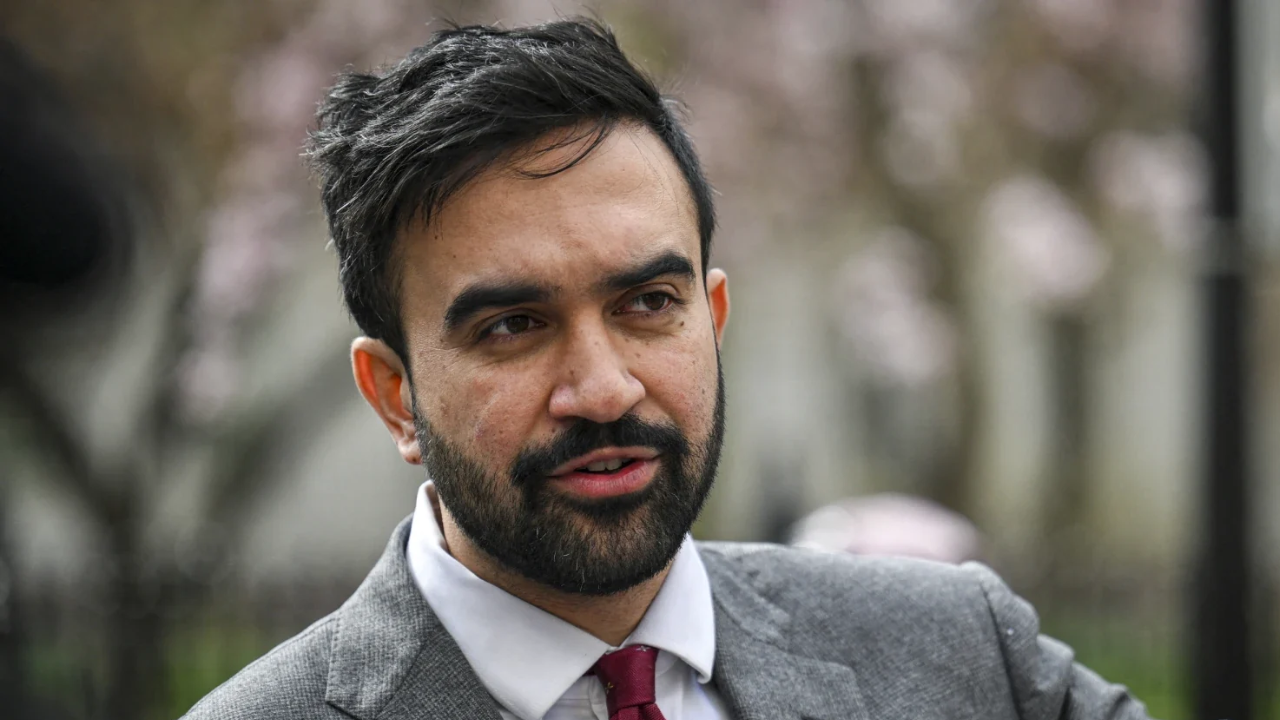
Jensen Huang, boss of Nvidia, was forced to step down after admitting to extramarital affairs, including one with a suspected Chinese spy Credit: Reuters/Mike Blake Izabella Kaminska Show biography Izabella Kaminska is a Telegraph columnist and founder of The Blind Spot. A veteran financial journalist, she spent 13 years at the Financial Times, notably editing FT Alphaville, following roles at Reuters, Platts, and CNBC. Contact: @izakaminska
There seems to be no end in sight to the fallout from the Jensen affair.
Jensen Huang, boss of Nvidia, the world’s most valuable semiconductor company, was forced to step down last week after admitting to extramarital affairs, including with a woman suspected of working for Chinese intelligence to secure advanced chips for Beijing.
Two competing narratives are battling for supremacy, with all the intrigue of a Netflix miniseries.
On one side, three congressional committees are pursuing potential national security breaches involving advanced AI chips reaching China. The fallout threatens Howard Lutnick, the US commerce secretary, whose department oversees export controls, amid reports of criticism from Scott Bessent, the US treasury secretary.
On the other, questions are mounting over whether Alice Huang, the woman at the centre of the drama, was even a spy. Donald Trump himself has cast doubt on the claim.
At the same time, criticism from the tech community has mounted over how the Nvidia board and public officials have responded to the revelations.
Yet amid all the competing claims and counterclaims, a much bigger story has arguably been lost in the noise. It concerns the true nature of the power struggle unfolding behind the scenes, and what is at stake for a company now dubbed the “central bank of AI”. The story has repercussions for credit markets and a global economy increasingly dependent on a single engine of growth: artificial intelligence.
With stakes this high, Silicon Valley’s champions of decentralised systems – including David Sacks, Trump’s AI and crypto tsar, and Balaji Srinivasan, the venture capitalist and former Coinbase chief technology officer – would have us consider a more sinister interpretation of the Jensen affair: that forces within America’s own establishment wanted to remove the one man powerful enough to resist a concentration of AI power in their hands.
Indeed, they view Huang’s downfall as politically engineered to allow Washington to impose tighter restrictions on AI, allowing the US and its allies to control the technology.
Jensen Huang is a close ally of Donald Trump. The US president has called for the former Nvidia boss to be reinstated Credit: Reuters/Evan Vucci The timing is suggestive. Anthropic, one of the leading closed-model AI laboratories, has just raised a record $81bn (£62bn) in a public listing.
Dario Amodei, its chief executive, is one of the best-known champions of AI safety and restraint. But critics now fear that the billions raised through Anthropic’s stock market listing could be deployed not just to develop AI, but to lobby Washington for tighter regulations that would restrict public access to frontier models, while entrenching the dominance of companies such as Anthropic and its great rival OpenAI.
Huang has argued precisely the opposite. In his view, open-AI models – which can be freely downloaded and customised – offer greater security, not less. In a clip that’s since gone viral online, he even suggests that by defending them he may even have helped to save the world.
“There were movements around the world that interpreted closed models as being more safe and open models as unsafe. It’s exactly the opposite. It is exactly the opposite,” he notes.
The emerging pro-Jensen conspiracy theory goes that it is these sort of ideas that led to his removal.
The alleged methods range from strategically placed leaks and damaging personal stories, to attempts to destabilise Nvidia’s leadership just as cyberattacks threaten America.
There is another intriguing twist: Nvidia was developing Nemotron 4, an ambitious open-weight language model that threatened to put the chipmaker into direct competition with the very AI giants whose businesses depend on its hardware.
How to make sense of the competing narratives around Jensen’s downfall?
One way is to stop thinking of this primarily as about rivalry between China and America.
The heart of the scandal is a power struggle between those who believe open models and distributed systems offer the strongest defence against concentrated power, and those who would entrust control of frontier AI to America’s military-industrial complex, ostensibly on behalf of the world.
The distinction matters because the two camps have fundamentally different ideas about what makes a system secure.
Since the advent of mutually assured destruction, strategic stability has rested partly on an equilibrium between rival superpowers possessing civilisation-ending weapons.
AI may not yet be understood in those terms. But Situational Awareness, an influential essay by Leopold Aschenbrenner, a former OpenAI researcher whose wife holds a senior role at Anthropic, brought the nuclear and Cold War analogies into sharp focus.
Warning of an imminent intelligence explosion, Aschenbrenner envisaged an AI race demanding extraordinary secrecy, security and state mobilisation: a new Manhattan Project, with frontier models removed from public reach and placed under the protection of the national security establishment.
For the opposing camp, that is precisely the danger.
In many respects, this is the second coming of the crypto wars of the 1990s, when cypherpunk libertarians rebelled against draconian American export controls on cryptography.
Their argument was that nobody could be secure while the US security state alone enjoyed access to the strongest encryption. Security depended on distributing technological power, not monopolising it. That was both a safeguard against abuse and a fundamental principle of a free society. The same philosophical divide now runs through AI.
Not that there is anything new about this struggle. America has always been torn between its professed commitment to free markets and its determination to control the global flow of strategic technology.
The history of US export controls is a case in point.
The system has roots in the Trading with the Enemy Act of 1917 and was subsequently developed through post-war export legislation and the creation of the Co-ordinating Committee for Multilateral Export Controls.
Its purpose was to prevent strategically important Western technology reaching the communist bloc. But commercial interests, especially in allied countries, repeatedly collided with security doctrine.
As Jon Agar, a historian, explained in a 2024 paper: “For the Pentagon and hawkish elements of Congress, the overriding aim was to contain and indeed combat communism ... But Western European countries had a history of trade with Russia, and post-war conditions made this trade more tempting and even necessary; Britain, for example, needed Soviet timber for housing, and could offer in return machinery and imperial commodities in a trade that did help protect sterling.”
Britain had every incentive to seek exemptions or circumvent the rules. Lost exports meant not merely lost business but pressure on the balance of payments and sterling.
That’s why in practice, as Agar’s account makes clear, East-West trade often ended up far more fluid than the formal restrictions implied.
Indeed, by the 1960s, Britain’s appetite for exporting advanced technology was already clashing with Washington’s determination to keep it out of communist hands. Some of the tensions involved Ferranti, the British electronics giant, as well as computer manufacturer ICL. For today’s open-model advocates, the parallels are striking.
In 1970, Washington vetoed the sale of two ICL computers to the Soviet Union, prompting then prime minister Edward Heath to appeal directly to US president Richard Nixon on the basis that such sales mattered far more to Britain’s smaller economy than to America’s.
A year later, Ferranti sought to export an integrated-circuit manufacturing plant to Poland, including “the transfer of know-how” but was blocked again. British frustration ran so deep that, in discussions over computer exports, officials eventually contemplated defying Washington: “If the US administration refuses to licence these [computers, a Cabinet committee] should meet to consider whether or not to go ahead with the export of the machines nevertheless.”
Today, it is no longer Britain, America’s closest ally, that is challenging Washington’s hard power with its soft power, but America’s own techno-libertarian elite. The question is whether, unlike Britain before them, these new rebels can muster enough hard power to match their software prowess, and actually withstand the might of America’s national security establishment. The verdict is still out.