Judges Weigh Kristi Noem’s Potential Criminal Case
A federal appeals court is set to consider on Tuesday whether a criminal contempt inquiry into the Trump administration can proceed over the deportation of Venezuelan migrants to El Salvador.
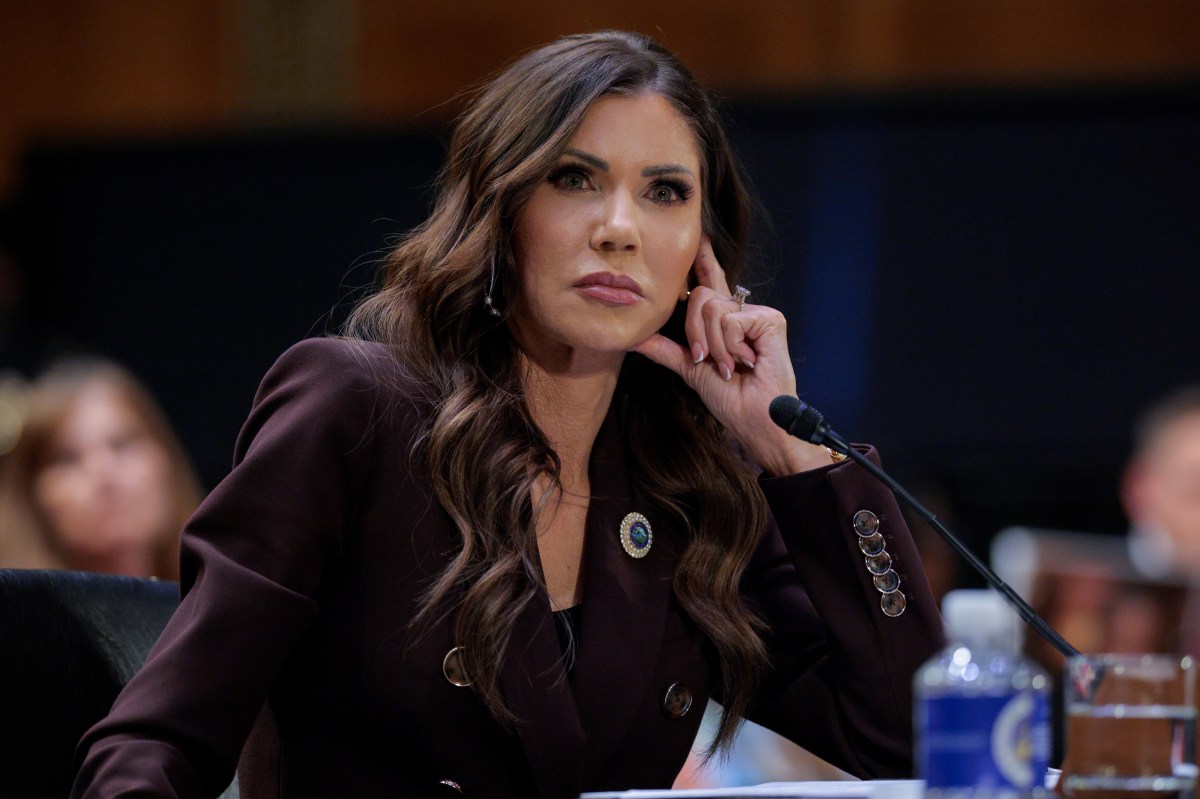
Former Homeland Security Secretary Kristi Noem is at the center of the dispute, after the government identified her as the official responsible for the decision to allow Venezuelan detainees to be transferred to El Salvador's CECOT prison in March 2025, despite a judge's order blocking their removal.
The full D.C. Circuit will hear arguments over whether a judge can continue his inquiry and potentially make a criminal contempt referral.
Newsweek contacted Noem, the Department of Homeland Security and the Department of Justice, whose attorneys are representing the government in the case, via email for comment.
The issue stems from events that took place in 2025, when the Trump administration moved to deport Venezuelan migrants it alleged were members of the Tren de Aragua gang, under the Alien Enemies Act.
Two planes carrying detainees were already in the air on March 15, 2025, when Judge James Boasberg, the chief judge of the U.S. District Court for the District of Columbia, who was overseeing a lawsuit brought by some of the migrants, issued a temporary restraining order. The order barred the government from removing the migrants for 14 days or until further order of the court. However, the planes carrying the migrants continued to El Salvador.
The Supreme Court vacated Boasberg's order a few weeks later, finding that the migrants' legal challenges had to be brought in the federal districts where they were detained. However, Boasberg continued pursuing his contempt inquiry, saying the later ruling did not excuse the government's potential violation of his order.
Boasberg said in April 2025 that he had found probable cause to believe the government had deliberately violated his order, and said he was considering a criminal contempt inquiry.
Months later, in response to the judge’s queries about the decision-making, the government identified Noem as the official responsible for the decision to allow the detainees to be transferred to El Salvador, saying she made the decision after receiving advice from government lawyers.
Boasberg initially gave a verbal order on March 15, after the planes had already taken off, which stated that the migrants could not be removed and that any planes carrying them needed to be returned to the United States. The government argued that because the order was orally given, it was not binding.
The government noted that when the court issued a written order less than an hour later, it barred the government from “removing” the migrants but did not explicitly order the return of migrants who had already departed.
The government said Noem then directed that the detainees could be transferred to Salvadoran custody. They were subsequently taken to CECOT, the country's maximum-security prison.
The government argued that Boasberg had overstepped his authority in pursuing the contempt inquiry.
In April 2026, a three-judge appeals court panel, in a split decision, ordered Boasberg to end the criminal contempt inquiry.
The majority opinion said the written order was not sufficiently clear to support criminal contempt over the transfer of the migrants to Salvadoran custody. It also said Boasberg had gone too far by seeking to investigate “high-level Executive Branch deliberations about matters of national security and diplomacy.”
The full D.C. Circuit has agreed to reconsider the panel's decision, and will determine whether Boasberg can continue his criminal contempt inquiry.
If the court allows the inquiry to proceed, Noem could face a criminal contempt referral over her role in the decision to transfer the migrants to El Salvador, if sufficient evidence supports one. Noem, who President Donald Trump removed as secretary of the Department of Homeland Security in March 2026, has not been charged with a crime.
In August, 204 former judges urged the appellate court to allow the contempt inquiry to continue, calling the district court's investigation “wholly proper and appropriate.”
The en banc court will hear arguments on Tuesday.
Contact Newsweek editors on this story: Matthew Cannon and Sam Wilson.