Just Owaisi opposed as govt enacted CEC law. Where was rest of the Opposition?
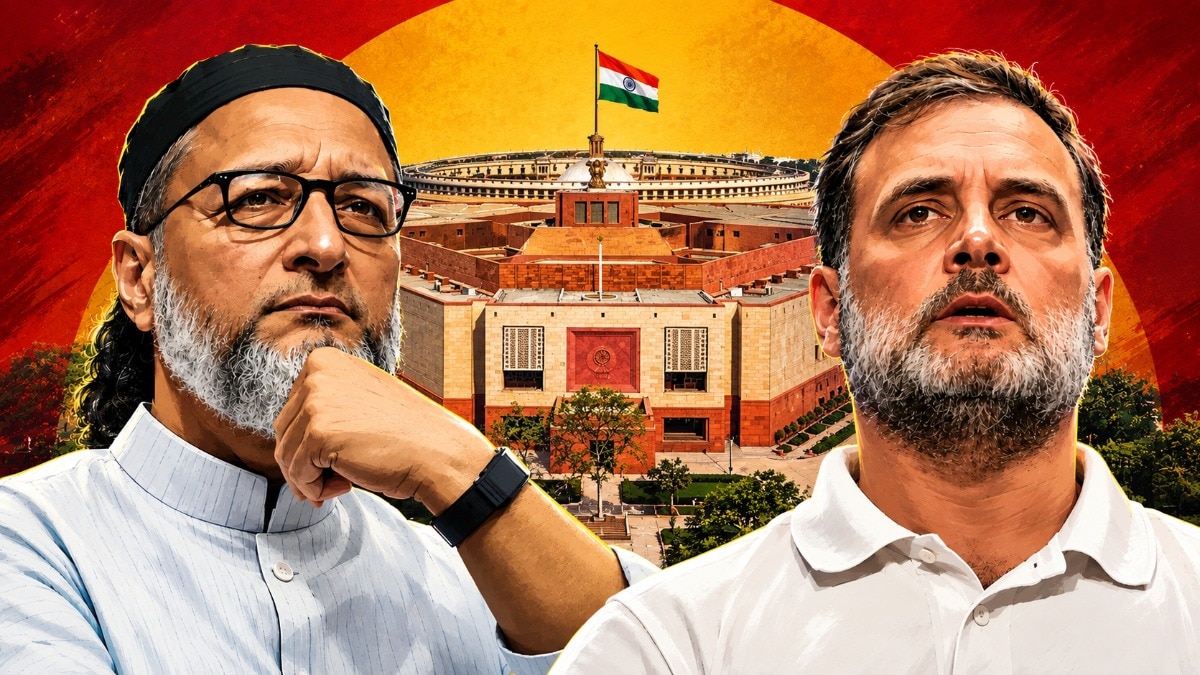
The Opposition targeted the government and the Chief Election Commissioner (CEC), Gyanesh Kumar, after an investigation report revealed that the latter had overruled the dissent of two other Election Commissioners on crucial issues, including the Special Intensive Revision (SIR) exercise. Opposition leaders are seeking Gyanesh Kumar's removal from the Election Commission of India (ECI) and questioning his selection process. However, the turn of events was such that most Opposition MPs were absent from Parliament when the government enacted the law on the selection process of ECI members.
The Opposition, which is slamming Kumar, had also been critical of the SIR exercise. Since Kumar's appointment as the CEC in 2025, the 62-year-old has been a frequent target of Opposition parties, particularly Congress MP Rahul Gandhi, who is now the Leader of Opposition (LoP) in the Lok Sabha.
But the controversy over the appointment of the CEC and the two Election Commissioners goes back to December 2023, when the BJP-led NDA government brought a law governing their selection. And this is where things get interesting. When the Chief Election Commissioner and Other Election Commissioners (Appointment, Conditions of Service and Term of Office) Bill was passed in the Lok Sabha on December 21, 2023, AIMIM chief Asaduddin Owaisi was the only Opposition MP to speak against it during the debate.
But where was the rest of the Opposition, including Rahul Gandhi?
The renewed salvo against the ECI and the CEC comes after The Indian Express published a report on Wednesday claiming that Election Commissioners Sukhbir Singh Sandhu and Vivek Joshi had formally recorded objections at least 14 times over 10 months. According to the report, the two ECs said major decisions were being taken in the name of the full Election Commission without their knowledge, with some of the actions described as "unauthorised and illegal".
Rahul Gandhi reacted, saying on Wednesday that "vote chori" was a crime against the Indian people and a direct attack on the Constitution. Opposition parties also urged the Supreme Court to take suo motu cognisance of the report.
The ECI, however, rejected the claims made by The Indian Express. In a clarification issued after the investigative report, the Commission said, "Differing views and observations are a normal part of deliberation in any institution. They are a part of the decision-making process before a final decision is taken."
The ECI has been a major target of the Congress and other Opposition parties, particularly since the Prime Minister Narendra Modi-led government brought the law governing the appointment of the CEC and Election Commissioners in December 2023.HOW ELECTION COMMISSION MEMBERS ARE SELECTED UNDER 2023 LAW
The Chief Election Commissioner and Other Election Commissioners (Appointment, Conditions of Service and Term of Office) Bill was passed by the Rajya Sabha on December 12, 2023, and by the Lok Sabha on December 21. It received presidential assent on December 28 and was notified as an Act on December 29.
The law created a three-member selection committee comprising the Prime Minister, the Leader of the Opposition in the Lok Sabha and a Union Cabinet minister nominated by the Prime Minister. This replaced the interim selection mechanism laid down by the Supreme Court earlier that year, under which the panel comprised the Prime Minister, the Lok Sabha LoP and the Chief Justice of India.
The legislation became controversial because it came months after the Supreme Court's 2023 judgment in Anoop Baranwal versus Union of India, which had laid down the interim mechanism for appointing members of the Election Commission until Parliament enacted a law.
Baranwal, who is an advocate, had challenged the existing practice of appointing the CEC and Election Commissioners through the President on the advice of the Union government. His petition argued that allowing the government to have a decisive role in selecting the country's electoral watchdog could affect the independence of the ECI.
In March 2023, a five-judge Constitution Bench of the Supreme Court ruled unanimously on the issue and directed that, until Parliament enacted a law, appointments to the Election Commission would be made on the recommendation of a committee comprising the Prime Minister, the Lok Sabha LoP and the Chief Justice of India (CJI).
The Centre's December 2023 legislation replaced the CJI with a Cabinet minister nominated by the Prime Minister.
That change triggered a major political controversy and remains at the heart of the Opposition's criticism of the Election Commission.
Amid the Opposition's renewed uproar against the CEC, a two-judge bench of the Supreme Court on Wednesday delivered a split verdict on whether petitions challenging the law governing the appointment of the CEC and ECs should be referred to a larger, five-judge Constitution Bench. The matter will now be placed before the CJI.
But there is another question that often gets lost in the debate. If the Opposition was so opposed to the new appointment mechanism, why was there almost no Opposition presence when the Bill was passed in the Lok Sabha? Here is the full story.advertisementWHEN CEC-SELECTION BILL WAS PASSED, 100 OPPOSITION MPs HAD BEEN SUSPENDEDThe answer lies partly in the extraordinary circumstances of Parliament's Winter Session in December 2023.
The session had already been thrown into turmoil by the December 13 security breach, when two intruders entered the Lok Sabha chamber with smoke bombs, trigerring a full-blown security scare. Opposition MPs demanded a statement from then Union Home Minister Amit Shah and a discussion on the breach. As protests continued, suspensions mounted.
By December 19, a total of 141 MPs from both Houses had been suspended. The Opposition benches in the Lok Sabha were almost empty.
The final figure was even higher. On December 21, 2023, the day the CEC Bill was passed, three more Congress MPs were suspended. That took the number of suspended Lok Sabha MPs to 100. Across both Houses, 146 MPs had been suspended during the session. As of 2023, the Opposition had a total of 142 MPs in the Lok Sabha.
The timing mattered the most. The CEC Bill was taken up in the Lok Sabha on the same day that the House added the final three suspensions. The legislation was passed after a brief discussion — reportedly 1 hour and 40 minutes — and by voice vote.
According to media reports, 12 MPs participated in the debate, mostly from the BJP and the NDA. Hyderabad MP Asaduddin Owaisi was the only speaker in the Lok Sabha debate to oppose the Bill.
That is the crucial context behind the apparent contradiction in today's Opposition criticism.WHAT WAS RAHUL GANDHI DOING WHEN THE BILL WAS PASSED?
This revisit is important because, among all the opposition parties and its leaders, it is Rahul Gandhi who has extensively campaigned against the ECI and CEC Gyanesh Kumar.
Rahul Gandhi was not among the MPs suspended from the Lok Sabha at the time when the bill was passed. Yet he didn't get a chance to speak in the Lok Sabha debate on the CEC Bill on December 21.
Instead, his public activity that week was centred on the mass suspensions and the Opposition's protest over the Parliament security breach.
The wider Opposition's attention at that point was overwhelmingly focused on the suspensions and the demand for a statement from the home minister over the December 13 security breach. Rahul Gandhi couldn't record his dissent. The series of events of the time explains why he couldn't record his dissent.
The sequence of events offers a more complicated answer than simply asking why the Opposition did not oppose the Bill. The legislation was passed amid the security breach row, mass suspensions and a deeply disrupted Winter Session. Rahul Gandhi was present in the Lok Sabha but couldn't participate in the debate, while Owaisi was the only Opposition MP to get an opportunity to speak against the Bill.
The controversy over the ECI's independence has since moved far beyond that December 2023 debate. But when the Opposition revisits the origins of the current appointment system, the parliamentary record of December 21, who was suspended, who spoke and who did not, remains an important part of the story.- EndsPublished By: Avinash KateelPublished On: Sep 24, 2026 09:09 IST