Justin Ling: Europe has to choose: Bend the knee to Trump, or join Carney’s new world order - Toronto Star
The decision should be pretty clear. Unfortunately, Europe doesn't seem ready to make it.
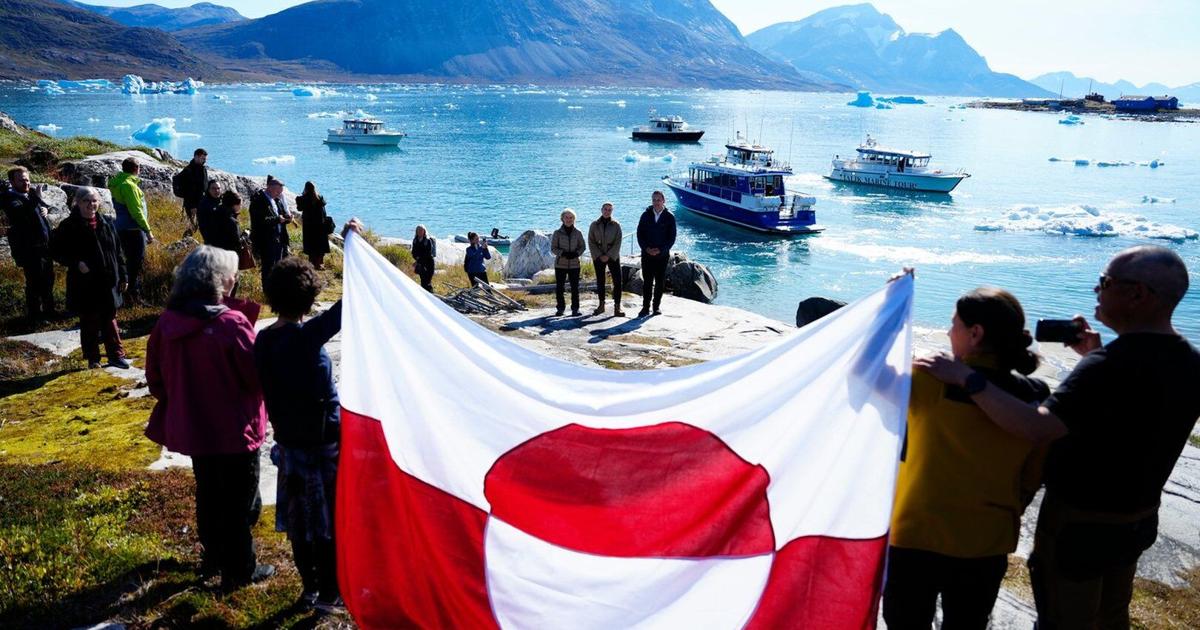
Danish Prime Minister Mette Frederiksen, Greenland government leader Jens-Frederik Nielsen and President of the European Commission Ursula von der Leyen are seen in Qoornoq, Greenland, on Sept. 6, 2026.
Justin Ling is a staff columnist for the Star and an investigative journalist based in Montreal. Reach him by email: jling@thestar.ca
After a year of threatening to seize Greenland by force, Donald Trump has inked a deal to extend indefinite American influence over the autonomous Danish territory. It’s “a dream come true for the United States of America,” the president posted on social media this week.
A day earlier, Prime Minister Mark Carney made his own announcement: Canada would be joining the British-led Joint Expeditionary Force, a military alliance of Arctic and other northern nations, including Denmark.
These two developments illustrate the radically different paths being Canada and the U.S. are taking these days. And they only further underscore the fact that Europe needs to pick a lane: either serve as vassal or pursue the middle-power alliance Ottawa envisions for the liberal world.
The choice should be pretty obvious. Unfortunately, it’s not clear that Europe is ready to make it.
The actual text of the Greenland deal isn’t quite as spectacular as Trump has advertised. On Truth Social, he boasted that the deal provides America with “permanent control over security, and all other needs, in Greenland,” at “NO COST” to the U.S. — “FOREVER.”
In fact, the deal is largely an updated version of the one that America signed with Denmark after the Second World War. Mette Frederiksen, the Danish prime minister, said it “recognizes the sovereignty and territorial integrity of the Kingdom and the Greenlandic people’s right to self-determination.” He was echoed by Greenland’s prime minister, Jens-Frederik Nielsen, who said the deal would promote the national security and economic development of both the U.S. and Greenland.
But the text, signed on Tuesday at the United Nations Headquarters, does grant America some considerable concessions — and the term of the agreement is, as Trump said, indefinite.
The agreement allows Washington to expand its current military base on Greenland, in Pituffik; to reopen its former bases in Narsarsuaq and Mestersvig; and to open additional military facilities only with the consent of both Nuuk and Copenhagen. The text gives some wins to Greenland — explicit protection for its culture and ancestral way of life, and a commitment to hire local companies, albeit with caveats — but the deal is, overall, a gift to Trump.
A particularly staggering part of the agreement gives the U.S. a veto on any foreign direct investment on Greenland from outside NATO or the European Union. This, recall, is exactly the kind of move Trump’s negotiators pulled in their talks with Ottawa.
“In the Kingdom of Denmark,” Frederiksen said at the signing ceremony, “the United States has a friend that has always kept our word, an ally you have always been able to rely on.”
It’s a depressing sentiment. Denmark is certainly a reliable ally — but the U.S. no longer is, and this deal came to fruition only because Trump had threatened to seize Greenland if both nations failed to sign over to Washington the authorities it delineates. In striving to show their fealty, perhaps Denmark and Greenland have averted Trump’s limited attention span. Or perhaps they will find themselves more vulnerable.
In “immediately” installing a “large military presence” on Greenland, Trump has increased his leverage over the autonomous territory just as it readies itself for possible independence.
The deal is good for Greenland, Nielsen said, in that his nation is now a full party to it, but it carries a big risk, too: “Your security is our security, and our security is your security.”
But as Michael Jarlner, columnist for the Danish paper Politiken, wrote on Wednesday, “When assessing the agreements Trump makes, his respect for law and order is probably worth having in the back of his mind.” It’s a sobering comment, as the president spent Tuesday threatening to “annihilate” Iran and pledging to replace potash from Canada with that from Belarus, the authoritarian Russian puppet state.
Even if there is some naïveté factoring into their risk-reward calculation, the nations of Europe are, thankfully, piecing together how to keep themselves safe — from China, from Russia and from the U.S., if need be.
At her State of the Union address earlier this month, European Commission President Ursula von der Leyen promised the EU was going to start taking its security much more seriously. She vowed to establish a European Security Council, a forum in which leaders — not only from EU nations but also from Norway, Ukraine, the United Kingdom and Canada — can assemble to tackle shared challenges. Missing from that list: the United States. That’s good.
Meanwhile, Europe has been pursuing a different kind of security pact: under the JEF, it has found a way to project power beyond the auspices of American-dominated bodies.
The JEF was established by the U.K. in 2014 as a smaller, leaner military alliance of European states. Primarily comprised of countries on the North and Baltic seas, it was created as a leaner force, one capable of deploying to conflict quickly, but it has also become a useful body through which a tighter-knit group of nations can coordinate and collaborate. Analysts have described the JEF as a way to maximize its members’ military and political power — they have been more supportive of Ukraine than the NATO average, for example.
Canada was invited to join the JEF more than a decade ago, but Ottawa declined. Since Trump’s return to the White House — and particularly since he began threatening to annex Greenland and blow up NATO — calls have grown for us to reconsider joining the partnership.
In recent years, the JEF has been responsible for seizing ships in the Russian shadow fleet, ships that have been evading Western sanctions. It has also deployed to the high north, complementing Denmark’s exercises on Greenland.
If Canada were to join the JEF, it would mean all the major Arctic powers, save the U.S. and Russia, would be represented in its ranks. It would plug us into more training programs, particularly in the high north; tighten interoperability with our non-American allies; and tie us tighter to the European security apparatus.
“Canadian membership of the JEF makes geopolitical, geoeconomic and defence regeneration logic,” argued Ed Arnold and Robbie Boyd, analysts with the London-based Royal United Services Institute think-tank, in an essay last year. They worried that Canada, in remaining outside the alliance, was set to become “the most important ally the JEF never had.”
Canada joining yet another alliance may sound like another abstraction. We have already announced our participation in the Security Action for Europe (SAFE) project and will host the new Defence, Security and Resilience Bank. Certainly, most Canadians will never interact with these multinational institutions. Some, like the protesters gathered outside the prime minister’s office on Monday afternoon, may even bristle at the idea that Canada is spending more on collective defence and integrating itself into more military pacts.
But it all portends a deeper rewiring of the world order. As Carney told the European Parliament earlier this month, this Europe-Canadian pact is “an alliance strong enough so that no one can dictate our choices.” And, he added, it is a relationship whose “strength reinforces international law rather than replaces it.”
As with many of Carney’s speeches these days, it served as a useful call-and-response with Trump.
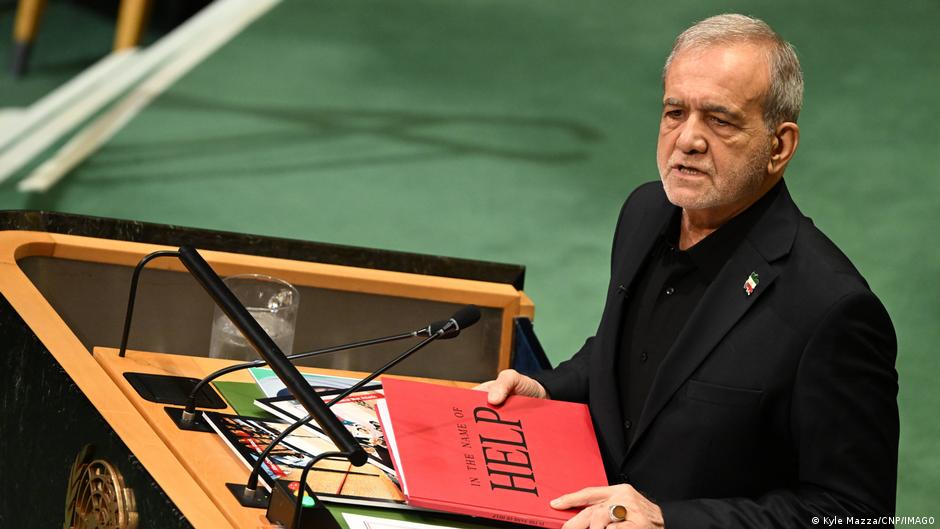
The American president, speaking before the UN General Assembly in New York City on Tuesday, called the International Criminal Court “an evil group of people” and a “rogue institution,” and he demanded that member states resign from it. He boasted about cutting funds to the UN and insisted that its human-rights body wanted “transgender mutilation.” He insisted no country could hold America accountable for its actions. In so doing, he provided a glimpse of a world in which no bad actor — be it Belarus, Russia, Saudi Arabia, or China — could ever be held to account. We must, so his logic goes, all cower behind the American shield and accept our inferior position.
Even if these shifts and changes can be dizzying to keep track of, recent weeks should give us hope that this middle-power alliance is not just achievable but also capable of enabling our shift away from America’s reckless nihilism. But we will need to convince other nations this is doable.
In the Financial Times on Sunday, Carney co-authored an op-ed with Brazilian President Luiz Inácio Lula da Silva, Kenyan President William Ruto and European Council President António Costa. Together, they announced the creation of Partners for Multilateralism, a team of middle powers that will push to reform the UN and other global bodies.
“The real choice is not between preserving the international order established after the Second World War or abandoning it,” they wrote. “It is between renewing multilateral co-operation in a changing world, or allowing polarisation and power politics to define the next era.”
That is the choice, and it is a stark one.
Error! Sorry, there was an error processing your request.
There was a problem with the recaptcha. Please try again.
You may unsubscribe at any time. By signing up, you agree to our terms of use and privacy policy. This site is protected by reCAPTCHA and the Google privacy policy and terms of service apply.
Opinion articles are based on the author’s interpretations and judgments of facts, data and events. More details
Justin Ling is a staff columnist for the Star and an investigative journalist based in Montreal. Reach him by email: jling@thestar.ca