
Justin Ling: There’s more than just Quebec’s future riding on this provincial election - Toronto Star
Polls suggest Paul St-Pierre Plamondon and his Parti Québécois are going to win. Will Canada lose?
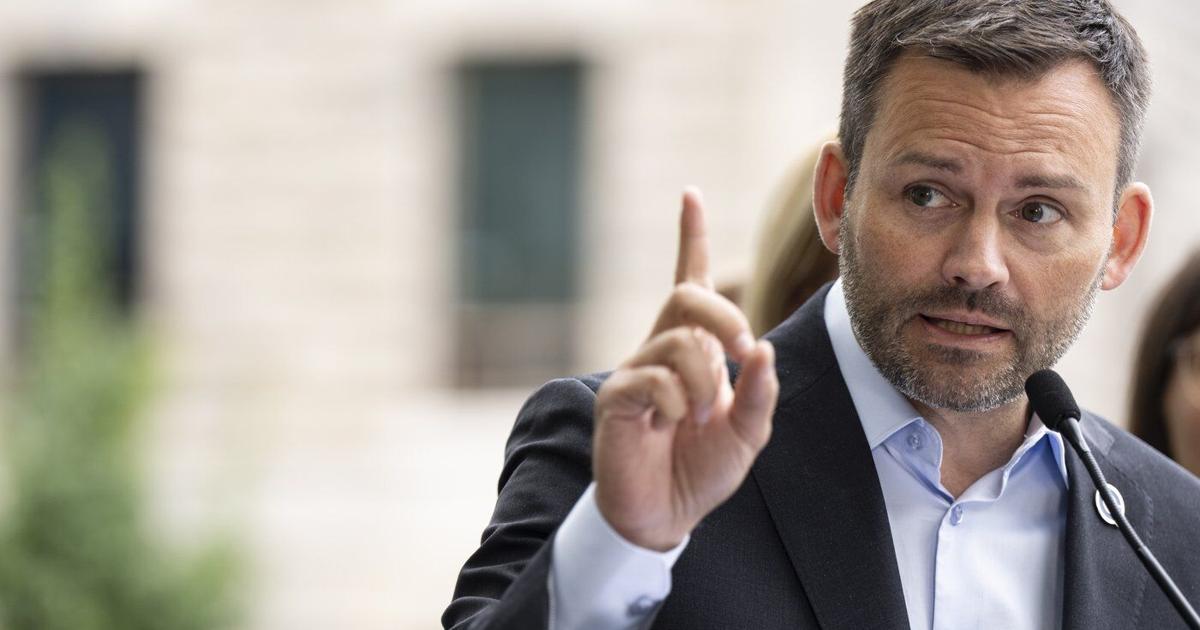
Parti Québécois Leader Paul St-Pierre Plamondon speaks to reporters during a campaign stop in Saint-Jerome, Que., on Sept. 2, 2026.
Justin Ling is a staff columnist for the Star and an investigative journalist based in Montreal. Reach him by email: jling@thestar.ca
Donald Trump, we know, poses an existential threat to Canada. And Canada, proclaims Paul St-Pierre Plamondon, poses an existential threat to Quebec.
On Monday, Quebecers will go to the polls to elect a new provincial government. They are, more than most of the rest of Canada, freaked out by the threat emanating from south of the border and supportive of Prime Minister Mark Carney’s efforts to counter it.
Yet if the polling is accurate, it will be Plamondon and his Parti Québécois who take a seat at the Council of the Federation. That’s bad news.
I live in Quebec — I wasn’t born here, but it’s home. I’m well accustomed to hearing the rest of the country, which still makes too little effort to understand Quebec, sneer at la belle province’s obsession with language or culture, or panic that the sky is falling when the sovereigntists come near to power.
But with Plamondon, there’s reason to worry. PSPP, as he’s universally known in Quebec, has been balancing the real threat of Trump with the imagined threat of Carney so as to put the whole country, Quebec included, at risk.
He is a reactionary who has rebuilt the PQ into an anti-immigrant party obsessed with blaming religious minorities and refugees for all his nation’s ills — not unlike and Trump. He is dogmatic in believing another referendum must be held, although he doesn’t think it should even be necessary; he believes “Yes” actually won the 1995 referendum. The vote, he claims, was rigged by an unscrupulous federal government.
Most worrying, he has found Trump to be a useful foil in his quest to quit Canada. Where Canada has been a “bad neighbour,” Plamondon has promised Quebec would “do better to demonstrate that we’re good partners to the United States, and we’ll be proactive on that idea.” He even planned to visit Washington to “establish ties” with the Trump administration, though he later cancelled the trip.
Since then, the public mood has shifted, and Plamondon has turned like a weathervane. He has vowed not to hold another independence referendum until Trump leaves the White House — but certainly before 2030, he promises. During the debates, when Plamondon declared he would “collaborate with Mark Carney and the other provinces.” That seemed to catch even the moderator off-guard.
Nobody is buying it, but no credible alternative has emerged.
Fréchette, who hastily replaced her even more unpopular predecessor, has tried to fashion herself into the Québécoise Carney. It hasn’t really worked. In an act of apparent desperation, her party recently leaked details of a purported Republican plot to interfere in the election on the PQ’s behalf. It was a pathetic effort, as all she revealed was a single blog post from a pro-Trump think-tank.
In doing this, however, Fréchette also let loose a quite different story — one that makes clear how much of a risk Plamondon is. Two well-placed sources, speaking to the Journal de Montréal, confirmed that the Trump administration had offered to negotiate a bilateral deal with Fréchette’s government earlier this year. The approach was meant to short-circuit Carney’s ongoing negotiations, the Journal reported.
Fréchette, thankfully, did not take the bait. Instead, her office contacted Ottawa to brief Carney on the effort. Had Plamondon been premier, it’s hard to believe he would have done the same.
Even if Fréchette has been solid on this one file, her party, in power since 2018, has lost all credibility on everything else. Our health-care system is in shambles. A quixotic effort to introduce private-sector competition to education has made everything worse and more expensive. The state is indebted, and growth is sluggish.
That leaves three who don’t want to kneecap Canada to advance Quebec.
Éric Duhaime is a former right-wing shock jock who heads up a team of kooky candidates under the Conservative banner. But Quebecers have warmed up both to Duhaime himself and to his bumper-sticker plans: cut taxes, cut red tape, drill for gas, break off our dependence on the U.S. “There’s a way to make gains inside Canada,” Duhaime said in the final election debate.
Ruba Ghazal, co-spokesperson of the left-wing sovereigntist Québec solidaire, has sounded effortlessly sensible the entire election. “Canada is an ally,” she says whenever she’s asked about the trade war. She has pitched co-operation, not competition, even suggesting Quebec should be more proactive in helping Canada fight by taxing or cutting off electricity exports to the U.S.
Finally, there’s Captain Canada: Charles Milliard. He’s argued consistently that Quebec could get a lot more done through enthusiastic federalism. “I’m convinced that, with this political instability we face today, we need to stand shoulder to shoulder,” the Liberal leader said in one debate.
Carney has loomed large over the election, but he hasn’t been terribly helpful in forming a bulwark against Plamondon. He’s had a good working relationship with Fréchette, and he grabbed lunch with Milliard when the election began. But he has also made decisions — such as privatizing operations at the Montréal-Trudeau airport and slashing business taxes — that impact Quebec without so much as briefing the premier beforehand. This has added credence to Plamondon’s invectives about Ottawa’s indifference toward Quebec.
Polls show voters split between the three alternative options, and they suggest Quebecers have mostly locked in their choices. So Plamondon looks set to win, even as his support hovers around 30 per cent. And Quebec may stumble into having a premier who, we know, would sell out the rest of the country with no hesitation.
Error! Sorry, there was an error processing your request.
There was a problem with the recaptcha. Please try again.
You may unsubscribe at any time. By signing up, you agree to our terms of use and privacy policy. This site is protected by reCAPTCHA and the Google privacy policy and terms of service apply.
Opinion articles are based on the author’s interpretations and judgments of facts, data and events. More details
Justin Ling is a staff columnist for the Star and an investigative journalist based in Montreal. Reach him by email: jling@thestar.ca

