
Kavanaugh Breaks With Conservatives as Alito Sits Out Supreme Court Case - Newsweek
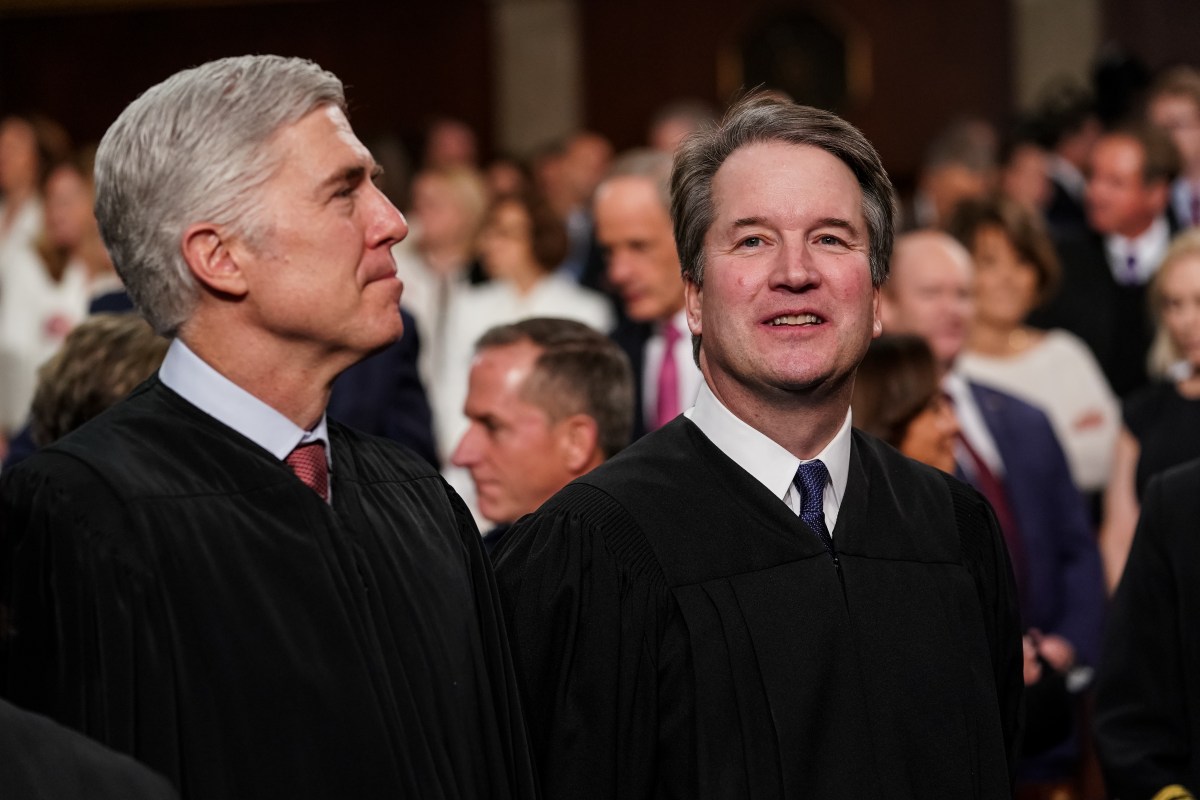
The first decisions of the Supreme Court's new term put Justice Brett Kavanaugh on opposite sides of his fellow conservatives in a case involving Sunoco, a major gasoline and oil company in the United States.
Sunoco was ordered to pay over $100 million in a class action lawsuit resulting from alleged late payments for oil production without interest, as is required by Oklahoma law. Sunoco asked the Supreme Court to review the case, arguing that the group may include people who didn't actually suffer and that courts have to determine who is entitled to damages before awarding them.
The court denied the petition for writ of certiorari, meaning they wouldn't hear the case. But, Kavanaugh said in the order that he would grant the petition.
One justice, Justice Samuel Alito, sat out the decision. Alito gave no reason for sitting out the case. His financial disclosures from the past few years show he owns stock in Phillips 66, which, like Sunoco, operates refineries, fuel terminals and pipelines. They show no stake in Sunoco itself. Owning stock in a competitor is not typically grounds for recusal.
Alito also holds stock in ConocoPhillips, an oil and gas company that is not considered a direct competitor of Sunoco's in fuel distribution.
Alito's investment in oil and gas companies also possibly caused his recusal in the first oral arguments of the new term. On Monday, justices heard arguments in Suncor Energy Inc. v County Commissioners of Boulder County, a climate change case. Following months of pressure and complaints, Alito decided to recuse himself from the case, although he declined to give a reason.
In the Sunoco v. Perry Cline case, Cline led a class of royalty owners who alleged that Sunoco violated Oklahoma law by not paying interest on late royalty payments. They argued that the payments were only made once the owners specifically demanded it and courts upheld a ruling that required Sunoco to pay them $103 million.
In the company's petition to the Supreme Court, Sunoco didn't dispute the $103 m judgment, but instead asked the Court to weigh in on how the class of recipients was decided. The company argued that courts shouldn't be able to certify a class or award damages if they haven't determined the actual members of the class. They said the class included people who had funds sitting in unclaimed-property funds because Sunoco couldn't identify or locate the owners.
Cline, in response, argued the case is a poor vehicle for deciding the broader issues of class action lawsuits that Sunoco asked the Court to decide. While Sunoco argued that class members can't be identified, Cline told the Supreme Court they could be through Sunoco's business records, which were used to pay the royalty proceeds. Since every class member was deprived of money owed to them, he argued to the Court that they all suffered financial injury.
Sunoco argued that if the Supreme Court does not take the case, lower-court rulings would stand that let courts certify damages without without requiring any practical way of identifying who is entitled to the money. The company also argued that allowing that precedent to stand will put pressure on defendants to settle class action lawsuits and put overwhelming economic pressure on companies despite there being no proof of actual people having suffered.
Contact Newsweek editors on this story: Jenni Fink and Cristina Diciu.


