
Kerala to Kashmir to Ayodhya, Gyanesh Kumar’s journey to top of poll panel - The Indian Express
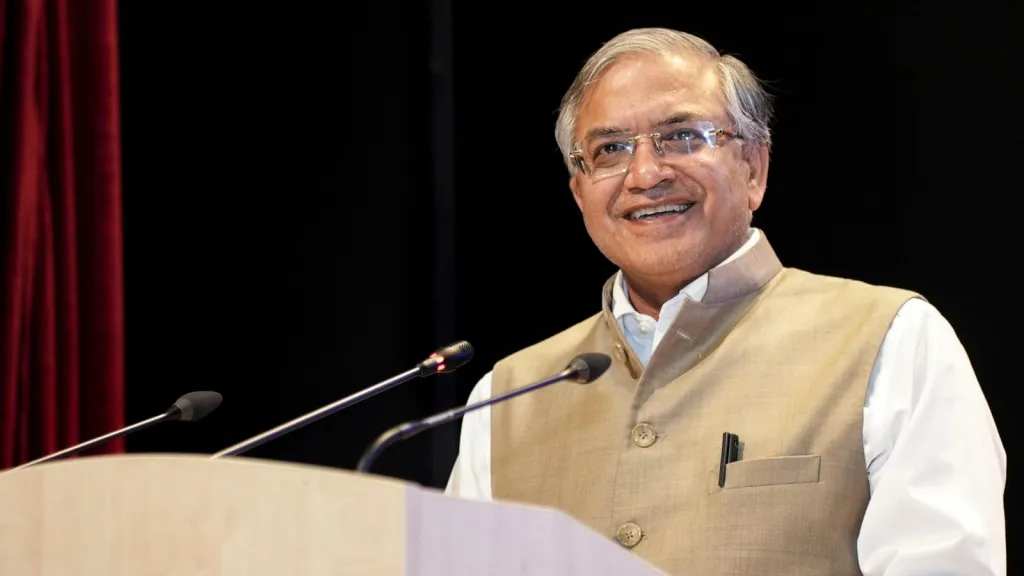
The Indian Express investigation on the unprecedented rupture within the Election Commission has put the spotlight on Chief Election Commissioner (CEC) Gyanesh Kumar, whose time at the helm of the poll panel has been mired in controversies. The 62-year-old is the first CEC to be appointed after the contentious law for choosing the poll panel chief – the government now has an advantage in the selection panel – came into force.
His 19-month tenure has seen an uproar over the Special Intensive Revision (SIR) of voter lists in several states. Opposition parties, led by the Congress, have consistently accused Kumar of using the poll panel to the ruling party’s advantage. The CEC has trashed these objections.
The Indian Express investigation, which has sparked a political storm, found that Election Commissioners Sukhbir Singh Sandhu and Vivek Joshi formally objected, at least 14 times over the last 10 months, to decisions taken by the poll panel without their knowledge.
The Express investigation exposes an opacity within the Election Commission’s functioning that eventually forced Kumar’s two colleagues on the three-member panel to write to flag their concerns to the Cabinet Secretary. The CEC is yet to react to the political uproar over the Express report.
Kumar is a 1988-batch IAS officer of the Kerala cadre. His profile on the Election Commission website notes his B.Tech degree from IIT-Kanpur and a course in environmental economics from Harvard University. His first posting was in 1990, as a Sub-Collector in Pathanamthitta, Kerala. He then worked across departments in the state before taking over as Resident Commissioner at Kerala House in Delhi in 2012.
Kumar’s bureaucratic journey really took off after he was transferred from that post and appointed, in May 2016, as Joint Secretary in the Kashmir Division of the Union Home Ministry, then headed by Rajnath Singh. This was the time of a new spurt in militancy in the Valley, led by Hizbul Mujahideen commander Burhan Wani. The PDP-BJP coalition was in power in the erstwhile state.
In 2019, after Amit Shah took charge of the Home Ministry, Kumar was roped in for the drafting of the Jammu and Kashmir Reorganisation Bill that split Jammu and Kashmir into two Union Territories and abrogated Article 370, one of the RSS-BJP’s oldest ideological projects.
Kumar’s handling of the post-abrogation situation in Kashmir, including a security crackdown, is known to have earned him Shah’s trust. His next project was to constitute the Ram Janmabhoomi Teerth Kshetra Trust, which oversaw the construction of the Ram temple in Ayodhya.
In 2020, Kumar’s career faced a minor hiccup. The government left him out of the empanelment of 24 IAS officers of the 1988 batch as Secretaries. In February 2021, Kumar bounced back and was posted as Secretary, Ministry of Parliamentary Affairs. Shah picked him later for the new Ministry of Cooperation under him.
A bureaucrat from Jammu and Kashmir who coordinated with Kumar in the Home Ministry said he stood out for his attention to detail. “He never left things for others, got personally involved… In the post-August 5, 2019, period, we also witnessed his ability to deliver under pressure. Yet, he was always cordial and warm towards colleagues. I have never seen him lose his cool,” the officer said. Kumar’s daughters, too, are in the civil services – one is an IAS and the other an IRS officer. They are married to IAS officers.
Less than two months after he retired in January 2024, Kumar was picked as an election commissioner. His appointment was announced on March 15, 2024; the next day, the poll panel announced the schedule for the Lok Sabha elections.
In a busy poll year, Kumar was also involved in the first Assembly elections in Jammu and Kashmir after the abrogation of Article 370, as well as elections in Haryana, Maharashtra, Jharkhand and Delhi. As the senior-most officer on the panel, Kumar was expected to take over as the CEC. As per sources, in anticipation of this new rule, he began consultations with officials months before the takeover. He finally became CEC in February last year.
One of Kumar’s first orders as CEC was a directive to all Nirvachan Sadan employees to mark their attendance strictly on biometric machines. Officials also said heated discussions became common at meetings – a contrast to his predecessor, Rajiv Kumar.
And then came the Special Intensive Revision (SIR), which made national headlines and drew allegations of additions and deletions of voters to give the BJP an advantage in elections across the country.
What also stood out was the Election Commission’s response to the Opposition’s allegations. The poll panel stepped up its social media game, dismissing these charges as “misleading”. Kumar went on to challenge Rahul Gandhi, the Leader of the Opposition in Lok Sabha, to substantiate his allegations of “vote chori”, or to “apologise to the nation”.
For many, this was a man who had come very far from the days when his doors were always open and who would insist that his guests not leave without having kahwa – the Kashmiri drink offered in winters, as a gesture of warmth.

