King Charles ‘giddily elated’ after Diana’s death: 10 explosive claims in brother Charles Spencer’s book - The Indian Express
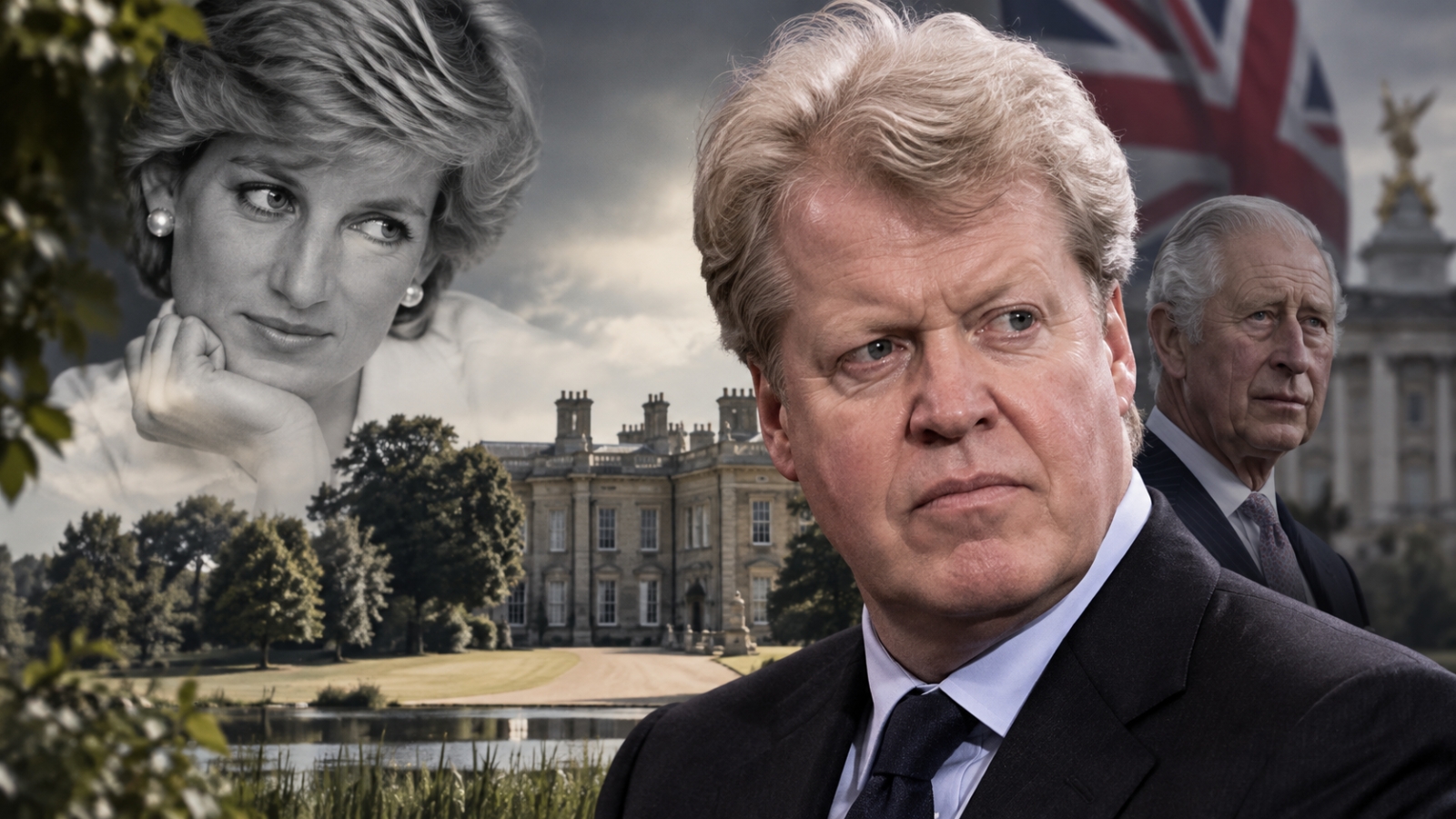
Nearly three decades after Princess Diana’s death, her younger brother Charles Spencer has reopened some of the most painful chapters in the history of the British royal family.
Spencer’s memoir, Swan Song: Diana, My Sister, was published on Tuesday, September 22, nearly 30 years after Diana died in a Paris car crash. The book presents her life and death from the perspective of her brother, who delivered the celebrated eulogy at her 1997 funeral.
The book has already triggered an unusually sharp response from Buckingham Palace. In a statement issued after excerpts appeared, the Palace said King Charles was mindful that the pain of fraternal grief can cloud reason, affect judgment and colour memory many years after a loss.
Spencer has rejected the suggestion that his recollections are unreliable, saying he is telling the truth, The Guardian reported.
The most explosive allegation, as reported by The Guardian, concerns a phone call between Spencer and the then-Prince Charles in the days before Diana’s funeral. Spencer says he objected to Princes William and Harry, then 15 and 12, walking behind their mother’s coffin. He argued that Diana would not have wanted her sons to undergo such a public ordeal.
According to Spencer, Charles became furious during a subsequent telephone conversation and criticised the Spencer family’s sense of duty.
He then allegedly said, “We’ll forget her soon enough.” Spencer says he was so stunned that he ended the call.”
Spencer has since insisted that those were “exactly the words” Charles used and said he told friends and family about the conversation at the time, The Guardian reported.
The Palace has not offered a detailed alternative account of the conversation. Its response instead questioned whether grief and the passage of time could have affected Spencer’s recollection, the report added.
Spencer also recalls speaking to Charles shortly after Diana died in Paris on August 31, 1997.
He says that while other people who called him sounded shocked and struggled to express themselves, Charles sounded “giddily elated — like a lottery winner”, The Washington Post reported.
Spencer goes further, saying he suspected Charles may have been thinking about how Diana’s death could free him to marry Camilla, the woman he loved.
But he acknowledges that this was “his interpretation”, not something he knew Charles was thinking. In his BBC interview, Spencer said he could not be certain of Charles’s thoughts and was drawing an inference from the tone of the conversation, news agency Reuters reported.
He claims that he was informed by a senior palace aide that William and Harry would walk behind their mother’s coffin. Spencer objected immediately, saying Diana would never have wanted her young sons to participate in such a traumatic spectacle, reported The Guardian.
Remembering a true Queen, 29 years after her passing. 🕊️👑 Diana was taken far too soon, leaving behind two young boys who lost their precious mother. Her legacy, kindness and compassion continue to live on. Forever remembered, forever loved. ❤️. #Diana pic.twitter.com/uqGXW8zV2a
Charles, according to Spencer, defended the decision by referring to his own experience of walking behind the coffin of Lord Mountbatten.
Spencer responded that Charles had been an adult when Mountbatten died, whereas William and Harry were children mourning their mother.
The two princes ultimately walked behind Diana’s coffin during the funeral procession. William has subsequently described the experience as extremely difficult.
The memoir also goes back to the beginning of Charles and Diana’s marriage. Spencer claims Diana told their father, shortly before the 1981 wedding, that she could not go through with marrying a man who did not love her.
He recalls seeing his sister distressed before the wedding after Charles allegedly told her that he was “very happy” to marry her but was not actually in love with her.
Charles and Diana married at St Paul’s Cathedral on July 29, 1981. Their relationship deteriorated over the following decade; they separated in 1992 and divorced in 1996.
One of the memoir’s more serious revelations concerns Diana’s mental health. Spencer writes that during some of her unhappiest periods, Diana experienced explosive emotional outbursts. He also claims she drove herself to Beachy Head, a high chalk cliff in southern England, while contemplating ending her life.
According to Spencer, her love for William and Harry stopped her from acting on those thoughts.
Because this is a retrospective account of Diana’s private mental state, it should be attributed specifically to Spencer rather than presented as an independently established clinical account.
Spencer recalls seeing 12-year-old Harry after Diana’s funeral and describes him as “tiny, and slight, and bereft.” He argues that Harry needed calm and emotional support following his mother’s death but believes he did not receive enough of it.
The memoir portrays Spencer as particularly concerned about his younger nephew and what the loss might mean for him in later life, news agency Associated Press reported.
Spencer has also drawn a connection between the media treatment of Diana and the later treatment of Harry and Meghan, saying he sees “echoes” of what happened to his sister.
Spencer recounts an extraordinary conversation following Diana’s funeral. He says Queen Elizabeth II’s private secretary, Robert Fellowes, approached him while the family was travelling back to Althorp, Diana’s final resting place.
Spencer says Fellowes told him that the Queen wanted to offer Diana her “Her Royal Highness (HRH)” title back posthumously.
Diana had lost the HRH style after her 1996 divorce from Charles, although she retained the title Princess of Wales.
Spencer says he rejected the offer because he regarded it as meaningless after Diana’s death. He later questioned whether he should have accepted it for William and Harry, the People reported.
The memoir revisits an episode from 1980, before Charles and Diana married. A newspaper had reported that a blonde woman had secretly joined Charles aboard the Royal Train. The report caused controversy, and Buckingham Palace denied that Diana was the woman involved.
Spencer writes that Diana later became convinced that the woman could have been Camilla Parker Bowles, partly because of the location of the alleged meeting and the proximity to Camilla’s home.
The memoir also contains an allegation concerning Mohamed Al-Fayed, the father of Dodi Fayed, who was with Diana when she died. Spencer claims Diana told him that Al-Fayed had sexually touched her and made a crude remark during her relationship with Dodi, the Daily Mail reported.
The claim appears against the wider backdrop of allegations of sexual misconduct against Al-Fayed that emerged publicly years later.
The memoir repeatedly returns to the role of the media in Diana’s life. Spencer portrays his sister as someone who became increasingly exposed to intense press scrutiny as her marriage broke down and her fame grew.
He also recalls taking steps to keep newspaper editors away from Diana’s funeral because of his anger over the treatment she had received from the press.
Spencer has subsequently drawn parallels between Diana’s experience and the media scrutiny faced by Harry and Meghan, telling the BBC that Diana had been “really brought low” by criticism and that he sees echoes of that treatment today.
The Express Global Desk at indianexpress.com which delivers authoritative, verified, and context-driven coverage of key international developments shaping global politics, policy, and migration trends. The desk focuses on stories with direct relevance for Indian and global audiences, combining breaking news with in-depth explainers and analysis. A major focus area of the desk is US immigration and visa policy, including developments related to student visas, work permits, permanent residency pathways, executive actions, and court rulings. The Global Desk also closely tracks Canada’s immigration, visa, and study policies, covering changes to study permits, post-study work options, permanent residence programmes, and regulatory updates affecting migrants and international students. All reporting from the Global Desk adheres to The Indian Express’ editorial standards, relying on official data, government notifications, court documents, and on-record sources. The desk prioritises clarity, accuracy, and accountability, ensuring readers can navigate complex global systems with confidence. Core Team The Express Global Desk is led by a team of experienced journalists and editors with deep expertise in international affairs and migration policy: Aniruddha Dhar – Senior Assistant Editor with extensive experience in global affairs, international politics, and editorial leadership. Nischai Vats – Deputy Copy Editor specialising in US politics, US visa and immigration policy, and policy-driven international coverage. Mashkoora Khan – Sub-editor focusing on global developments, with a strong emphasis on Canada visa, immigration, and study-related policy coverage. ... Read More