Knowledge Nugget | BRICS Summit 2026: New Delhi Declaration, key takeaways and what was left unsaid - The Indian Express
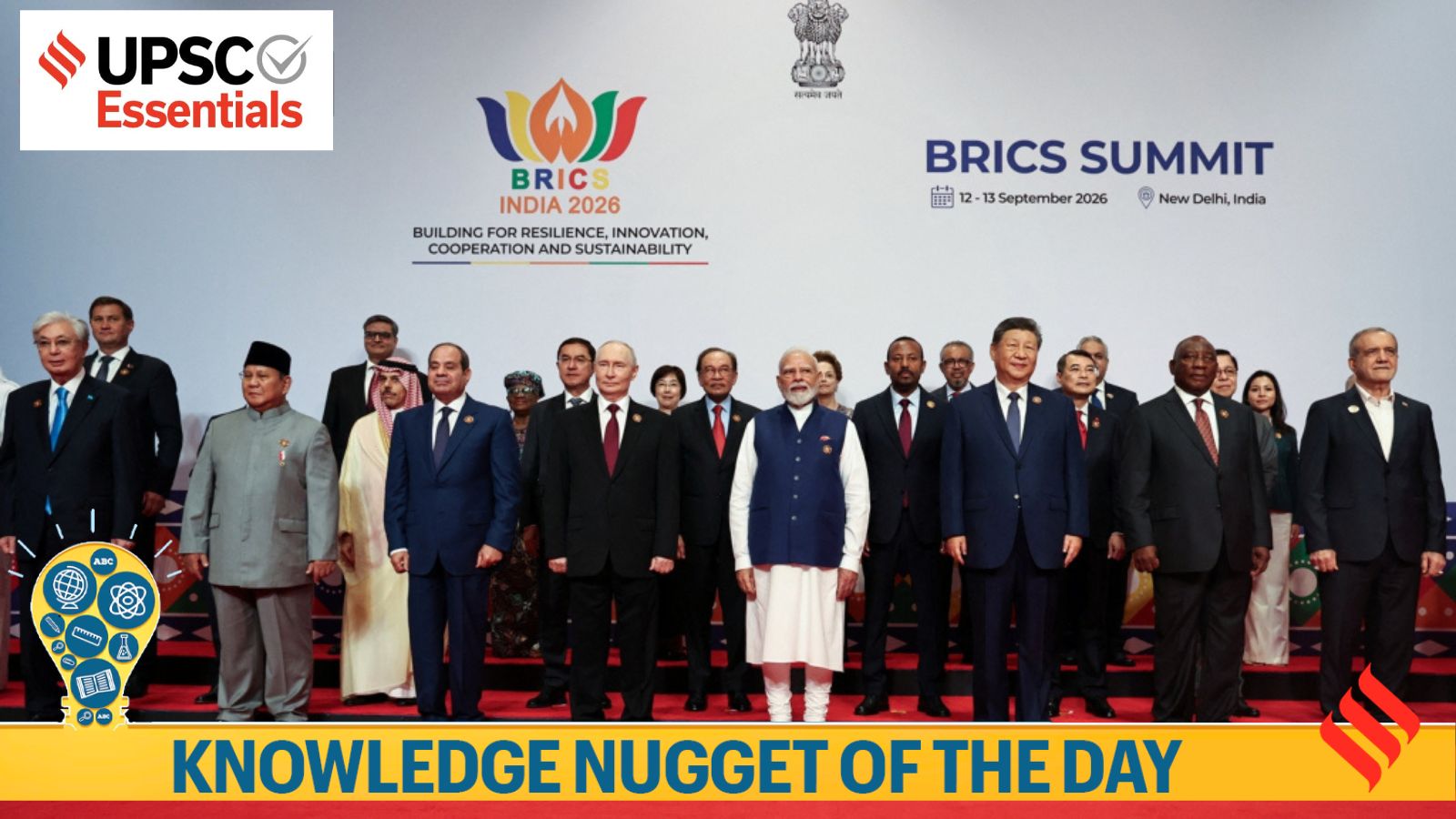
Take a look at the essential events, concepts, terms, quotes, or phenomena every day and brush up your knowledge. Here’s your UPSC Current Affairs knowledge nugget for today on the BRICS Summit 2026.
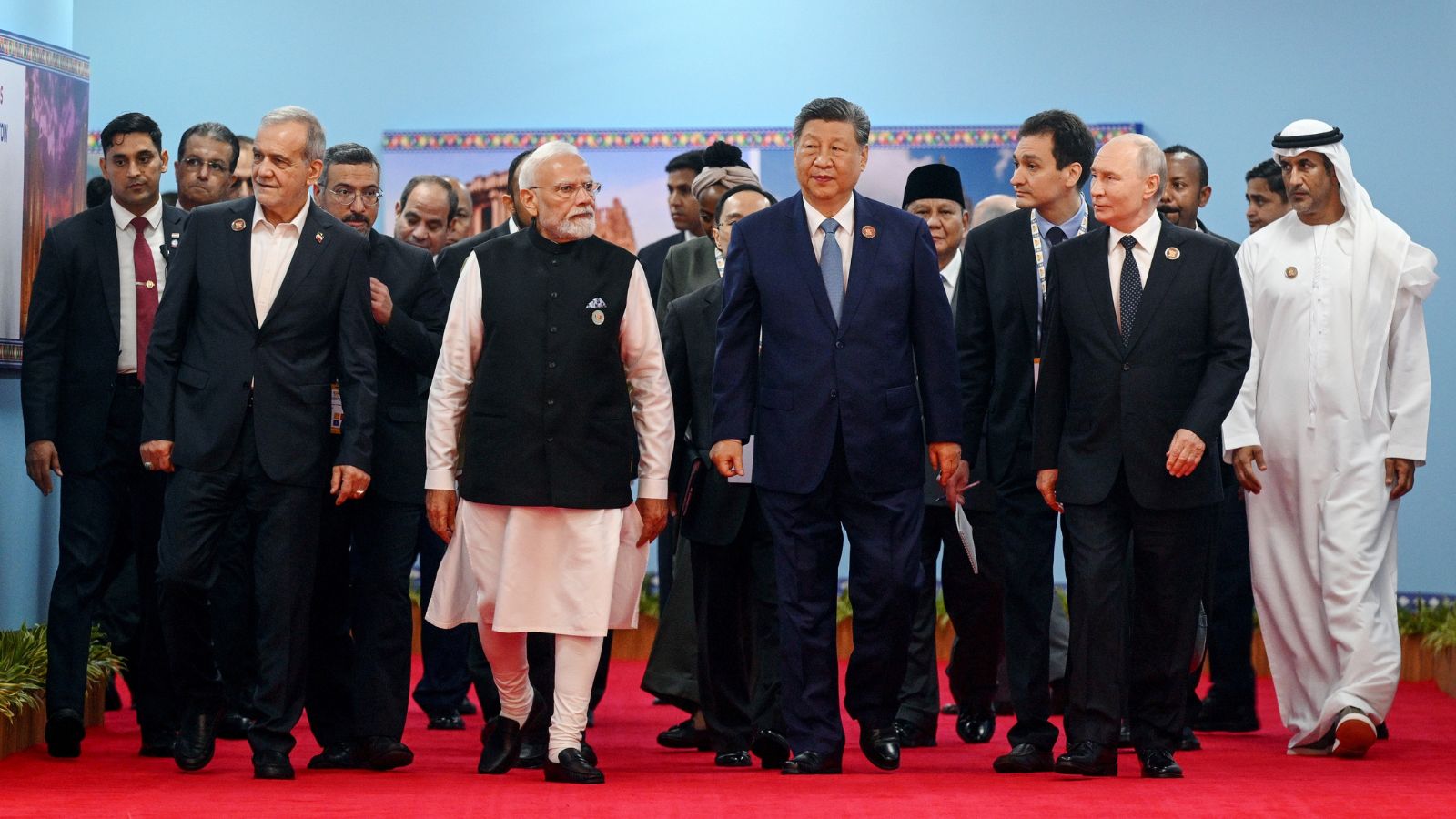
The 18th BRICS Summit concluded on September 13 in New Delhi. The BRICS grouping, on September 12, adopted the New Delhi Declaration, laying out common positions on issues ranging from trade and terrorism to artificial intelligence and institutional reform, and various initiatives were supported by member countries. In this backdrop, let’s look at the key highlights of the summit.
Set against the backdrop of tariffs, trade tensions, and geopolitical fragmentation, the theme of this year’s BRICS summit was Building for Resilience, Innovation, Cooperation, and Sustainability. The 45-page BRICS declaration achieved a consensus through careful diplomatic calibration. As many as 140 paragraphs of the document dwelt at length on trade, health, and tourism, making the document cooperative rather than confrontational.
#1 ‘Seafarers’ Emergency Support Network: Prime Minister Narendra Modi proposed establishing a ‘Seafarers’ Emergency Support Network’ to provide timely assistance and ensure the safety of personnel working at sea.
— India has been advocating for the safety of seafarers because it supplies a massive share of the global maritime workforce and relies heavily on secure sea lanes for international trade. In fact, India provides over 12% of all trained seafarers around the world, with thousands of Indian families depending on those working aboard commercial vessels.
#2 New agriculture initiatives: The BRICS nations announced four new agriculture initiatives, including the establishment of Agroecology and Regenerative Agriculture for Climate Resilience and Productivity and Digital Agriculture.
— The leaders also agreed to the establishment of a collaborative, non-binding, and farmer-centric BRICS AGRIN (Agro-Inputs, Genetic Resources, and Information Network), while welcoming the launch of a Global Forum on Farmers’ Rights in Seed Systems.
#3 BRICS Continuity and Implementation Mechanism:To keep track of the initiatives, the Prime Minister proposed a ‘BRICS Continuity and Implementation Mechanism.’ This would enable the follow-up of all initiatives and outcomes through the Troika (the troika refers to a framework comprising past, current and incoming chairs of the grouping).
#4 NIMHANS to be nodal body for BRICS Centres of Excellence: The New Delhi Declaration agrees to support the establishment of a network of training hubs and centres of excellence (CoEs) for mental health, with Bengaluru-based National Institute of Mental Health and Neuro Sciences (NIMHANS) being the coordinating centre.
#5 BRICS calls for boosting transport: BRICS nations reaffirmed their commitment to enhance transport potential, including in civil aviation, while also respecting the “sovereignty and territorial integrity” of all member states.
— Notably, India, China, Russia, and Brazil are among the top five countries in the world with the largest railway and road networks.
#6 BRICS education agenda: The BRICS nations have called for cooperation in Early Childhood Care and Education (ECCE) and Foundational Literacy and Numeracy (FLN).
— They also welcomed the outcomes of the 13th BRICS Education Minister’s meeting in Bhubaneshwar last month. The New Delhi Declaration also highlighted another priority sector — the BRICS Technical and Vocational Education and Training (TVET) Cooperation Alliance (BRICS-TCA).
— The Declaration encouraged the BRICS Network University to consider traditional, indigenous and local knowledge systems as an additional International Thematic Group.
#7 BRICS Remote Sensing Satellite Constellation (RSSC) Agreement: The New Delhi Declaration also acknowledges the significant progress in finalising the amendment to the BRICS RRSSC Agreement for including new space agencies.
— The RSSC is a virtual network of existing observation satellites of the BRICS countries, including India’s Resourcesat 2 and 2A, China’s Gaofen-6 and Ziyuan III 02, and Russia’s Kanopus-V type.
— The Summit also drafted the Terms of Reference for the BRICS Space Council. There was also an emphasis on debris mitigation and long-term sustainability.
#8 BRICS Science and Research Repository: The declaration also speaks of the planned BRICS Science and Research Repository, envisaged as a structured platform for knowledge storage and sharing among BRICS countries voluntarily, while respecting data security, intellectual property rights and relevant national policies.
#9 BRICS seeks ‘mutually reinforcing policy levers’: With an eye on ensuring resilient global value chains, the BRICS countries will look at “mutually reinforcing policy levers” to boost trade within the grouping, the New Delhi Declaration, issued on Saturday, said.
— The levers would include backward and forward global value chain linkages, regional integration, economic diversification beyond primary commodities, investment in physical and digital infrastructure, regulatory frameworks, and upgrading workforce skills.
#10 BRICS condemns unilateral tariffs, backs WTO reforms: The para 22 of the declaration says the members condemn “unilateral coercive measures,” “unilateral economic sanctions and secondary sanctions” — which is standard BRICS shorthand for Western sanctions regimes.
— BRICS members said that the proliferation of trade-restrictive actions is inconsistent with WTO rules, whether in the form of “indiscriminate raising of tariffs and non-tariff measures”, or protectionism under the “guise of environmental objectives”.
— The declaration said that the members support reform of the WTO and to strengthen a non-discriminatory, open, equitable, transparent, fair, inclusive, predictable and rules-based multilateral trading system, with the WTO at its core.
#11 BRICS condemns Pahalgam attack: On terrorism, the BRICS leaders got a consensus in 2026 Delhi but the language formulation was similar to the 2025 Rio declaration. “We express strong condemnation of any acts of terrorism as criminal and unjustifiable, regardless of their motivation, whenever, wherever and by whomsoever committed. We condemn in the strongest terms the terrorist attack in Jammu and Kashmir on 22 April 2025, during which 26 people were killed and many more injured.”
#12 BRICS opposed Carbon Border Tax: The declaration also opposed “carbon border adjustment mechanisms (CBAM)”, aiming at US/EU trade-climate measures.
— Notably, CBAM is an import duty that is imposed by Europe on goods produced in other countries by processes that lead to greater carbon emissions than domestic European manufacturers are allowed to emit.
#13 Call for UN Security Council (UNSC) reform: In the section on UNSC, the declaration states: “Recalling the 2022 Beijing and 2023 Johannesburg-II Leaders’ Declarations, China and Russia, as permanent members of the UN Security Council, reiterate their support to the aspirations of Brazil and India to play a greater role in the UN, including its Security Council..”
#1. No mention of Ukraine: On Ukraine, there was no mention at all in the Delhi 2026 declaration. With Russia at the high table as India’s long-time partner, any mention of Ukraine has been avoided. No paragraph in the 45-page declaration mentions Ukraine, Russia’s invasion, or related sanctions by name. In Rio 2025, there was an anodyne paragraph: “We recall our national positions concerning the conflict in Ukraine as expressed in the appropriate fora, including the UN Security Council and the UN General Assembly.”
#2 No common BRICS currency: While speculation about a unified BRICS currency has been rife for years, the declaration steered clear of the subject. Instead, BRICS continued to focus on a more incremental goal: making it easier for members to promote trade settlements and investments in their own currencies to achieve faster, cheaper and safer cross-border payments.
— The declaration acknowledged discussions on promoting the use of BRICS local currencies while respecting national priorities and recognising that there is “no one-size-fits-all approach”.
1. BRICS brings together eleven major emerging markets and developing countries of the world: Brazil, China, Egypt, Ethiopia, India, Indonesia, Iran, Russia, Saudi Arabia, South Africa and the United Arab Emirates.
2. It serves as a useful platform for consultation and cooperation on contemporary issues having global as well as regional significance, and issues of global political and economic governance.
3. BRICS began as BRIC, Brazil, Russia, India and China, in 2006, following a Goldman Sachs projection identifying these economies as future engines of global growth. It evolved from a foreign ministers’ dialogue into a leaders’ forum, with its first summit held in Yekaterinburg, Russia, in 2009.
4. South Africa joined in 2010, and the grouping expanded dramatically in 2024 with the addition of Egypt, Ethiopia, Iran, Saudi Arabia and the UAE. Indonesia became the 11th full member in January 2025.
1. 16th BRICS Summit was held under the Chairship of Russia in Kazan.
2. Indonesia has become a full member of BRICS.
3. The theme of the 16th BRICS Summit was Strengthening Multiculturalism for Just Global Development and Security.
Which of the statements given above is/are correct?
🚨 Click Here to read the UPSC Essentials magazine for August 2026. Share your views and suggestions in the comment box or at manas.srivastava@indianexpress.com🚨
Subscribe to our UPSC newsletter. Stay updated with the latest UPSC articles by joining our Telegram channel – Indian Express UPSC Hub, and follow us on Instagram and X
Roshni Yadav is a Deputy Copy Editor with The Indian Express. At The Indian Express, she writes for the UPSC section. You can contact her via email: roshni.yadav@indianexpress.com. ... Read More