Knowledge Nugget | India now exporter of Hilsa (ilish): What is it and why it matters - The Indian Express
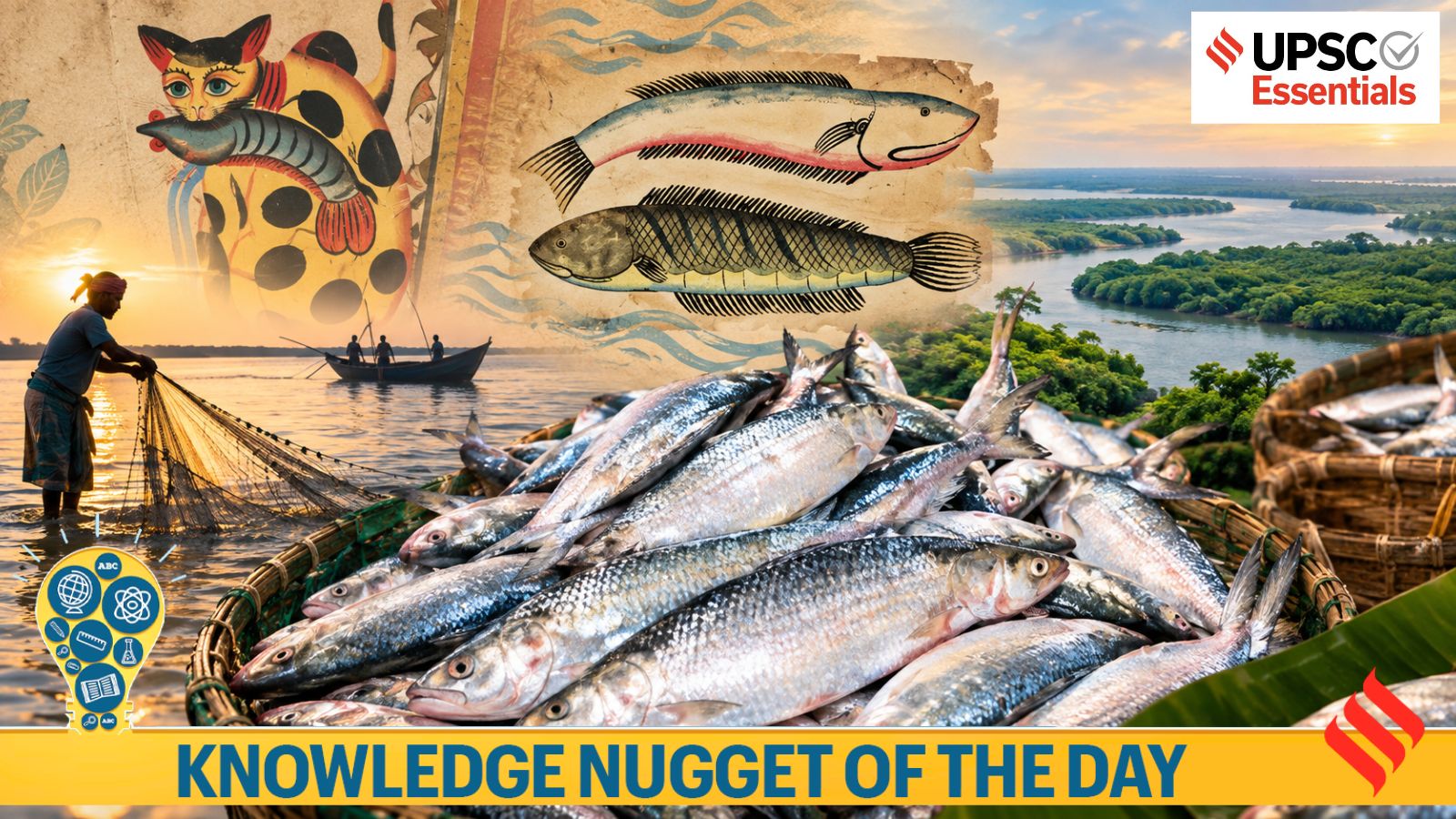
Take a look at the essential events, concepts, terms, quotes, or phenomena every day and brush up your knowledge. Here’s your UPSC Current Affairs knowledge nugget for today on Hilsa.
🚨As we mark the 3rd anniversary of the UPSC Essentials Magazine, we thank our readers for being part of this journey. Your trust, feedback and continued support have shaped the magazine and encouraged us to keep improving with every edition. Click here to read the UPSC Essentials magazine for September 2026. Share your views and suggestions in the comment box or write to us at manas.srivastava@indianexpress.com.🚨
In a role reversal of sorts, India is exporting Hilsa fish to Bangladesh, bucking the trend of the neighbour supplying the sought-after variety of fish that has the highest place of pride on Bengal’s dining tables. In this backdrop, let’s know about the Hilsa fish and its significance.
1. Hilsa, known as Ilish in Bengali, is rich in nutrition and popular in West Bengal, where it is designated as the state fish. Mostly found in the Hooghly-Bhagirathi river system and in the Bay of Bengal, Hilsa is an anadromous fish — that is, it migrates from the ocean to rivers for spawning.
2. Shoals of males and females of the species migrate twice a year for breeding in rivers — mid-February to April and September-October.
3. There are two varieties of hilsa in the Bay of Bengal – Tenualosa ilisha and Tenualosa toli ilish.
4. Hilsa fish is a sentiment for Bengalis. For Bangladeshis, Hilsa is the national fish. Although the fish get caught in the fishermen’s net round the year, monsoon is the peak season when the number multiplies. Bengalis from both West Bengal in India and Bangladesh wait for this season.
5. Bengal celebrates Ilish Utsab every year, a festival dedicated solely to Hilsa. Restaurants and households prepare diverse Hilsa dishes, turning the humble fish into a culinary star.
6. Hilsa is often gifted during weddings or festivals as a token of love and prosperity. In traditional rituals, a pair of Hilsa fish (Joda Ilish) symbolizes harmony and good fortune for married couples.
7. Around 500 tonnes of Hilsa have been sent to Bangladesh in the past two months through the Petrapole land port on the international border in West Bengal. Traders expect an additional 150 to 200 tonnes of Hilsa to be exported to Bangladesh in the coming weeks.
8. Traditionally, Hilsa is brought in from Bangladesh when its government allows its import, generally during the Durga Puja festive season. Currently, Bangladesh has paused Hilsa exports to India.
“This is the first time Hilsa from our country is being exported to Bangladesh. It is a welcome development. Most of the catch is from Gujarat,” said Syed Anwar Maqsood, secretary of the Fish Importers Association in Bengal and the Howrah wholesale fish market.
9. According to fish traders and exporters, the development reflects changing patterns of production, availability and consumer demand in the two neighbouring countries.
10. A substantial portion of the Hilsa consignment is from Gujarat, particularly the Bharuch region, and some supplies have moved through the Howrah fish market in Bengal.
1. Recently, ‘Pradhan Mantri Matsya Sampada Yojana (PMMSY)’ completed 6 years. It was launched on 10th September, 2020 to bring ‘Blue Revolution’ through sustainable and responsible development of fisheries sector in India. It focuses on the ecologically healthy, economically viable, and socially inclusive development of the Fisheries sector of India.
2. The Department of Fisheries, Ministry of Fisheries, Animal Husbandry and Dairying, Government of India is implementing PMMSY.
3. It is designed to address critical gaps in the fisheries value chain from fish production, productivity and quality to technology, post-harvest infrastructure and marketing. It aims to modernize and strengthen the value chain, enhance traceability and establish a robust fisheries management framework while simultaneously ensuring the socio-economic welfare of fishers and fish farmers.
Aquaculture can be simply put as the controlled process of cultivating aquatic organisms, especially meant for human consumption. According to Food and Agriculture Organization (FAO) of the United Nations, “The farming of aquatic organisms including fish, molluscs, crustaceans and aquatic plants. Farming implies some sort of intervention in the rearing process to enhance production, such as regular stocking, feeding, protection from predators, etc.” 4. PMMSY provides support for various fishing activities, including the development of fishing harbors and fish landing centers to ensure the safe docking and berthing of fishing boats and vessels, as well as the efficient handling of post-harvest operations. Additionally, it promotes the establishment of ornamental fish-rearing units, fish retail markets, and fish kiosks.
5. The Pradhan Mantri Matsya Kisan Samridhi Sah-Yojana (PM-MKSSY) is a central sector sub-scheme under the PMMSY for the formalisation of the fisheries sector and supporting fisheries micro and small enterprises.
1. It is an anadromous fish that migrates from the ocean to rivers for spawning.
3. The peak breeding migration of Hilsa occurs only during the monsoon season.
Which of the statements given above is/are correct?
Subscribe to our UPSC newsletter. Stay updated with the latest UPSC articles by joining our Telegram channel – Indian Express UPSC Hub, and follow us on Instagram and X
Roshni Yadav is a Deputy Copy Editor with The Indian Express. At The Indian Express, she writes for the UPSC section. You can contact her via email: roshni.yadav@indianexpress.com. ... Read More