
Kraft Heinz bets on Brazil with verticalized production - Valor International
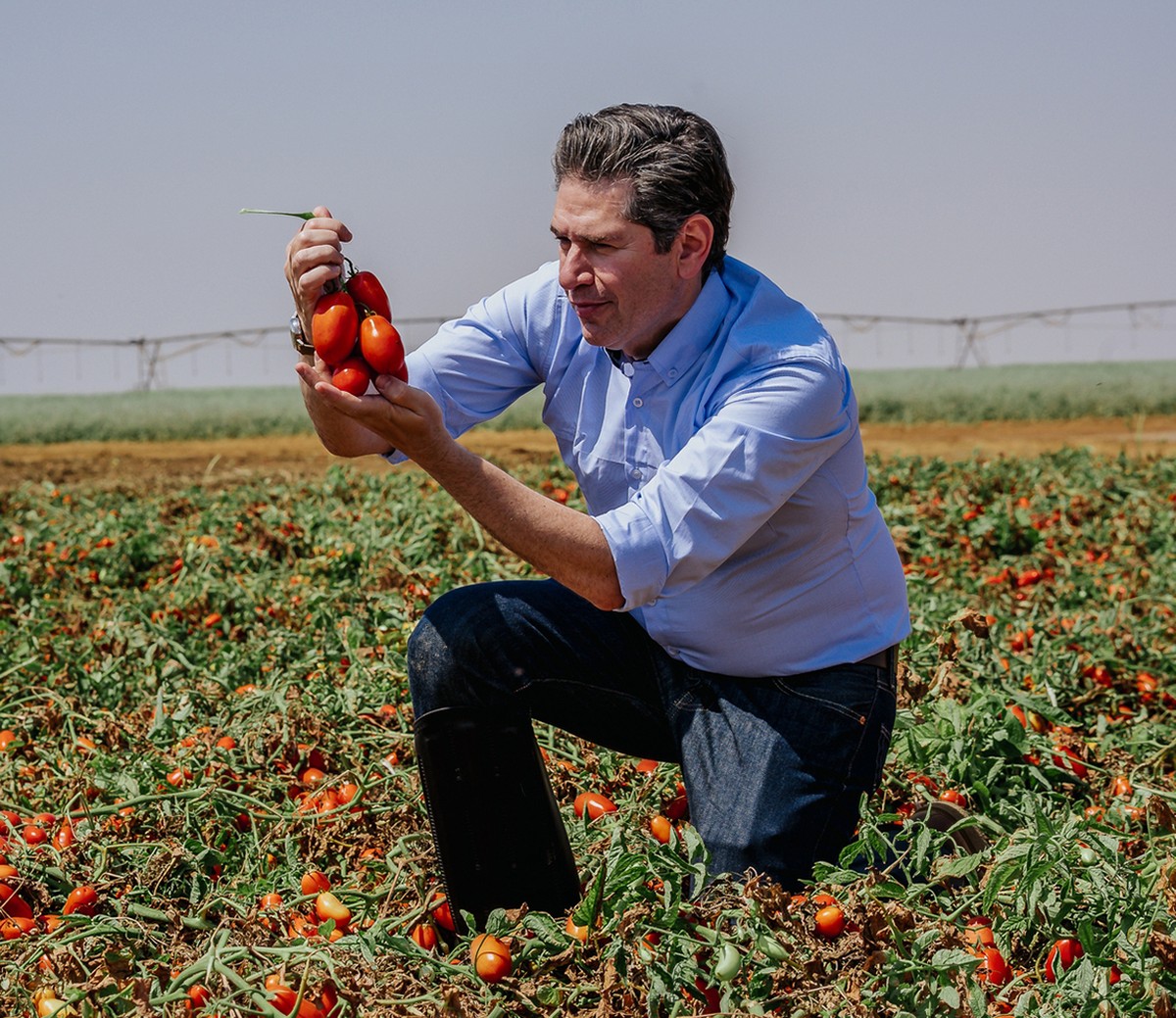
Under the scorching September sun, green and red stretch across the fields against the blue skies of Brazil’s Central Plateau. From these tomato crops in Cristalina, Goiás, comes part of the raw material that Kraft Heinz uses to produce its iconic ketchup. Since last year, all ketchup manufactured and sold by the company in the country has been made exclusively with locally grown tomatoes.
“A few years ago, we didn’t have the production capacity we needed, so we had to import tomato paste from California. The great news is that our harvests are now improving both in quantity and quality,” said Ariel Grunkraut, CEO of Kraft Heinz Brasil, speaking from the tomato fields that just hours later would be harvested and processed into paste at the company’s plants.
Self-sufficient in tomato paste production, Kraft Heinz is already considering exporting the ingredient. Currently, operations in Costa Rica, Venezuela, and Mexico still rely on tomato paste from California. For now, however, growing demand within Brazil prevents exports, the executive noted. “Our ambition is that in three to five years we’ll be able to export to Latin America...and take advantage of Mercosur, and supply Hispanic markets,” Mr. Grunkraut said.
Worldwide, only four countries carry out all stages of Heinz ketchup production, from growing tomatoes to making the final product: Brazil, Egypt, Turkey, and Poland.
For the company, producing locally not only brings logistical advantages but also shields operations from external risks. “Our reaction speed is critical, because when we depend on maritime shipping from California, any global transport or logistics crisis can disrupt supply and leave us short on Heinz paste,” said Matheus Pimentel, Kraft Heinz’s director of procurement and agriculture.
Local sourcing also reduces exposure to currency and tariff fluctuations that could affect import costs.
The Cristalina fields, with vast industrial tomato crops stretching to the horizon, are just one of several supply sources. Kraft Heinz works with 13 growers in Goiás, where its factories are also based, in the city of Nerópolis. Each year, the company processes about 7 billion tomatoes, with productivity reaching 130 tonnes per hectare.
At Fazenda Cupim, one of the suppliers visited by Valor, about 350 hectares are dedicated to industrial tomatoes under contract with Kraft Heinz. “With table tomatoes, you’re at the mercy of market swings—sometimes prices soar, sometimes they crash. With industrial tomatoes, profitability isn’t always as high, but it’s much more stable,” said farm manager Cristiano Denes.
According to Lucas Paschoal, Kraft Heinz’s director of agriculture, the company now evaluates suppliers through its Excellence Program, launched in 2024. Farmers are scored on quality, sustainability practices, productivity, and commercial performance. Top-rated growers gain commercial incentives, priority access to new technologies, and a seat at the company’s crop-planning discussions.
In July, all of Kraft Heinz’s Brazilian suppliers received international Farm Sustainability Assessment (FSA) certification, the first time any of the company’s global operations earned this recognition.
Kraft Heinz entered Brazil in 2013 by acquiring local food company Quero, giving it access to tomato processing and grower networks, Mr. Grunkraut recalled. In the past five years, the group has also acquired Hemmer and BR Spices, investing R$1 billion to build and modernize plants in Nerópolis, Blumenau (Santa Catarina), and Jandira (São Paulo). According to the CEO, further acquisitions are not currently planned.
“We just completed two acquisitions in under five years, and we’re still integrating them into our portfolio. The challenge for the next decade is to drive growth organically,” he said.
Even so, Mr. Grunkraut noted that many of the company’s brands still don’t reach the entire country as they could. For this year, the expectation is double-digit growth in Brazil. The country is one of five considered strategic for Kraft Heinz, mainly due to its growth potential.
Globally, the company recently announced a split into two businesses: Taste Elevation, focused on sauces and condiments, and Groceries North America, covering coffee, cheese, and other products. Mr. Grunkraut said the restructuring should have little impact on the Brazilian operations, which will remain entirely under Taste Elevation.
Industrial tomatoes are specific varieties cultivated for large-scale processing, used in the production of sauces, pastes, and ketchup.
According to Mr. Paschoal, the traits sought in industrial tomatoes—such as firmness, deeper color, lower acidity, higher viscosity, and greater soluble solids content—are not necessarily the same qualities valued in table tomatoes, which are traditionally consumed fresh.
In the market, there are several varieties grown exclusively for industrial use. At Kraft Heinz, the company relies on proprietary seeds developed more than 90 years ago. “We have our own genetics that were developed in California in 1934. So, 100% of Heinz seeds are created in California and then exported worldwide, including to Brazil,” Mr. Paschoal said.
Industrial tomato farming is highly mechanized. Planting, irrigation, fertilization, pesticide application, and harvesting are all performed by machines. The plants grow close to the ground, eliminating the need for stakes or ties commonly used in other tomato crops.
Mr. Paschoal noted that mechanized planting allows roots to reach depths of 40 to 60 centimeters, giving them greater access to nutrients. Harvesters separate the fruit from the plants, and sensors discard tomatoes that don’t meet color standards, returning them to the field as organic matter, which can help reduce fertilizer needs in the following cycle.
The reporter’s travel costs were covered by Kraft Heinz.


