Labour Court upholds dismissal of Cape Town metro cop after attending year-end party during sick leave - IOL
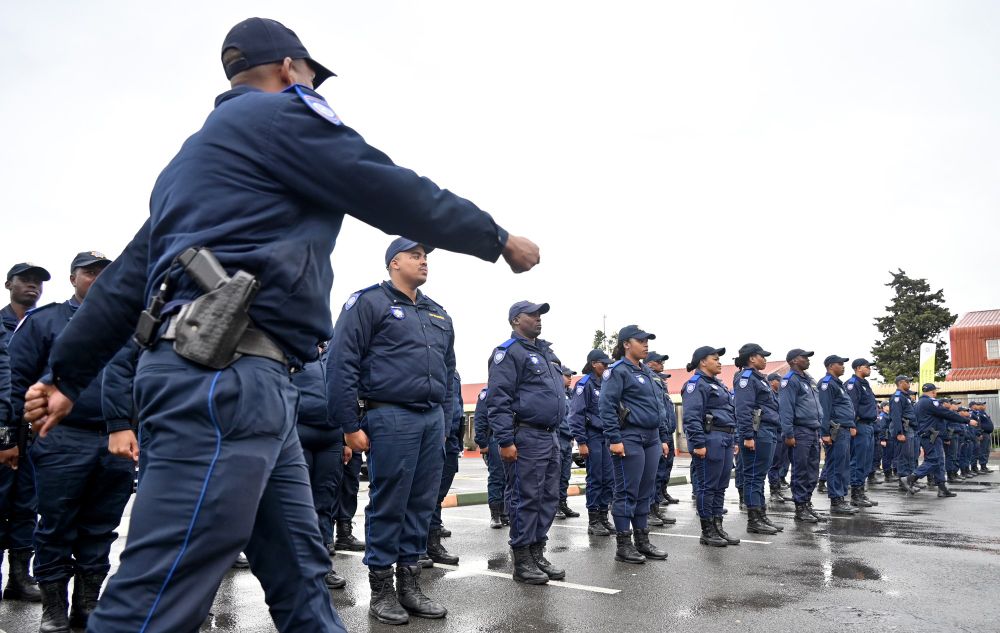
Cape Town metro officer loses Labour Court challenge after dismissal for attending year-end party while on sick-leave.
The Labour Court in Cape Town has dismissed an application by the South African Municipal Workers’ Union (SAMWU), on behalf of law enforcement officer May, challenging his dismissal by the City of Cape Town.
Acting Judge Snyman dismissed the review application after finding that the applicants had failed to properly explain why their case was filed late. The court also found that there were limited prospects of overturning the arbitrator’s finding that May’s dismissal was substantively fair.
May had been employed by the City as a law enforcement officer in the safety and security directorate since 2010. He was dismissed in February 2024 following disciplinary proceedings arising from his attendance at a staff function on December 15, 2022.
The staff function had not been approved by the City. Employees had been told that it would not be permitted.
Meanwhile, May was booked off sick from December 12-14, 2022.
He returned to work on the 15th and worked from 8am until about 2pm. He then attended the staff party, which took place despite management's refusal. Photographs from the event were subsequently posted on Facebook and showed May among those attending.
He ate and left the function at 7pm.
The City considered his attendance at the function to be inconsistent with his sick leave and its leave policy.
He was therefore charged with dishonesty, among other charges.
According to the City's leave administration guidelines, employees on sick leave were required to conduct themselves consistently with recovery from their illness and medical treatment.
The policy also required employees who were confined to their homes while on sick leave to remain there, except when travelling for medical treatment or consultation, unless they had a motivated recommendation from a medical practitioner permitting them to leave. May was familiar with the policy.
May told the arbitration that he only became aware of the function after receiving a telephone call later that afternoon from a colleague. He said he attended because the employees had something for him following his hospitalisation.
May initially faced three disciplinary charges: leaving work before the end of his shift without permission, dishonesty relating to his sick leave, and insubordination for attending an unauthorised staff function.
He was acquitted of the first charge but found guilty of the second and third charges at his disciplinary hearing. He was subsequently dismissed in February 2024.
On appeal, the guilty finding on the insubordination charge was overturned. The appeal chairperson found that May could not have received the instruction prohibiting the function because he had been off sick when the instruction was issued.
The finding of dishonesty was upheld. The appeal chairperson concluded that May had acted dishonestly by being absent from work on the basis that he was too ill to perform his duties, while subsequently attending the staff function.
SAMWU subsequently referred an unfair dismissal dispute to the South African Local Government Bargaining Council (SALGBC).
The dispute proceeded to arbitration, where the arbitrator found in November 2024 that May's dismissal was substantively fair.
SAMWU and May then approached the Labour Court seeking to have the arbitration award reviewed and set aside and for May to be reinstated with retrospective effect.
A major obstacle was that the review application was filed outside the statutory six-week period.
The arbitration award was received in November 2024, while the review application was filed on February 2025, 21 days late. The applicants therefore required condonation from the court.
The court found that the applicants had not properly made out a case for condonation in their founding affidavit. Instead, they said that the reasons for the delay would be dealt with later.
The supplementary affidavit also failed to provide an explanation. The applicants only attempted to explain the delay in their replying affidavit.
Judge Snyman held that this was not permissible because a party bringing motion proceedings must ordinarily make out its case in its founding papers. The purpose of a supplementary affidavit in a review application is to supplement the grounds of review in light of the arbitration record, rather than to repair shortcomings in the original application.
The explanation eventually provided by the applicants referred to internal processes within SAMWU.
According to the explanation, the arbitration award was discussed with May on 26 November 2024, after which the matter was referred to the union's national office. Attorneys were consulted and legal opinions obtained, while the union offices were closed over the festive period. Authority to proceed with the review was eventually granted on 3 February 2025.
Judge Snyman said trade unions dealing with labour disputes must organise their internal decision-making processes so that statutory deadlines can be met. The court also noted that there was no explanation for what May himself had done to follow up on the progress of his case.
The applicants had also failed to address the issue of prejudice that would result if condonation were refused.
Although the failure to establish a proper case for condonation was sufficient to dispose of the matter, the court went on to consider the merits of the review.
The court applied the established test for reviewing arbitration awards: the question is whether the arbitrator's decision was one that a reasonable decision-maker could reach on the evidence before them.
Judge Snyman found that the arbitrator had properly assessed the evidence and probabilities.
The court accepted that May attended the staff function while on sick leave and that the City's policy regulated how employees were required to conduct themselves while on sick leave. It found that the arbitrator was entitled to draw an inference of dishonesty from May's conduct and the applicable workplace policy.
The court further found no basis to interfere with the arbitrator's conclusion that dismissal was an appropriate sanction.
The City's disciplinary code permitted dismissal for a first offence involving misconduct related to dishonesty. The court also considered May's length of service and clean disciplinary record but agreed with the arbitrator that these factors did not outweigh the seriousness of the misconduct.
The court concluded that the finding that May's dismissal was substantively fair fell within the range of reasonable outcomes available to the arbitrator.
Judge Snyman ultimately refused condonation for the late filing of the review application.
The court found that the applicants had failed to provide a proper explanation for the delay, had not adequately addressed prejudice and had limited prospects of success on the merits.
As a result, the Labour Court dismissed both the condonation application and the review application.