Lagos’ environmental journey: The work is far from finished - The Guardian Nigeria News
Every credible legacy must have a chapter on unfinished business. Without it, commemoration can easily become little more than self-congratulation.
Lagos has made visible progress in several areas of environmental management over the years, including drainage, waste management, climate planning, pollution control, urban greening and enforcement.
But environmental progress is not a destination that can be reached once and celebrated forever. A drain cleared today can be blocked tomorrow. A tree planted this year can die the next. A waste-management system can deteriorate, while an enforcement regime can lose consistency. A wetland protected by one administration can come under pressure under another.
The strongest assessment of Lagos’ environmental journey must, therefore, acknowledge an uncomfortable reality: the work is far from finished.
Independent academic research supports that caution. A systematic review of flood-resilience measures published in 2025 acknowledged significant structural interventions in Lagos but concluded that existing resilience strategies remained insufficient for the scale of the challenge.
The study identified inadequate infrastructure, poor waste-disposal practices, weak enforcement of planning regulations, limited community engagement and shortcomings in early-warning systems among the challenges. These are not minor gaps. They point directly to what Lagos must get right in the years ahead.
First, physical planning and environmental policy must become more closely integrated. It makes little sense for one government agency to approve a development only for another to later declare that the same development is obstructing a drainage channel or encroaching on environmentally sensitive land.
Environmental considerations should be embedded in physical planning, particularly in floodplains, wetlands and coastal corridors. The painful spectacle of buildings being demolished after huge private investments should become increasingly rare. Where development is clearly inappropriate, intervention should come before construction, not after millions of naira have been committed.
Prevention is cheaper, less disruptive and more effective than enforcement after the damage has been done.
Second, Lagos must continue to modernise its drainage infrastructure. The state has continued with dredging, channelisation and maintenance, including the approval of interventions on 28 additional primary channels following extreme rainfall in June 2026. But climate change is altering the assumptions on which much of the city’s infrastructure was designed. Drainage capacity must, therefore, be reassessed periodically against changing rainfall intensity, land-use patterns, tidal conditions and projected climate risks. The question should no longer be whether a drainage channel was adequate 20 years ago. It should be whether it will remain adequate 20 years from now.
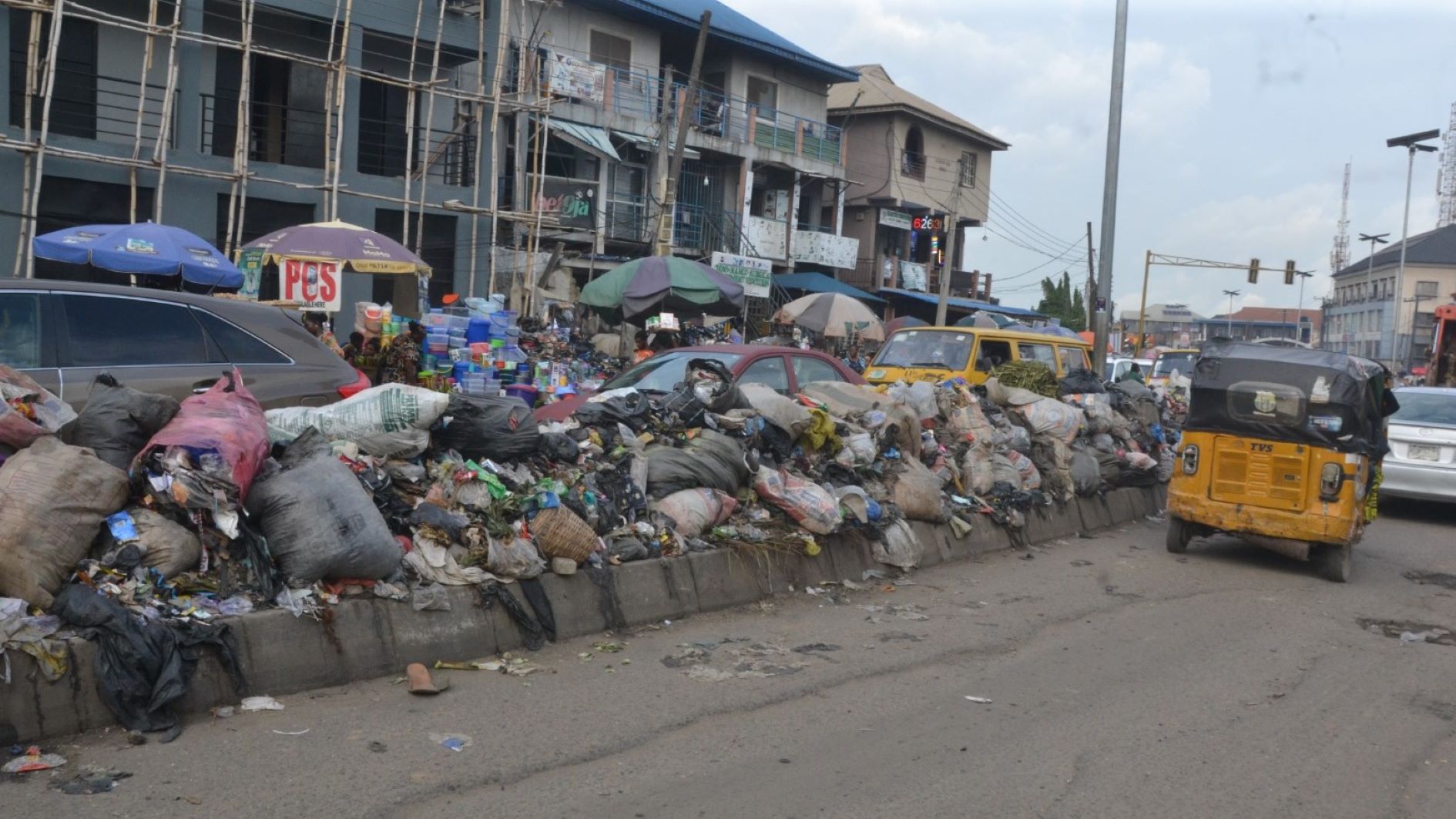
Third, waste collection must become more reliable Lagos cannot build an effective circular economy on a weak primary-collection system. Government data have acknowledged gaps in formal waste collection as well as widespread illegal disposal.
That situation requires sustained attention.
Private Sector Participation (PSP) operators should be assessed against measurable service standards. Residents should have predictable collection schedules, while technology should be deployed to monitor performance. Different neighbourhoods may also require different collection models, particularly communities where road access and settlement patterns make conventional collection difficult.
Operators that consistently fail to meet agreed standards should not remain in the system indefinitely simply because they hold franchises.
Fourth, environmental data should become increasingly accessible to the public.
How many drainage channels are currently under maintenance? How much waste does Lagos actually recycle? What proportion ends up in landfills? How many trees planted five years ago are still alive? What are the long-term air-quality trends? Which communities face the highest flood risks? Which industries repeatedly violate environmental regulations? Modern environmental governance requires dashboards as much as bulldozers.
Reliable public data would improve accountability while allowing researchers, civil society organisations and residents to assess whether policies are achieving their intended results.
Fifth, enforcement must be consistent and transparent.
A few things can undermine public confidence in environmental regulation more than the perception that rules are applied differently depending on who is involved.
A roadside trader should not be sanctioned for obstructing a drainage channel while a major developer is allowed to reclaim environmentally sensitive land. A small entertainment business should not face penalties for excessive noise while a larger or politically influential establishment escapes scrutiny.
Environmental laws gain legitimacy when citizens believe that the same rules apply regardless of status or influence. That principle should become institutional rather than dependent on the personalities occupying public offices.
Sixth, Lagos must accelerate climate adaptation.
A World Bank assessment has highlighted the exceptional nature of Lagos’ flood exposure compared with other coastal cities in sub-Saharan Africa. The state’s Climate Adaptation and Resilience Plan also identifies long-term risks associated with extreme rainfall, rising temperatures and sea-level rise. This means environmental policy can no longer be designed principally around yesterday’s Lagos. Planning must anticipate the Lagos of tomorrow.
That requires resilient infrastructure, coastal protection, wetlands conservation, heat-management strategies, urban greenery and stronger protection for vulnerable communities.
Seventh, perhaps the biggest unfinished task is to make environmental responsibility less centred on government alone. A city cannot become sustainable simply because a commissioner is energetic or an administration is committed. Strong political leadership can accelerate change, but it cannot substitute for durable institutions.
The real test of an environmental legacy begins when an officeholder leaves.
Does drainage maintenance continue? Does enforcement remain consistent? Does recycling expand? Does air-quality monitoring improve? Do local governments retain the discipline required to sustain environmental programmes? Do residents continue to participate? That is the difference between an administration’s achievement and an institutional legacy.
There will always be a temptation in legacy communication to present a perfect picture. Lagos should resist that temptation The state still faces flooding challenges. Dirty and neglected locations remain. Waste-collection failures occur. Environmental infractions continue. Wetlands remain under pressure. Air and noise pollution require stronger action, while wastewater infrastructure needs significant investment.
Acknowledging these realities does not diminish the progress already made. Rather, it provides a basis for preserving, improving and expanding it.
Perhaps the strongest environmental legacy any government can leave is not the declaration that, “We have solved the problem.”
It is the ability to say: “We changed the direction, built systems that did not previously exist, confronted practices that were once considered untouchable, and left the next administration with a stronger foundation from which to continue.” For a city changing as rapidly as Lagos, there will never truly be a final environmental project. There will only be the next challenge.