Laws on paper, peasants in peril
Direct Source Verification:
This story is aggregated from The Express Tribune (tribune.com.pk). Full reporting rights and copyright belong to the primary publisher.
Report finds low wages, bonded labour persist despite protective legislation
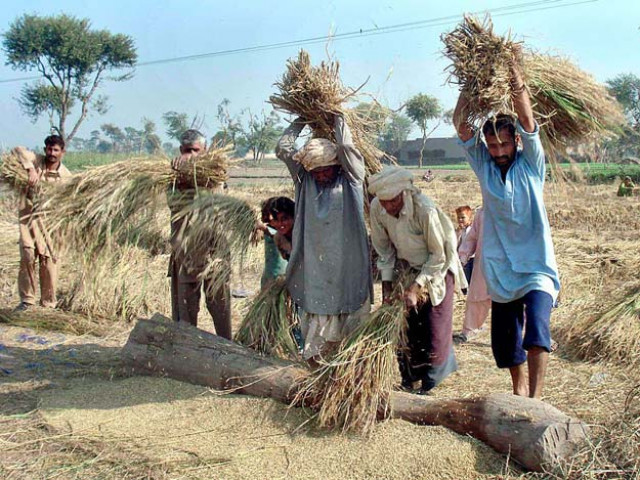
A non-profit organisation's report outlining the state of peasants' rights has depicted a bleak picture of the agriculture workforce's continued exploitation in the face of laws, policies and initiatives aimed at their protection and welfare. The socio-political problems, low wages, landlessness, health, education and gender issues have also been highlighted in the report titled 'State of Peasants' Rights in Sindh in 2025'.
The Hari Welfare Association (HWA) launched this report at an event at Hyderabad press club on Thursday. The 106-page report consists of seven chapters ranging from laws to social safety programmes. Violence against women, tribal conflicts and bonded labour also find separate sections.
Addressing the launch, the HWA's executive director Akram Khaskheli briefed about the Sindh Assembly's legislations which aspired to address vulnerabilities of landless peasants, especially women farm workers. He shared brief insights of the Sindh Tenancy Act, 1950; the Sindh Bonded Labour System (Abolition) Act, 2015; the Sindh Women Agricultural Workers Act (SWAWA), 2019; and the Sindh Water Policy, 2023.
"The 2019 judgment of the Sindh High Court concerning the tenancy act had given a big hope to landless peasants for access to justice but the provincial government challenged that judgment in the apex court where it is still pending," he regretted. The historic judgment had barred the deputy and assistant commissioners from acting as arbitrators between a landlord and a peasant. The jurisdiction to settle disputes between the two was handed over to the courts in the light of the separation of judiciary from the executive.
"It is lamentable that despite its assertions for being pro-peasant, the Sindh government hasn't withdrawn its appeal against the SHC's pro-peasant order," Khaskheli said. The report stated that 51% of rural households remain landless as 64% of farmland is owned by 5% of landlords. Women own only 3% of the land.
Over the last 16 years, the provincial government gradually enhanced the minimum wage from Rs7,000, in 2010, to Rs40,000, in 2025. However, on the ground the peasants earn hardly around Rs15,000 wage per month, the report claimed.
Labours held captives against repayment of debts or wages paid in advance are also yet to reap fruits of the the Sindh Bonded Labour System (Abolition) Act, 2015, as thousands of farm workers undergo this bondage every year.
Original Source
https://tribune.com.pk/story/2629969/laws-on-paper-peasants-in-peril