Lawyer says convicted killer was booted from McGill without due process - Toronto Star
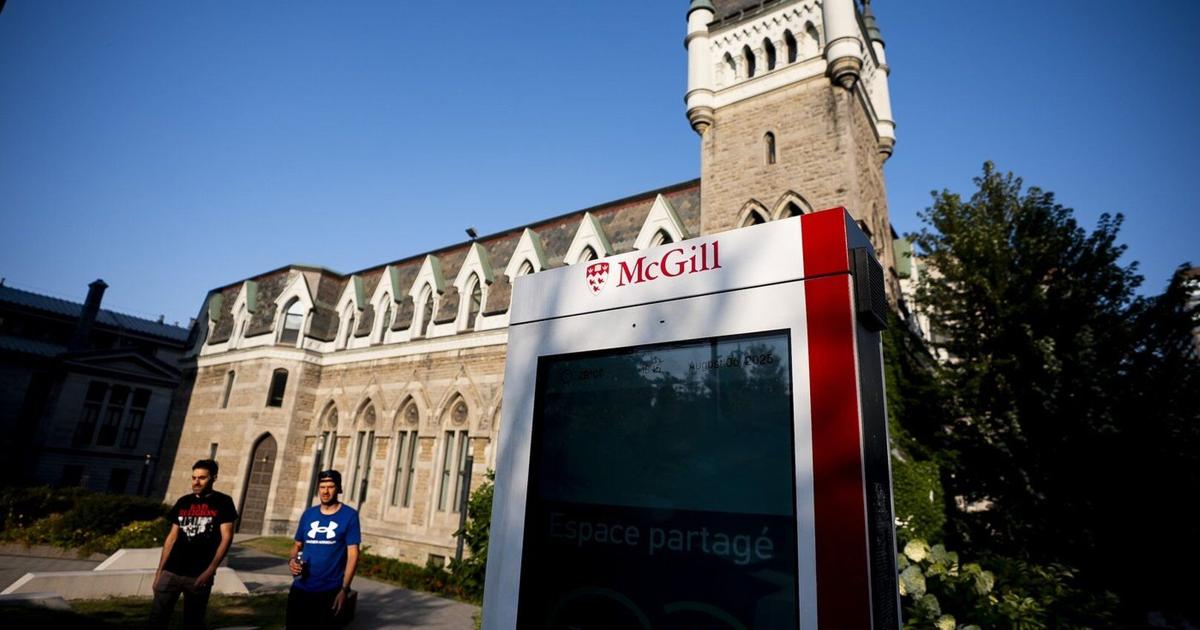
People walk through McGill University’s campus in Montreal on Wednesday, Aug. 6, 2025. THE CANADIAN PRESS/Christopher Katsarov
MONTREAL - A lawyer representing a man who was convicted of murder and attempted murder for attacks committed in 1984 says McGill University’s decision to revoke his admission was rushed and lacking in due process.
Lawyer Nora Demnati says the school decided to unenrol Jeffrey Ewert from its law faculty without offering him an in-person meeting or giving him a chance to fully address concerns.
Ewert, now in his 60s, was sentenced to two life sentences after he sexually assaulted and strangled two women in British Columbia in separate 1984 incidents that left one victim dead and the other severely disabled.
McGill’s provost announced earlier this week that he was no longer a student, after news he was attending law classes while on day parole sparked concern about student safety and debate over whether or not he should be allowed to attend.
Demnati says Ewart disclosed his criminal history to McGill when he applied and was accepted.
Demnati also said McGill told him its decision to rescind Ewert’s admission was based on his failure to disclose aspects of a post-release parole board decision in his admissions application.
She said that’s a retroactive and unreasonable expectation, and is urging McGill to reconsider its decision until Ewert can present his case to stay at the school.
“In a context where criminalized people turn to higher education to positively transform themselves and expand the post-release opportunities available to them, the stakes are high, and the precedent set by McGill University has important ramifications well beyond the institution,” Demnati said in a statement released Friday.
“McGill would do well to take the time to better understand the implications of their actions and to approach both process and outcome more thoughtfully.”
McGill did not immediately respond for a request for comment.
Demnati says no concerns were raised to Ewert about his presence or behaviour until he was removed from campus on Oct. 6. She said he had returned each night to the halfway house where he was staying and followed the rules of his release, including reporting friendships with women to his parole officer and disclosing his past to them. She said concerns about his behaviour were only raised after his attendance made headlines.
“Mr. Ewert’s behaviour as a McGill student, which did not raise concern when it occurred, was scrutinized after the fact through the lens of his past convictions,” she said. “As a result, he faced unconfirmed accusations and — due to their anonymous, ambiguous and delayed nature — is not in a position to either defend himself against or engage in community accountability processes to address them.”
She said both Ewert and his supporters have received death threats.
Amid the firestorm, Correctional Service Canada issued a warrant to suspend Ewert’s conditional release and confirmed he had returned to custody while the situation is being reviewed. Demnati said his arrest on Oct. 30 prevented him from making “substantive representations” to the school.
She also said McGill’s decision was not “formally” based on any student concerns.
“Rather, it is based on Mr. Ewert’s supposed failure to disclose in his admissions application — not his criminal history, which he did voluntarily despite there being no requirement to — but select aspects of a decision rendered by the Parole Board of Canada after his release in 2025,” she wrote. “This imposed an unreasonable, retroactive obligation that Mr. Ewert could not have reasonably known. Nowhere does McGill admissions guidance indicate that this kind of information is necessary or even welcome.”
She said an obligation to include parole decisions in a university application would be “dangerous” because it seems to assign the school a law enforcement and risk assessment role that it lacks the expertise to fulfil.
The lawyer also said the school failed to consider the merits of Ewert’s admission, which include “strong academic promise, decades of prisoners’ rights advocacy, an active role in developing the law through successful court challenges, peer-reviewed publications, strong reference letters and community volunteering experience.”
This report by The Canadian Press was first published Nov. 6, 2026.