Lessons from failure: the ANC's electoral court setback and the need for organisational introspection - IOL
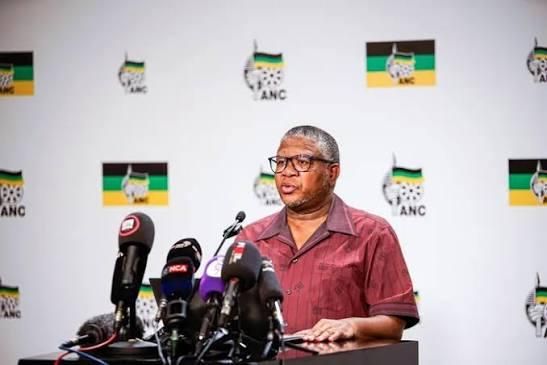
As the ANC stands at this critical juncture, the poignant questions of organisational failure have surfaced. In a landscape marked by shifting political dynamics, can the ANC transform its rich legacy into a contemporary framework of professional competence and operational discipline? The path ahead will require courage, honesty, and an unwavering commitment to the ideals that have defined the movement throughout its storied history.
The African National Congress is not an ordinary political organisation. Its biography is inseparable from the biography of South Africa itself. It led a struggle that demanded extraordinary sacrifice, negotiated a complex transition to democracy, and then governed the country for three decades. Its institutional presence remains extensive, stretching from Parliament into provinces, municipalities, branches and communities.
It is precisely because of that history and reach that its recent defeat in the Electoral Court should not be reduced to routine political commentary.
The Electoral Court has dismissed the ANC's challenge over 181 candidates excluded from the November 4, 2026 local government elections. The dispute centred on candidate information that the ANC says had been captured on the IEC's electronic system before the August 28, 2026, 5pm deadline, but the final electronic submission had not been completed. The ANC attributed the failure to technical difficulties, while the IEC disputed that account. The court ultimately dismissed the ANC's appeal.
The legal process must now take its course, including the ANC's intention to pursue further legal remedies. But outside the courtroom there is another question the ANC should be asking itself, and it may be more uncomfortable and more consequential than the legal argument: how did an organisation of this size, experience and depth allow such a failure to occur?
That question is not an accusation of incompetence. It is a question about organisational capability, and whether a political institution with such a substantial history has developed the systems, disciplines and internal controls required to translate political intention into effective execution.
I have spent more than 25 years working in Human Resources, organisational design, labour relations and wage negotiations, and one lesson has remained consistent: major organisational failures rarely arise from a single mistake in isolation. They tend to occur where several weaknesses intersect, unclear responsibility, inadequate communication, weak controls, insufficient oversight, or a culture in which concerns are not raised early enough.
Candidate nominations are not simply a political exercise. They are a highly regulated administrative process in which deadlines, documentation, verification, information systems, accountability and time management all matter. The distinction between information being captured on a system and a formal submission being completed may appear technical, but institutionally it is decisive.
The ANC says it successfully registered 8,947 candidates, with 181 affected across six municipalities. That represents a relatively small proportion of its overall submission. But organisational maturity cannot be measured by the percentage of tasks completed successfully.
In high-stakes compliance, mature institutions do not measure success only by the thousands of submissions that went through; they also ask whether their controls were strong enough to prevent a small number of failures at critical points. Good practice would have dictated that the submission be finalised at least five days before the cut-off, with a second verifier, a live completion dashboard, and a clear escalation path, rather than in the final hours. A buffer of that kind is not excessive caution. It creates the space to identify and resolve both foreseen and unforeseen problems while recovery is still possible.
The issue, therefore, is not simply whether there was a technical problem, or where responsibility for that problem lies. It is why the organisation's processes did not provide sufficient protection against a failure so close to a non-negotiable deadline.
There is a temptation to explain this as an old liberation movement struggling with modern technology. That explanation is too easy. The ANC operated for decades without many of the institutional advantages available to a conventional political organisation. Its underground structures, networks, political education and mass mobilisation required discipline, adaptability and an ability to operate under difficult conditions, often sustained through networks within communities and broader civil society that provided support when political organisation was banned.
The more important question is whether those strengths have been successfully translated into the capabilities required of a modern political institution. That transformation is not primarily about technology. It is about organisational culture.
Modern organisations require clear lines of responsibility, competent administration, reliable information, effective escalation mechanisms and accountability when systems fail. Political loyalty and organisational competence are not the same thing. A person can be deeply committed to an organisation and still not possess the technical or administrative competence required for a particular responsibility. Equally, raising a difficult organisational question should not automatically be interpreted as disloyalty. Institutions become stronger when they create enough confidence for people to identify risks and challenge assumptions before manageable problems become institutional failures.
The Electoral Court's decision also reinforces another principle: political weight cannot compensate for weak administration. The ANC's historical legitimacy is a matter of record, but constitutional institutions operate according to rules that apply to all political organisations regardless of their history or size. This is part of the constitutional principle that protects the electoral process, and ultimately all political parties.
When organisations encounter failure, there is a natural tendency to focus first on external circumstances. Resilient institutions also ask a more difficult question: what was within our own control, and what should we have done differently?
Even if the ANC ultimately succeeds in its legal challenge, the internal questions do not disappear. Who had final responsibility for the submission? What verification mechanisms were in place? Who was monitoring completion? At what point was the risk escalated? What contingency arrangements existed?
These are ordinary organisational questions, but they are precisely the questions that determine whether institutions learn from failure or merely explain it.
That is why renewal should not be reduced to questions of personalities, factions or individual accountability. The deeper questions concern how the organisation develops its people, recognises competence, manages information, maintains accountability, uses technology, and responds when something goes wrong.
The ANC carries several identities simultaneously. It is a liberation movement, a political party and, for much of our democratic history, a governing organisation. A liberation movement depends on mobilisation, solidarity and collective purpose. A modern political institution also requires professional competence, disciplined administration and reliable systems. There is no inherent contradiction between these requirements. The challenge is integrating them.
The Electoral Court judgment provides an opportunity for precisely that kind of reflection, not because 181 candidates define the ANC, but because a contained administrative failure can expose much larger questions about systems, accountability, and the relationship between political leadership and professional competence.
The legal question belongs in the courts. The organisational question belongs inside the ANC, at Luthuli House, in provinces, regions and branches. It requires an honest examination of what happened, why it happened, and what should change, without reducing the explanation to factional politics or finding a convenient individual to carry the entire burden.
The ANC has survived apartheid, repression, exile and transition. Its next challenge may be less dramatic but no less consequential: whether it can renew itself as a capable, disciplined and modern organisation, without losing the values and political purpose that gave it meaning.
For an organisation with this history, critical self-examination should not be mistaken for disloyalty. It is what allows institutions to learn, adapt and endure.
* Sithembiso Nzimande is a Human Resources and organisational development practitioner with more than 25 years' experience in HR, organisational design, labour relations and wage negotiations. He is the author of Human Resources as a Powerhouse.
/https://i.s3.glbimg.com/v1/AUTH_63b422c2caee4269b8b34177e8876b93/internal_photos/bs/2026/O/F/TVMVRtRRGqkZlIb75iLQ/115688633-ririodejaneirorj17-07-2026opresidentelulaemvisitaacarretadesaudedamulhern.jpg)