Lindsay Clancy Bid to Dismiss Murder Case Denied—Here’s What Happens Next - Newsweek
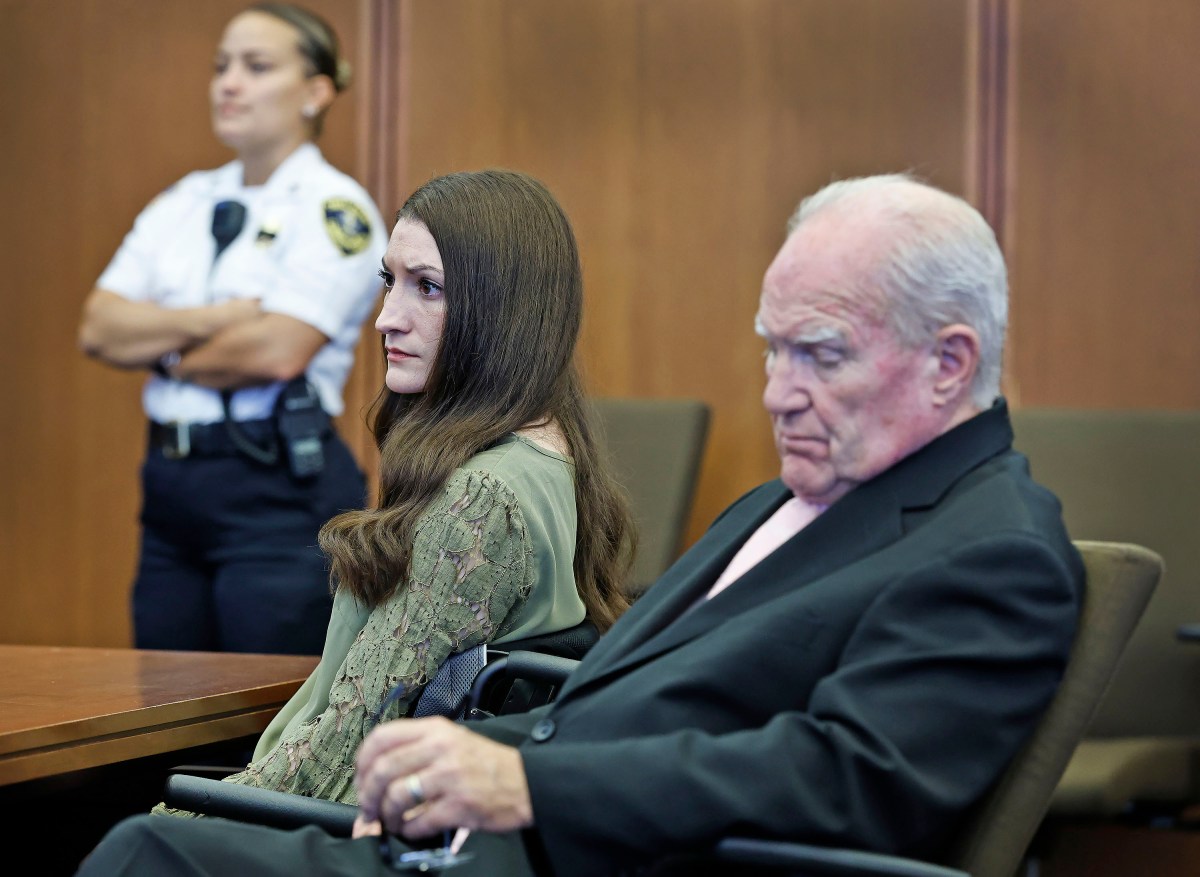
A Massachusetts judge has denied Lindsay Clancy's attempt to have the murder charges against her thrown out, clearing the way for prosecutors to pursue a retrial in the high-profile case involving the deaths of her three children.
In a ruling issued Thursday, Plymouth Superior Court Judge William F. Sullivan rejected the defense's Rule 25 motion for a required finding of not guilty following September's mistrial. Under Massachusetts law, a Rule 25 motion asks a judge to determine whether prosecutors presented sufficient evidence for a reasonable jury to convict.
Clancy's attorney, Kevin Reddington, argued the Commonwealth failed to prove two key elements of its case: that Clancy killed her three children and that she was criminally responsible for her actions at the time.
Sullivan disagreed, finding that prosecutors presented enough evidence for a reasonable jury to conclude beyond a reasonable doubt that Clancy committed the killings and could be held criminally responsible.
“There was evidence introduced, both physical and circumstantial, that would permit a rational trier of fact to find beyond a reasonable doubt the elements of the charge of murder," Sullivan wrote.
The decision does not determine guilt or innocence. Rather, it means the judge found the evidence presented during the first trial was legally sufficient for the case to proceed to a new jury.
The ruling represents a victory for prosecutors, who have maintained that Clancy carefully planned the killings of her children, Cora, 5, Dawson, 3, and Callan, 8 months, on January 24, 2023, then tried to kill herself, while her husband was briefly out of the family's Duxbury home.
Newsweek has contacted Reddington by email and left a message with Plymouth County District Attorney Timothy J. Cruz's office seeking comment.
According to the decision, prosecutors introduced both physical and circumstantial evidence showing that Clancy was alone with the children during the relevant time period. Her husband, Patrick Clancy, testified that he left the house to pick up takeout food and medication and later returned to find evidence of violence inside the home before discovering his children in the basement.
Medical examiners testified that the children died from asphyxia or complications resulting from mechanical asphyxia. Prosecutors alleged the children were strangled with exercise bands.
The judge also rejected the defense's challenge to the state's evidence regarding criminal responsibility. During the trial, both sides agreed that Clancy suffered from a serious mental illness at the time. The central dispute was whether that illness rendered her legally incapable of appreciating the wrongfulness of her conduct or conforming her behavior to the law.
Sullivan noted that three prosecution experts testified that Clancy retained those capacities, even if defense experts reached different conclusions. Resolving those competing opinions, he wrote, is a matter for a jury rather than a judge.
Thursday's decision marks the second time Sullivan has rejected the defense's bid to dismiss the case, finding on both occasions that prosecutors presented sufficient evidence for a jury to consider the charges.
“For the first time, the defendant is arguing that there is no evidence she did this,” Prosecutor Shanan Buckingham told the judge during Tuesday's hearing. “I’d suggest to you the entire record is voluminous as to information supporting the fact that she did this.”
A hearing is scheduled for November 2, when the parties are expected to address several unresolved issues, including Clancy's motion to block a retrial on double jeopardy grounds and the defense's request for a court inquiry into Michael Desronvil, the holdout juror who wanted to convict Clancy.
Defense attorneys have sought scrutiny of Desronvil's phone records as part of their effort to investigate the circumstances surrounding the mistrial and the conduct of the jury's deliberations.
Paul Mauro, an attorney and Fox News contributor, wrote on X after Sullivan's ruling, "Unsurprising. He should similarly swat down the double jeopardy motion and the request to review the holdout juror's phone."
Prosecutors have not yet said whether they intend to retry Clancy. Their options include pursuing another first-degree murder case, seeking lesser charges such as second-degree murder or manslaughter, or declining to move forward altogether.
If a retrial is ordered, a new jury would once again be asked to decide whether Clancy is guilty of murdering her three children or whether her mental state at the time rendered her not criminally responsible.
Newsweek’s reporters and editors used Martyn, our AI assistant, to produce this story. Learn more about Martyn here.
Contact Newsweek editors on this story: Jason Lemon and Sam Wilson.