List of Republicans Breaking With Trump Ahead of Midterms - Newsweek
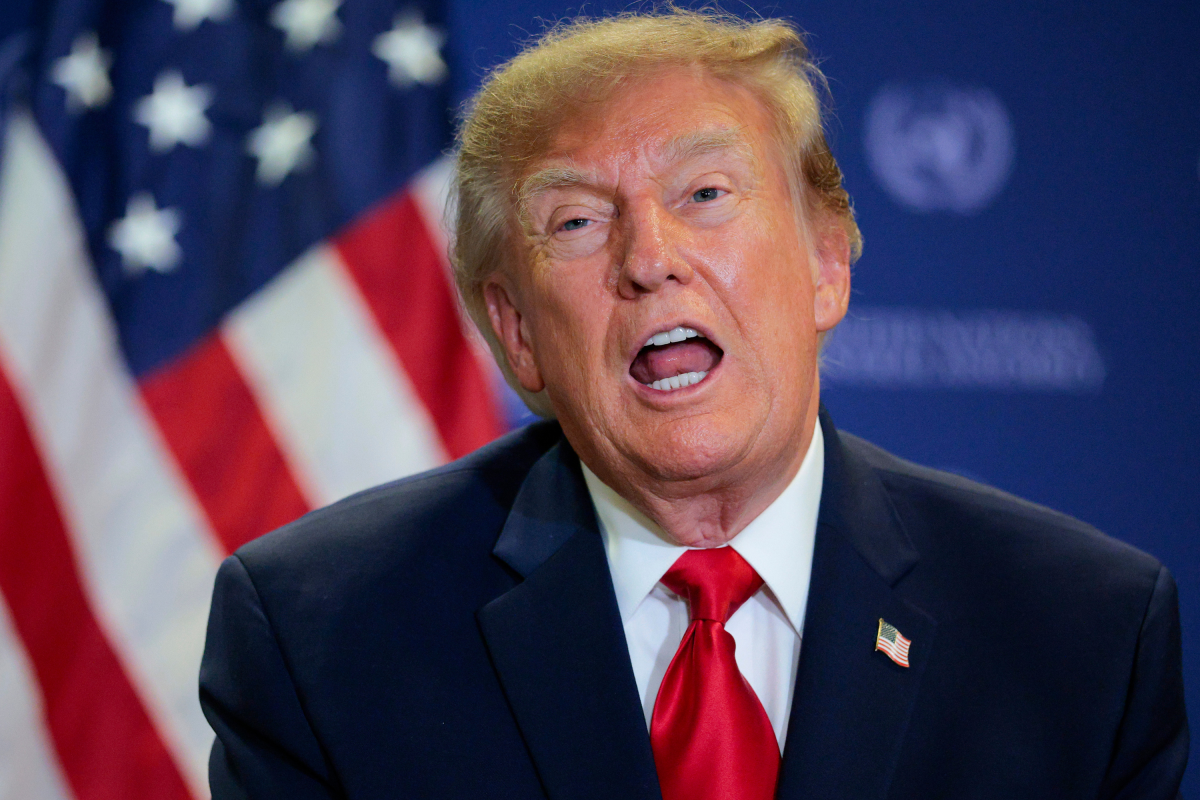
A growing group of Republicans has challenged President Donald Trump, opposed elements of his administration’s agenda, or reduced his prominence in campaign messaging ahead of the November 3 midterm elections.
The disagreements do not amount to a single, organized revolt against the president, but come as several GOP candidates fight for their political lives against a groundswell of momentum for Democratic hopefuls.
Several Republicans who have broken with the president on certain issues continue to support Trump, retain his endorsement and agree with much of his agenda.
The breaks with Trump vary in scope. Some have opposed policies or called for an end to the Iran war, while others have challenged his authority, scrutinized his family or played down his endorsement.
Newsweek reached out to the Republicans mentioned in this article by email on Wednesday morning.
The largest group of Republicans to break with the president has been over the Iran war.
Some lawmakers have supported congressional efforts to end the conflict. Some candidates in competitive elections have called for an end to the war because of its effect on fuel prices and household costs.
Other Republicans have pushed back on the president over issues like immigration enforcement, tariffs on agricultural imports, foreign business dealings involving the president's son, Donald Trump Jr., and the prominence of Trump’s endorsement in campaign messaging.
The most direct Republican challenges to Trump have come through congressional efforts to restrict what they call unauthorized military action against Iran.
Kentucky Representative Thomas Massie backed a House war-powers resolution directing Trump to end unauthorized military action against Iran.
Massie has been one of the most consistent Republican critics of Trump and has often drawn the president's ire. Trump backed a primary challenge to Massie by Ed Gallrein, who went on to win the nomination in May.
Massie has regularly criticized Trump for his military action in Iran being conducted without congressional approval.
He was among the original four House Republicans to cross party lines and support the effort to end the war in Iran.
Massie’s position reflects his longstanding noninterventionist approach and his view that Congress must authorize sustained military conflict.
Pennsylvania Representative Brian Fitzpatrick also supported the House effort to require an end to unauthorized military action against Iran.
Fitzpatrick also introduced his own resolution seeking to enforce the War Powers Act’s requirements.
He said the law required congressional notification before hostilities and congressional authorization within 60 days.
His position has centered on the constitutional role of Congress and the consistent enforcement of the War Powers Act across administrations.
It is not a broader rejection of Trump or the Republican Party.
Ohio Representative Warren Davidson supported the House resolution directing Trump to end unauthorized hostilities against Iran.
His vote placed him in opposition to Trump’s continued use of military force without a new authorization from Congress.
The resolution instructed the president to remove U.S. forces from hostilities while preserving an exception for defending the United States or an ally from an imminent attack.
Michigan Representative Tom Barrett was the fourth Republican to support the House war-powers resolution directing Trump to end U.S. military action against Iran unless Congress authorized the conflict.
Barrett had previously opposed an earlier war-powers resolution, saying in March that Trump had earned the opportunity to resolve the conflict quickly.
His later support for restricting the operation was a notable change in his position.
Iowa Representative Mariannette Miller-Meeks joined the restriction effort in September after opposing earlier attempts to constrain the conflict.
The vote placed Miller-Meeks alongside fellow Iowa Representative Zach Nunn and the four Republicans who had previously supported efforts to limit the president’s war powers.
Miller-Meeks said the United States should not remain in an “open-ended war” while Iowans were paying more at the pump.
The position challenged the continuation of military operations without congressional authorization, rather than representing a broader withdrawal of support for Trump.
Iowa Representative Zach Nunn supported the September House war-powers resolution seeking to end unauthorized U.S. military action against Iran.
Nunn had voted against earlier attempts to restrict the conflict but changed position as military operations continued.
Citing the deaths of two service members from Iowa, Nunn said sustained combat operations required congressional authorization once the opportunity for negotiations had closed.
Maine Senator Susan Collins, who is in a fierce reelection battle, supported a Senate effort to end unauthorized U.S. hostilities against Iran.
Collins said the president’s authority as commander in chief was “not without limits” and that the Constitution gives Congress an essential role in decisions about war and peace.
She also said further military action required “a clear mission, achievable goals, and a defined strategy for bringing the conflict to a close.”
Collins was the only Republican to support the Senate measure in the vote, according to the Senate voting record.
Her position focused on congressional authority and the limits imposed by the War Powers Act, rather than opposition to every aspect of Trump’s Iran policy, her statement documented.
Other Republicans have stopped short of supporting congressional restrictions on Trump’s military authority but have called for the war to end, often citing fuel prices and household costs.
Iowa Senate nominee Ashley Hinson, who is in a tight race for a crucial seat, has called for an immediate end to the Iran war, saying Iowans should not have to pay for it “at the pump or the checkout line.”
The move marked a break with Trump over the continuation and economic consequences of the conflict, although Hinson had previously supported the president’s authority to pursue it.
Hinson, who has Trump’s endorsement, also criticized the president’s expansion of lower-tariff beef imports.
She described the policy as a “bad idea” and argued that cheaper foreign supply could hurt Iowa cattle producers.
Michigan Senate candidate Mike Rogers, who is locked in a close battle for a Senate seat with Democrat Abdul El-Sayed, called for the Iran war to end quickly and proposed temporarily halting U.S. diesel exports.
Rogers argued that the government should consider restricting exports to help reduce domestic fuel prices while disruption linked to the conflict continued.
His call placed him at odds with the administration over the continuation of the war, but it was framed principally around prices, energy supply and the effect on voters rather than Congress’ constitutional war powers.
Michigan gubernatorial candidate John James called for the Iran conflict to be brought to a rapid conclusion.
James said every available tool should be used to end the war quickly.
His intervention added to pressure from Republican candidates in Michigan, where the war’s effect on fuel prices and household costs has become politically important.
His statement focused on the duration and economic consequences of the conflict.
It did not represent a broader rejection of Trump’s presidency or campaign agenda.
Ohio Senator Jon Husted, who is in a tight race with former Democratic Senator Sherrod Brown, called for the Iran war to end as quickly as possible, linking his position to rising gasoline prices.
“The war needs to come to an end as quickly as possible so that we can lower gas prices,” Husted told Politico. He also said Iran needed to reach an agreement with Trump.
Husted’s position stopped short of supporting a congressional attempt to restrict Trump’s military authority.
He instead urged a rapid settlement while continuing to rely on support from Trump and Vice President JD Vance in his competitive Senate race.
Husted broke with the continuation of the war but did not embrace the wider constitutional challenge mounted by some Republican lawmakers.
Wisconsin gubernatorial candidate Tom Tiffany called for the United States to leave the Iran conflict and focus on domestic priorities.
Tiffany said it was “time to move on” and argued that the country should “come home.” His position represented a shift after he had previously opposed congressional resolutions intended to end the war.
Unlike Republicans who supported the House war-powers measures, Tiffany did not base his disagreement primarily on Congress’ constitutional authority.
His intervention instead focused on ending the conflict and redirecting attention to concerns inside the United States.
Other GOP disagreements with Trump extend beyond foreign policy, covering immigration enforcement, scrutiny of the president’s family and the role of Trump in campaign messaging.
Florida Representative María Elvira Salazar has publicly criticized the Trump administration’s immigration crackdown.
In a campaign video, Salazar said some of the administration’s immigration-enforcement efforts had “gone too far.” She pointed to the detention of people without criminal records and urged Trump to be careful about the advice he was receiving on immigration.
“Mr. President, some of your immigration enforcement efforts have gone too far,” Salazar said.
This was a direct policy criticism of the president rather than an attempt to distance her campaign from him.
It focused on immigration, an issue that has been central to Trump’s second-term agenda, and is key to Florida voters.
Utah Senator John Curtis has called for an investigation into foreign business dealings and gifts involving Donald Trump Jr.
Curtis’ request concerned allegations involving the president’s son rather than a formal White House policy.
It placed a Republican senator in direct conflict with a member of Trump’s family.
The move is distinct from the Iran-related disagreements that account for most of the names on this list. Curtis has not broadly withdrawn his support for the administration.
Florida gubernatorial candidate Byron Donalds has removed several prominent references to Trump from his campaign homepage as his race against former Republican turned Democrat David Jolly has continued to tighten.
An earlier version of the site displayed several references to Trump’s endorsement, including a photograph of the two Republicans and prominent “Trump Endorsed” language.
The revised homepage focused instead on affordability, insurance, education and Donalds’ record in Florida.
Donalds has not publicly rejected Trump’s endorsement.
References to the president remained elsewhere on the campaign site, and his campaign said Donalds was proud to have Trump’s support.
The change represents a subtle reduction in Trump’s prominence in the presentation, not a withdrawal of support of the president.
“Our campaign website reflects Byron’s focus on the issues that matter most to Floridians—affordability, insurance costs, and government transparency,” Donalds' campaign communications director, Gates McGavick, told Newsweek in an emailed statement.
“He’s running to be the next Governor of Florida, is proud to have President Trump’s endorsement, and has real policy proposals to tackle those issues.
“This angle of reporting is FAKE NEWS—but, while everyone is focused on our website, check out our policy proposals to make life more affordable for Floridians. You’ll note our robust plans while Jolly has NONE—all MSNBC talking points and zero substance.”
A Donalds campaign source added, “Our polling shows that one of the key contrasts with Jolly is our robust policy and his lack of it. Jolly has zero depth—he’s all punditry.”
Newsweek’s reporters and editors used Martyn, our AI assistant, to produce this story. Learn more about Martyn here.
Contact Newsweek editors on this story: John Fitzpatrick and Geoffrey Rowland.