Lobbying: Fresh storm over dollars spent by Tinubu, Atiku in US - Vanguard News
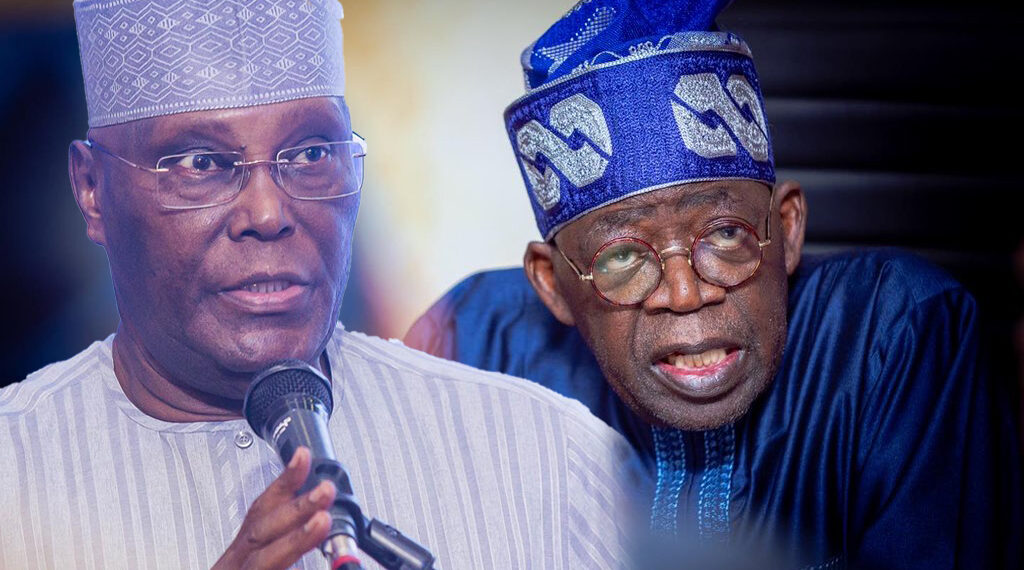
More than $10 million committed by the camps of President Bola Ahmed Tinubu and former Vice-President Atiku Abubakar to lobbying activities in the United States could have funded tens of thousands of micro and small businesses in Nigeria, findings revealed.
This has raised questions about the opportunity cost of political and government spending amid widespread economic hardship.
Publicly disclosed filings under the United States Foreign Agents Registration Act, FARA, seen by Sunday Vanguard, showed that the two engagements are worth about $10.2 million.
At an exchange rate of about N1,400 to the dollar, the amount translates to more than N14 billion.
Similarly, at N250,000 per business, the same amount could theoretically provide startup capital or business financing for about 56,000 microenterprises.
The calculation is illustrative rather than a claim that 56,000 viable businesses would automatically emerge. The actual number would depend on the size of each intervention, the sectors selected, the cost of administering the scheme, business survival rates and whether the money was provided as grants, loans or equity.
Still, the comparison has raised a broader economic question: in a country where access to capital remains one of the biggest constraints facing small businesses, what would N14 billion invested domestically have achieved?
Accordingly, Federal Government’s engagement with Washington-based DCI Group dates to December 2025. Under the agreement, DCI Group was retained to help the Nigerian government communicate its actions to US policymakers, particularly its efforts to protect Christian communities and maintain American support for Nigeria’s counter-terrorism campaign.
The contract, it was observed, provided for a monthly retainer of $750,000. The initial six-month engagement was valued at $4.5 million, with an automatic renewal that could take the total to $9 million. Nigeria paid $4.5 million upfront for the first six months.
The government’s decision came against the backdrop of growing scrutiny of Nigeria’s security situation in Washington and concerns over the country’s international image. It therefore has a stated diplomatic and security objective. Specifically, the argument over its value cannot simply be reduced to the amount spent.
On his part, Atiku, early this year, engaged Washington-based Von Batten-Montague-York, L.C. under a $1.2 million, 12-month agreement.
Documents filed with the US Department of Justice showed that the engagement was intended, among other things, to strengthen Atiku’s standing in US policy circles and counter narratives associated with the Nigerian government.
The filing also stated that the firm would facilitate engagement with members of Congress and executive-branch officials and provide strategic advice on policy positioning.
In July, reports said the firm had begun circulating historical US Department of Justice records relating to a 1993 drug-trafficking asset-forfeiture case linked to Tinubu among members of the Trump administration, Congress and senior congressional staff. More than 60 pages of records were reportedly submitted.
Taken together, the two contracts amount to about $10.2 million. At N1,400 to the dollar, that is approximately N14.28 billion. The figure provides the basis for another way of looking at the spending.
At home, experts believe N14 billion could do more in key sectors.
Consider a simple calculation. If N14 billion were divided into N250,000 packages, it would produce 56,000 interventions. At N500,000 per beneficiary, the number would fall to 28,000. At N1 million, it would support 14,000 businesses. At N5 million per business, the same amount would finance about 2,800 enterprises.
For larger businesses requiring N10 million to N50 million in capital, the number would range from about 280 to 1,400. The choice of financing model would therefore determine the economic reach of the money.
The comparison is particularly relevant because Nigeria’s MSMEs constitute a large part of the country’s economic activity, yet access to finance remains a major constraint.
In December 2025, the World Bank said Nigerian micro, small and medium enterprises account for most businesses, nearly half of GDP and a large share of jobs, while fewer than one in 20 MSMEs have access to bank credit. It subsequently approved a $500 million financing package aimed at expanding access to finance for Nigerian MSMEs.
The World Bank’s intervention is itself based on the argument that better access to finance can allow businesses to invest, expand and employ more people.
Further checks by Sunday Vanguard showed that if the amount were committed to the Nigerian Education Loan Fund, NELFUND, it could take care of the tuition fees and monthly allowances of hundreds of thousands of students.
For instance, at the Lagos State University, LASU, Ojo, regular students pay N90,000 tuition fees per session, while those who add entrepreneurship to their course pay N190,000.
The calculations showed that N14 billion would pay the annual tuition fees of no fewer than 155,555 regular students at LASU.
The same amount would clear the tuition fees of 73,684 students taking courses with full entrepreneurship.
For the monthly N20,000 upkeep allowance paid by NELFUND to beneficiaries, 700,000 students could benefit.
At LASU, 48,275 regular students could have their full tuition fees paid and also receive a monthly allowance.
Also, 35,897 students paying N190,000, including those with full entrepreneurship, could benefit from full tuition fee payment plus the NELFUND monthly allowance for one academic year.
At Olabisi Onabanjo University, OOU, Ago-Iwoye, where tuition fees range from N190,000 to N350,000, 73,684 students paying N190,000 could benefit, while 40,000 students paying N350,000 could also benefit.
Similarly, 35,897 students in the lower fee category could benefit from full fee payment and the N20,000 NELFUND monthly allowance for one academic session, while 25,454 students paying N350,000 could benefit from full tuition fee payment and the N20,000 NELFUND monthly allowance for one academic session.
Nigeria’s labour data also underlined the importance of small businesses and self-employment. In the National Bureau of Statistics’ labour-force data, 66.9 per cent of respondents in the cited sample reported working in their own business or farming activity, while 20.2 per cent said they helped in a household business.
This does not mean every N250,000 injected into a business would produce a job. Nor does it mean that diverting the lobbying expenditure into MSMEs would necessarily produce 56,000 sustainable enterprises. It does, however, illustrate the scale of the opportunity cost.
An economic expert, who spoke on condition of anonymity, questioned the wisdom of spending such sums on lobbying while domestic needs remain acute.
He described the expenditure as a waste of resources, arguing that Nigeria has extensive needs in its communities, including infrastructure and basic services.
The expert also questioned the practice of taking domestic political disputes abroad.
His concern, he said, was not limited to the financial cost, arguing that taking political battles to foreign governments and institutions could also carry reputational consequences for the country.
For him, Nigerian politicians should establish clearer boundaries in their political contests and avoid externalising matters that could be handled domestically.
Executive Director of the Rule of Law and Accountability Advocacy Centre, RULAAC, Okechukwu Nwanguma, approached the issue from the perspective of public accountability.
According to him, the fundamental issue is opportunity cost.
“In a country where millions are struggling with unemployment, inadequate healthcare, deteriorating schools, insecurity and collapsing infrastructure, every billion naira of public money spent on lobbying abroad must be justified against what that money could have achieved at home,” he said.
Nwanguma said that if the estimate that N14 billion could support about 56,000 jobs were correct, Nigerians were entitled to ask what measurable benefit the lobbying expenditure delivered in comparison with businesses, healthcare, education or infrastructure that could have been funded.
He, however, distinguished Atiku’s expenditure and government spending.
A politician spending legitimately acquired private funds on lobbying, he said, raises questions of disclosure and compliance with applicable laws. Where taxpayers’ money is involved, however, he argued that the standard should be considerably higher.
Government, he said, should disclose who was paid, how much was paid, the purpose of the expenditure, the procurement process and the measurable results expected.
“You cannot repeatedly tell Nigerians that there is no money while billions are available for expenditures whose public value has not been convincingly demonstrated,” he said.
The strongest argument in favour of the expenditure is that lobbying can produce value that is not immediately visible on a balance sheet.
For the federal government, influencing policymakers in Washington could potentially affect Nigeria’s diplomatic standing, security cooperation, foreign policy relationships and access to decision-makers.
For Atiku, the objective is political and reputational. A successful lobbying campaign could give an opposition politician greater access to American policymakers or help shape perceptions of him abroad.
That makes a simple comparison between lobbying and business financing imperfect.
An investment banker, however, would likely examine the issue through the lens of capital allocation.
The central question would be whether the expected return from the expenditure justifies the capital committed.
The question, therefore, is not simply whether lobbying works. It is whether the expected benefit is sufficiently important to justify the cost when the same resources could be deployed in sectors with immediate domestic economic needs.
Bismarck Rewane, the Managing Director of Financial Derivatives Company, has repeatedly identified productivity and the conditions facing businesses as central to Nigeria’s economic prospects.
In June 2026, he said reforms were important for building competitive companies and prosperous economies and that successful reforms should attract investment, increase productivity, create jobs and improve living standards.
Rewane also identified power, agriculture, manufacturing, fintech and telecommunications as important drivers of economic productivity, while stressing that SMEs are particularly affected by unreliable electricity and high operating costs.
According to him, the implication is that simply handing out N14 billion may not be enough. If the objective were job creation, the money could potentially have greater impact if combined with credit guarantees, infrastructure, technical support and access to markets.
Comments expressed here do not reflect the opinions of Vanguard newspapers or any employee thereof.